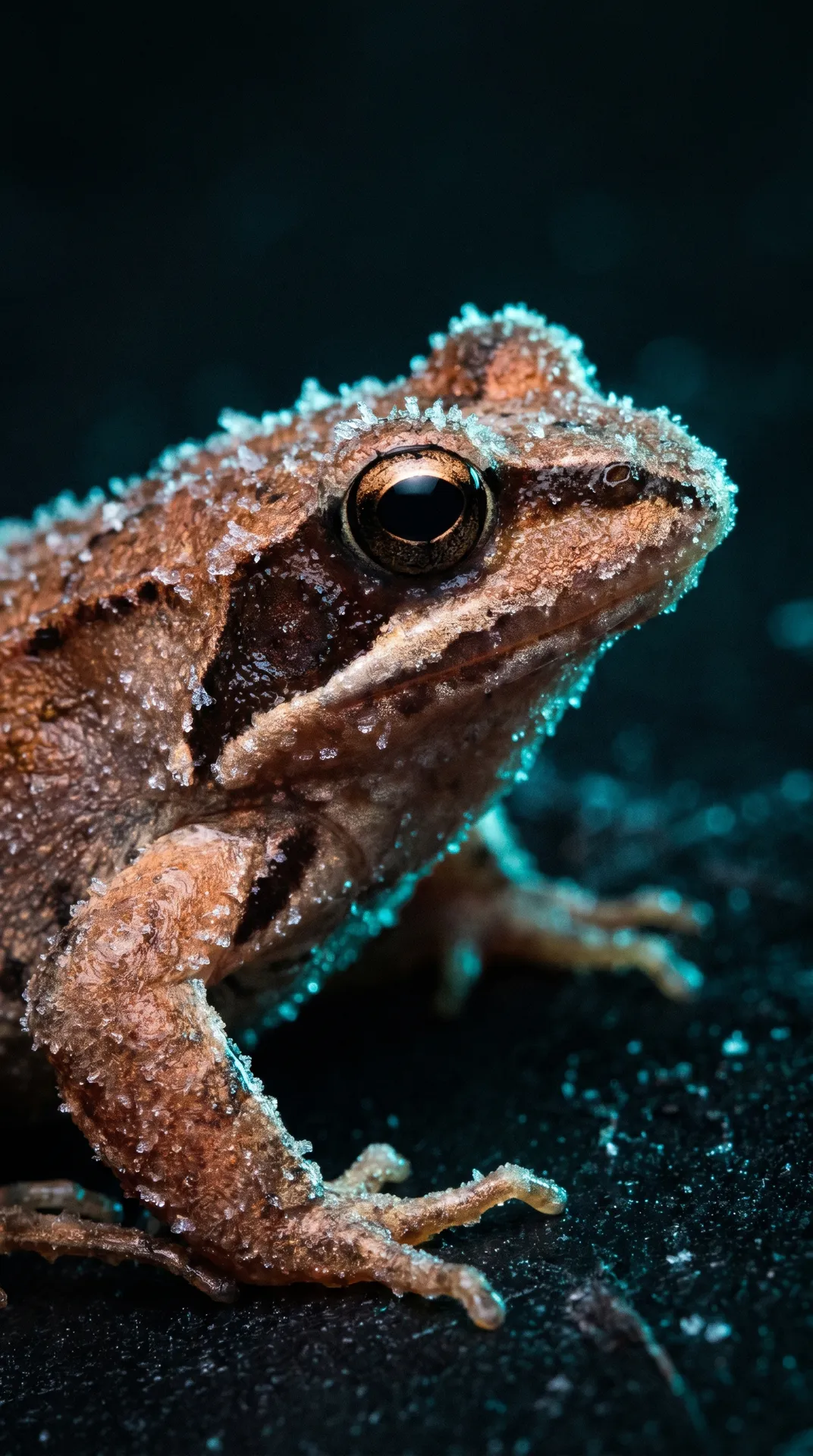
The frog that freezes solid every winter and comes back to life
This frog freezes into a solid lump of ice every winter — heart stopped, brain silent — then thaws back to life.
Which one is REALLY true about the Wood Frog?
The short version
The wood frog survives winter by letting up to 70% of its body water turn to ice; its heart stops, blood stops flowing, and its brain goes silent. It floods its cells with glucose as natural antifreeze, then thaws in spring and hops away as if nothing happened.
Why it's so weird
- ✓The Wood Frog can freeze into a solid lump of ice every winter and thaw back to life in spring.
- ✓The Wood Frog lets up to 70% of the water inside its body turn to ice without dying.
- ✓The Wood Frog stops its own heart, blood flow, and brain activity while frozen, leaving it dead by every normal measure.
- ✓The Wood Frog floods its cells with glucose as a natural antifreeze that stops sharp ice crystals from shredding them.
- ✓The Wood Frog waits frozen solid for weeks or even months, then warms up, restarts its heart, and hops away.
You could line up about 15 of them along a 7-year-old!
The full story
This frog freezes into a solid lump of ice every winter, and then comes back to life in the spring. Meet the wood frog, an animal that basically dies and resurrects itself every single year. When the cold hits, up to seventy percent of the water inside its body turns to ice. Its heart stops beating. Its blood stops flowing. Its brain goes completely silent. By every normal measure, it is dead. The secret is sugar. Just before it freezes, the frog floods its cells with huge amounts of glucose, a natural antifreeze that stops them from being shredded by sharp ice crystals. Then it simply waits, frozen solid, for weeks or even months. When spring finally warms the ground, it slowly thaws out, its heart kicks back on, and it hops away as if nothing ever happened. Follow for more weird animal facts.
When ice starts touching a wood frog's skin, its liver gets a signal and quickly turns its stored sugar (glycogen) into lots of glucose, pumping this sugary 'antifreeze' into the blood and all its cells. The trick is WHERE the ice forms: water gets pulled out of the cells and freezes in the spaces between them, so the delicate insides of cells stay liquid. The glucose keeps too much water from leaving each cell, stops the cells from shrinking too far, and blocks sharp ice from forming inside them. With its blood frozen in place the heart has nothing to pump, so it simply stops until spring thaws everything out.
📚 Source: Cryoprotectants and Extreme Freeze Tolerance in a Subarctic Population of the Wood Frog (NIH/PMC) ↗Scientists froze wood frogs in the lab (some Alaskan frogs down to -16C) and then measured the chemicals in their bodies, finding the liver's stored glycogen had dropped while glucose in the blood and organs shot up to many times its normal level, proving the sugar-antifreeze switch is real.
📚 Source: Wood frog adaptations to overwintering in Alaska: new limits to freezing tolerance (Journal of Experimental Biology) ↗Watch the 45-second version
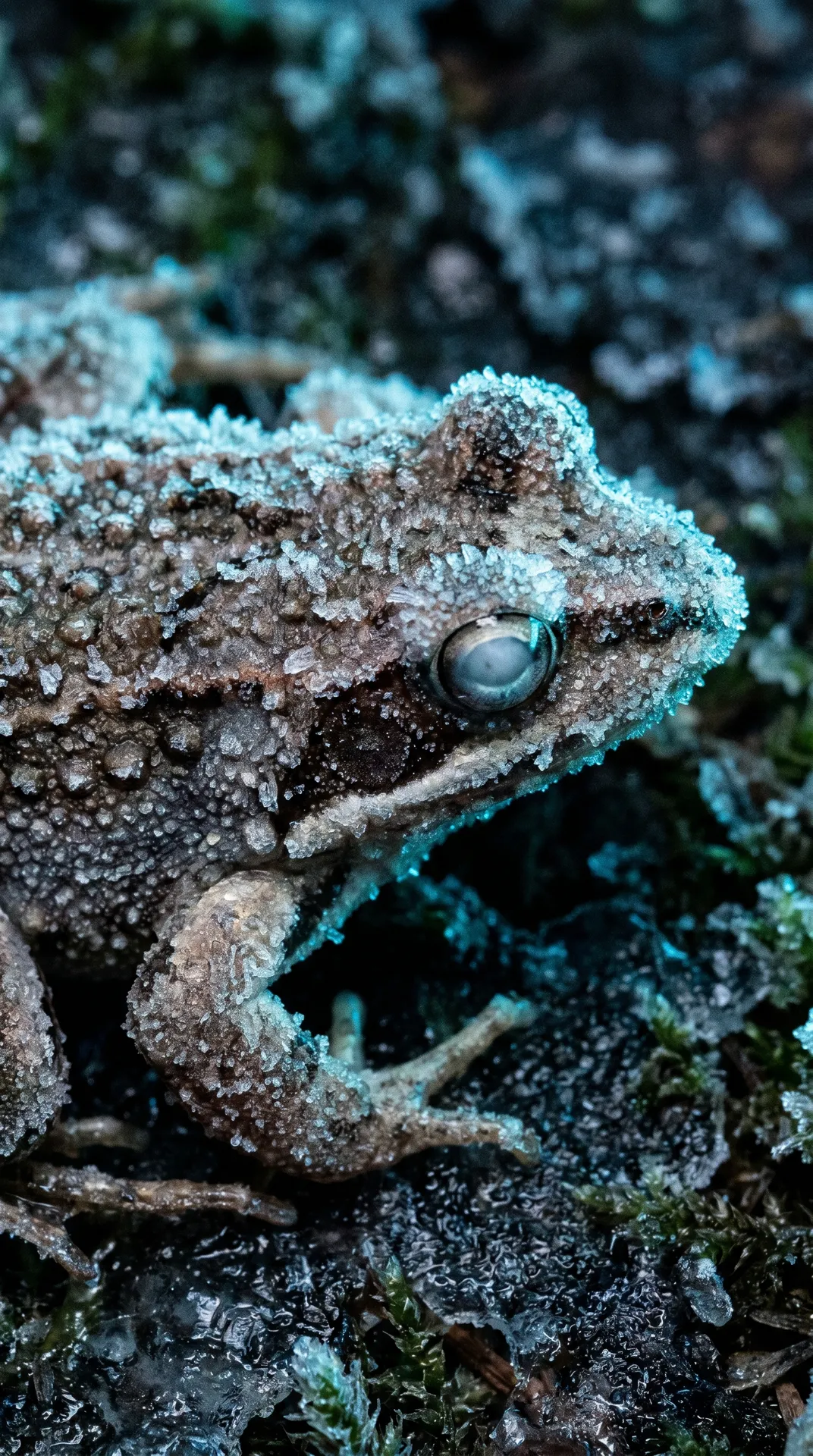
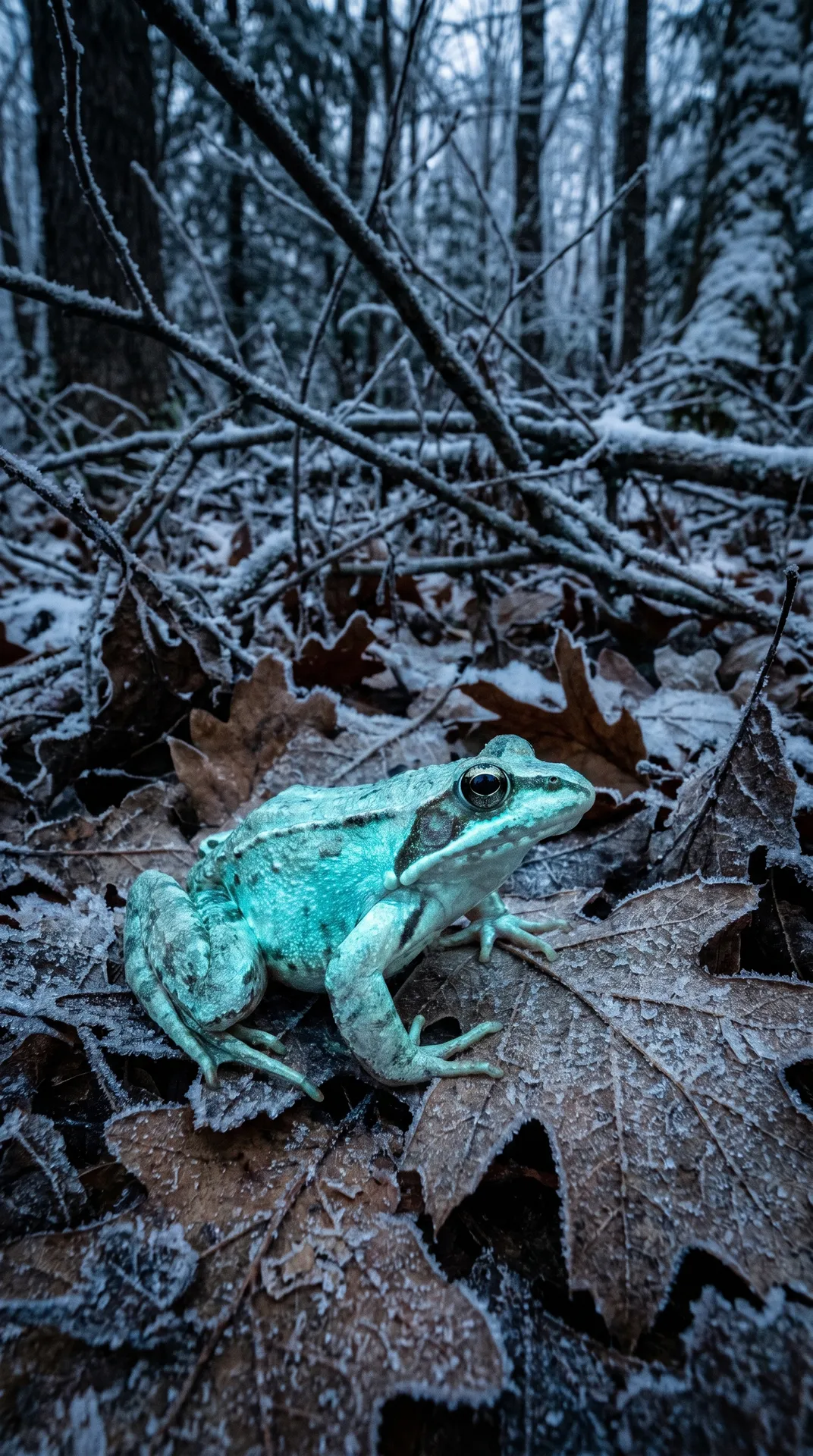
Wood Frog gallery
Check what you learned
No score, no pressure — just see what stuck. Tap Real or Fake.
“The Wood Frog can freeze into a solid lump of ice every winter and thaw back to life in spring.”
“The Wood Frog has a tongue whose support bones run back under the jaw and wrap all the way around the back of its skull.”
“The Wood Frog lets up to 70% of the water inside its body turn to ice without dying.”