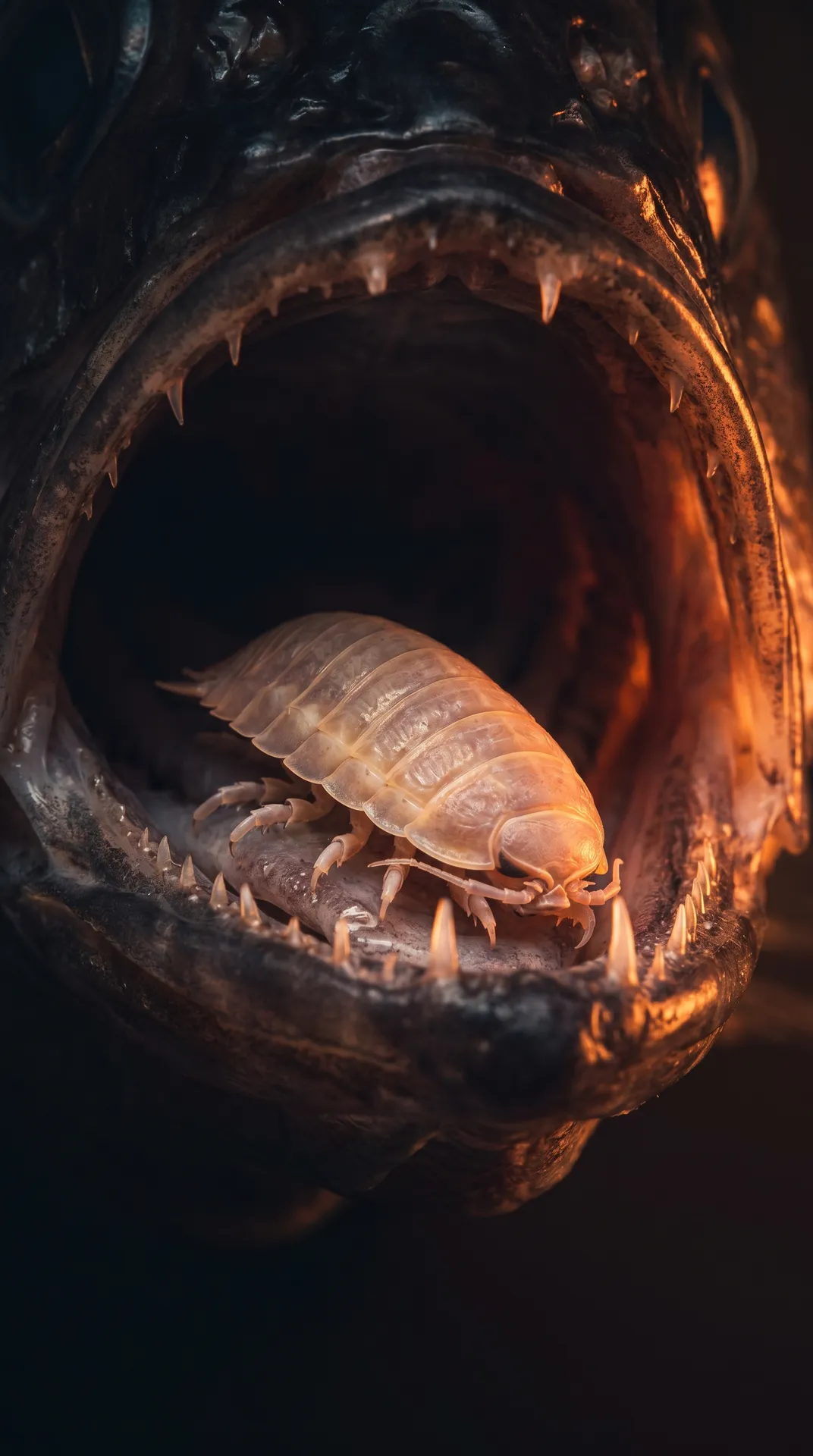
The parasite that eats a fish's tongue and becomes the new one
This creature eats a fish's tongue — and then becomes the new tongue.
Which one is REALLY true about the Tongue-Eating Louse?
The short version
The tongue-eating louse enters through a fish's gills, drinks the tongue's blood until it withers and falls off, then clamps onto the stub and becomes a functioning replacement tongue the fish uses to grip food. It's the only known parasite that fully replaces a host organ.
Why it's so weird
- ✓The Tongue-Eating Louse replaces a host's entire tongue and becomes a living, working substitute for it.
- ✓The Tongue-Eating Louse swims in through a fish's gills while still young and latches onto the base of the tongue.
- ✓The Tongue-Eating Louse drinks the tongue's blood until it withers and falls off completely.
- ✓The Tongue-Eating Louse lets the fish grip food with it, just like a real tongue, for years.
- ✓The Tongue-Eating Louse is the only known case of a parasite fully replacing an organ of its host.
You could line up about 31 of them along a 7-year-old!
The full story
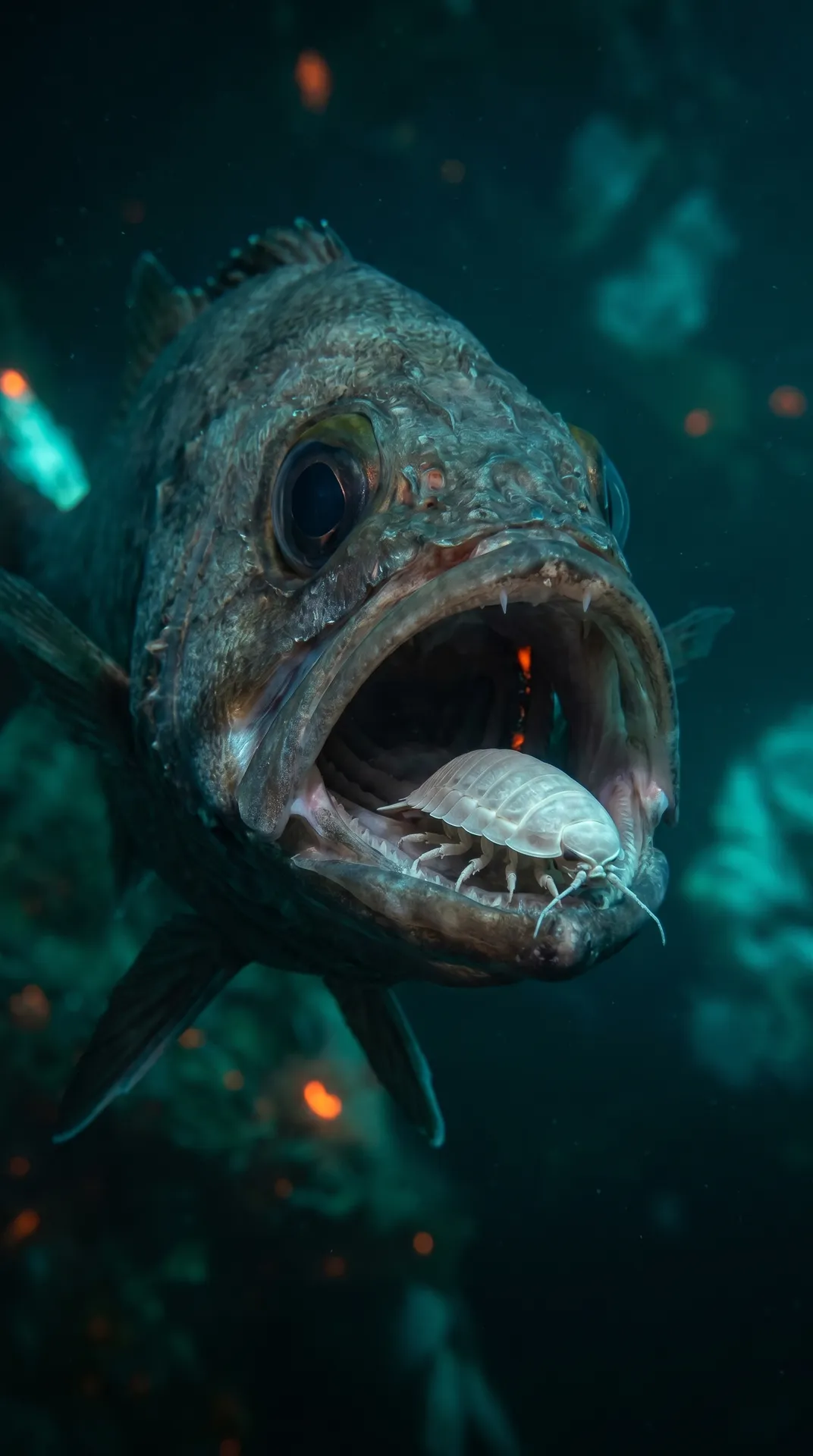
This tiny creature does something straight out of a nightmare. It eats a fish's tongue, and then it takes its place. Meet the tongue-eating louse, a small parasite that swims in through a fish's gills while it is still young. It latches onto the base of the tongue and slowly drinks its blood until the tongue withers away and falls off completely. But here is the truly disturbing part. The louse does not leave. It clamps onto the leftover stub and becomes a living, functioning replacement tongue. The fish then uses the parasite to grip its food, just like a real tongue, and the two of them live together for years. It is the only known case of a parasite completely replacing an organ of its host. Amazingly, the fish often survives and keeps feeding for years, simply sharing its mouth with the creature that replaced its tongue. Nature's most unsettling roommate. Follow for more weird animal facts.
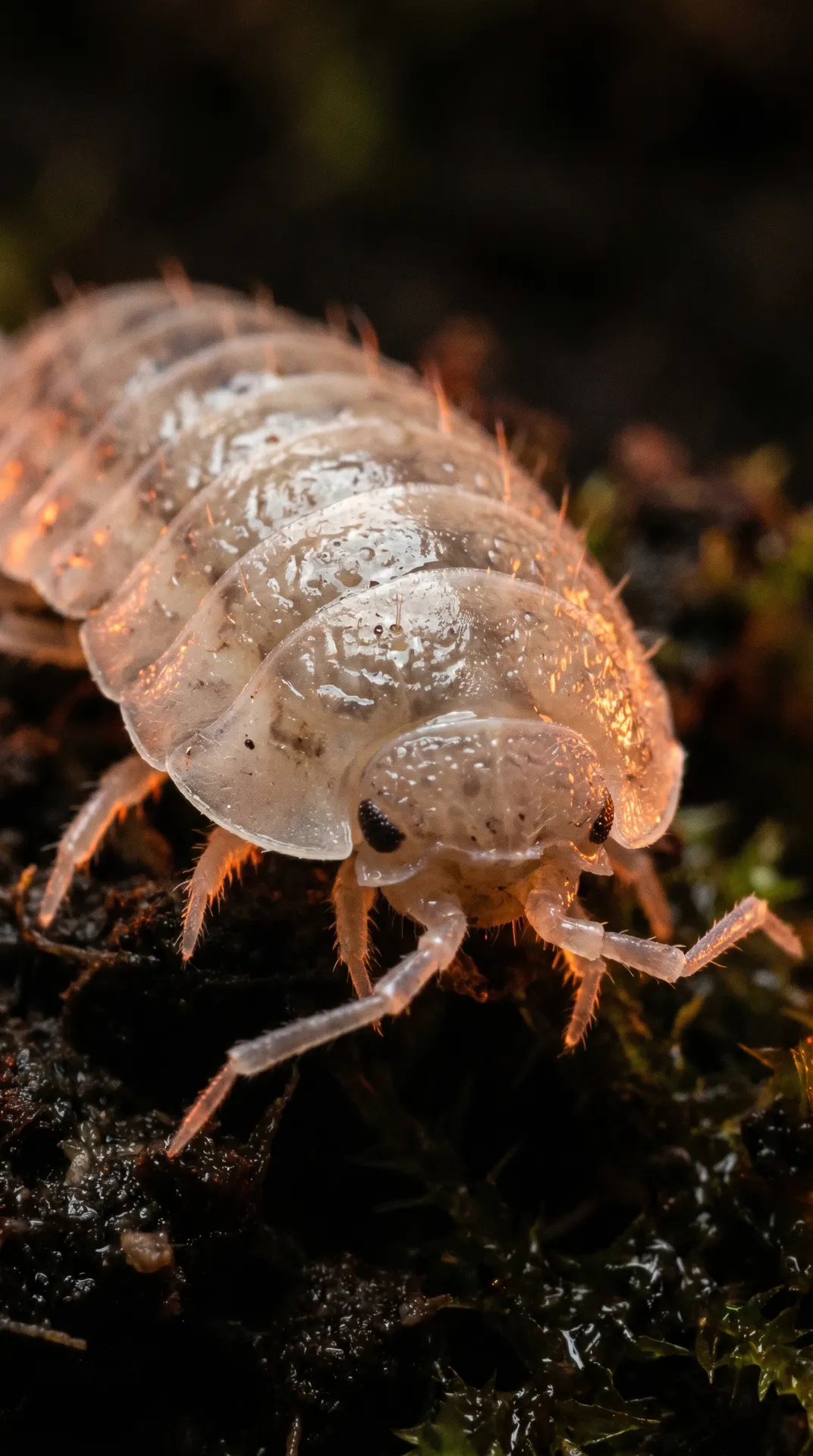
The louse is an isopod, a crustacean cousin of pillbugs, not a real insect louse. A young one slips in through the gills, where water already flows in, then crawls to the tongue and uses hooked legs to cut the tiny blood vessels feeding it. With no blood supply the tongue's tissue dies and drops off, just like a body part that loses its circulation. The louse then clamps onto the leftover stub, and because it sits exactly where the tongue did, the fish can press food against it the same way, so it works as a stand-in tongue.
📚 Source: Tongue-Eating Louse Actually Eats Tongues - Ocean Conservancy ↗Scientists examined parasitized fish and found tiny scrapes and grooves worn into the louse's back, exactly the wear expected if the fish had been pressing food against it like a real tongue, while watching the fish live and feed normally with the louse in place.
📚 Source: A Mean Mouthful - Wildlife Photographer of the Year, Natural History Museum ↗Watch the 45-second version
Tongue-Eating Louse gallery
Check what you learned
No score, no pressure — just see what stuck. Tap Real or Fake.
“The Tongue-Eating Louse replaces a host's entire tongue and becomes a living, working substitute for it.”
“The Tongue-Eating Louse snaps its spring-loaded jaws shut in under a single millisecond, one of the fastest movements ever recorded in any animal.”
“The Tongue-Eating Louse swims in through a fish's gills while still young and latches onto the base of the tongue.”