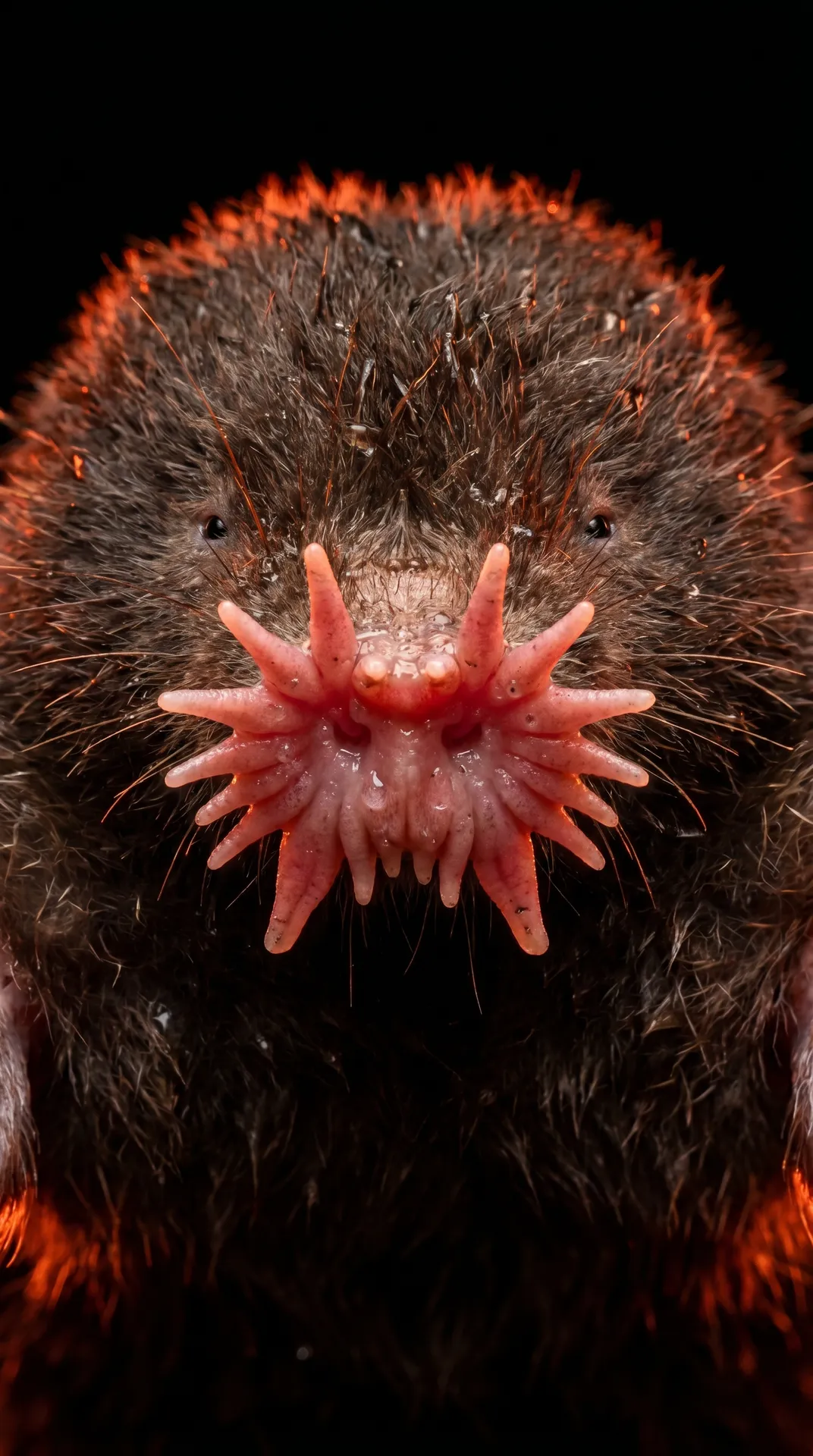
The blind mole that sees with 22 fingers on its face
This mole sees with 22 pink fingers growing out of its face — and eats faster than your brain can react.
Which one is REALLY true about the Star-Nosed Mole?
The short version
The star-nosed mole is nearly blind but feels the world with a 22-tentacle star covered in over 25,000 sensors, the most sensitive touch organ known in any mammal. It can find, identify, and eat prey in about 8 milliseconds, making it the fastest-eating mammal on Earth.
Why it's so weird
- ✓The Star-Nosed Mole can find, identify, and swallow in about 8 milliseconds, making it the fastest-eating mammal on Earth.
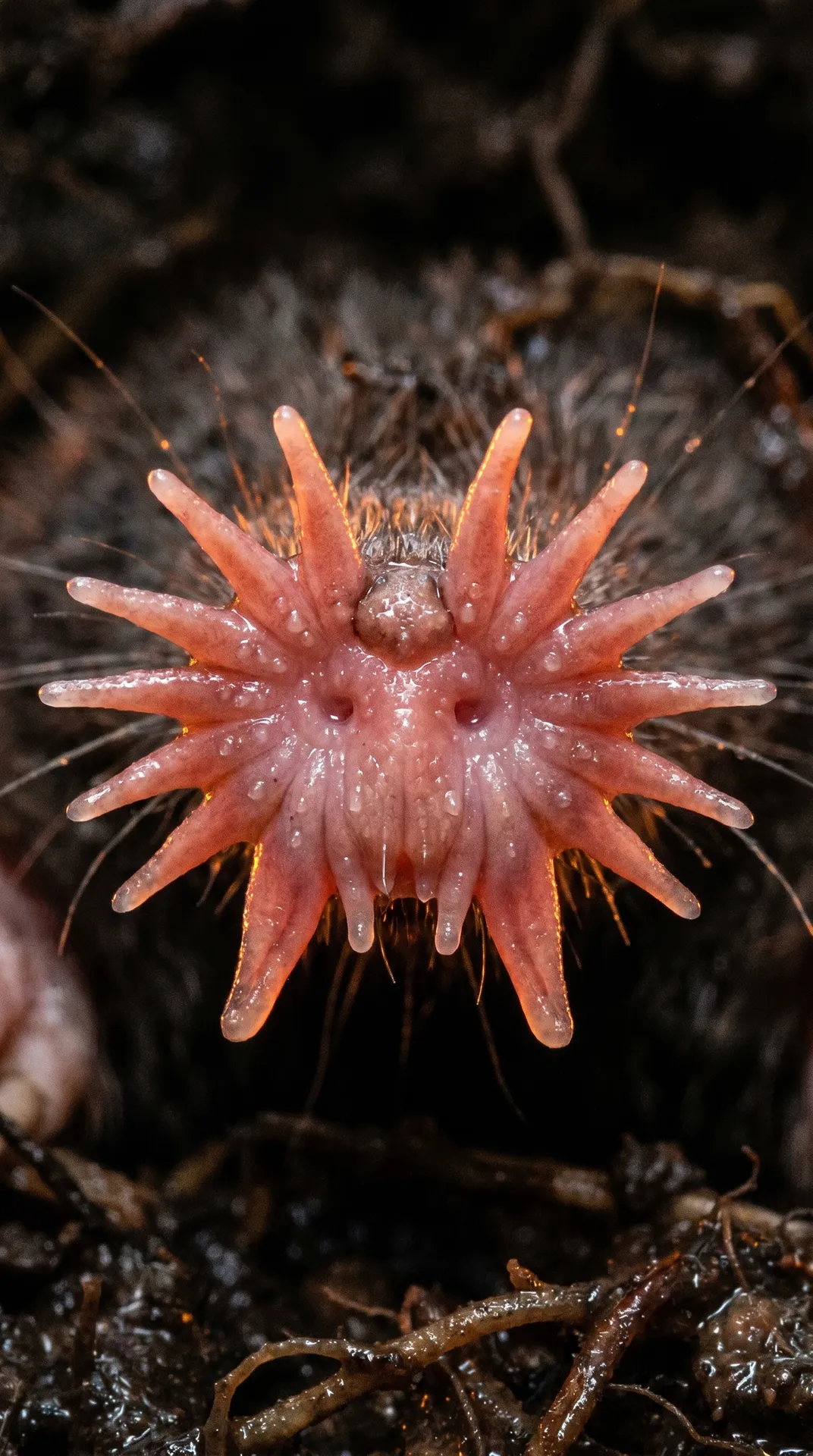
- ✓The Star-Nosed Mole feels the world with 22 pink fingers growing straight out of its face instead of seeing.
- ✓The Star-Nosed Mole has over 25,000 tiny touch sensors on its star, the most sensitive patch of skin known in any mammal.
- ✓The Star-Nosed Mole taps its star against the ground up to a dozen times a second to build a map of everything around it by touch.
- ✓The Star-Nosed Mole is almost completely blind but does not need eyes to hunt.
You could line up about 6 of them along a 7-year-old!
The full story
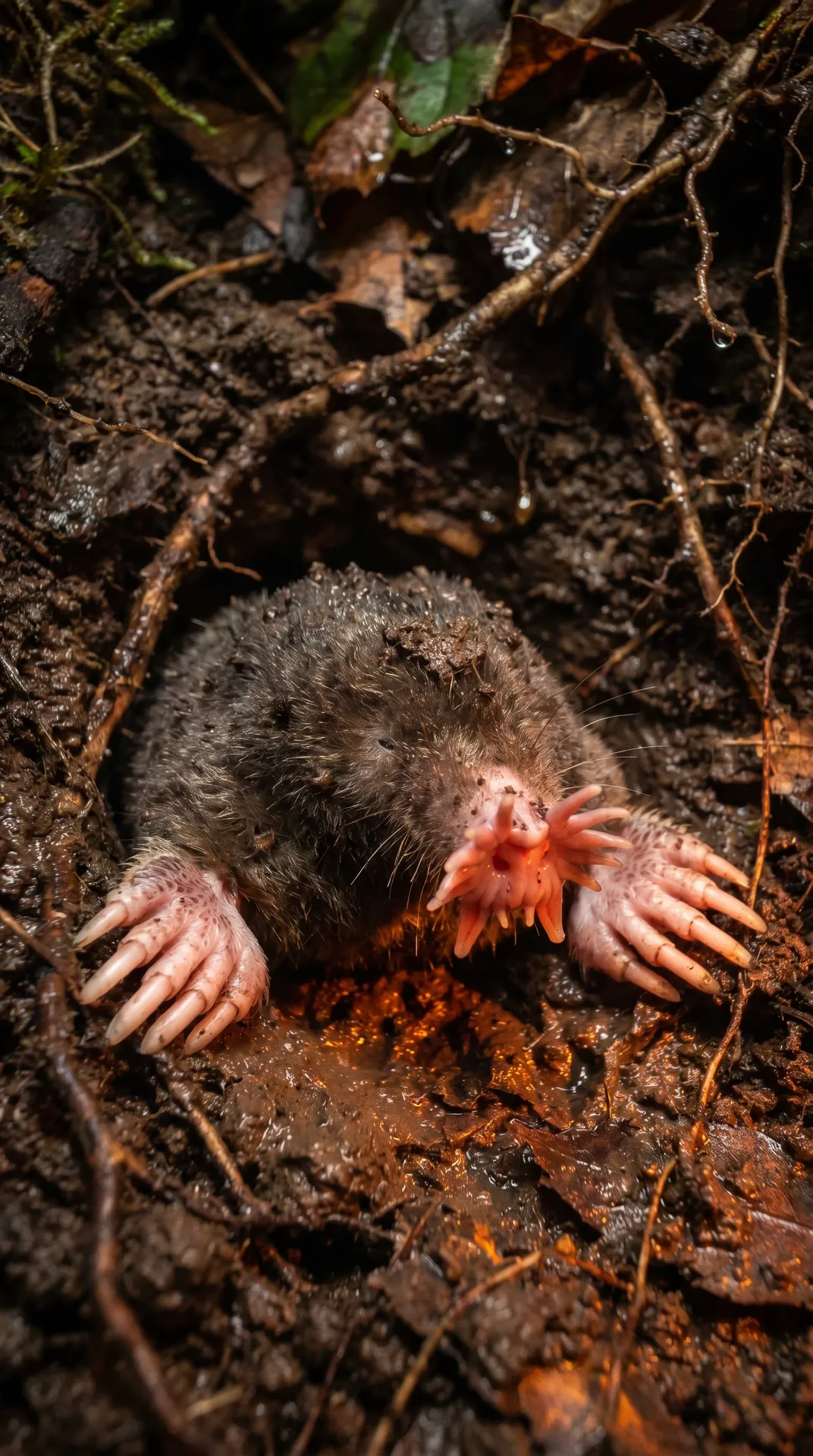
This mole does not really see at all. Instead it feels the world with twenty-two pink fingers growing straight out of its face. Meet the star-nosed mole, one of the strangest hunters on the entire planet. That weird star is not a hand and it is not for digging. It is a touch organ covered in over twenty-five thousand tiny sensors, making it the most sensitive patch of skin known in any mammal. The mole is almost completely blind, but it does not need eyes. It taps that star against the ground up to a dozen times a second, building a map of everything around it by touch alone. And it is fast. It can find a bug, identify it, and swallow it in about eight milliseconds, quicker than your brain can even react. It is officially the fastest eating mammal on Earth. Follow for more weird animal facts.
The star isn't a nose for smelling - it's a skin organ packed with about 25,000 tiny touch bumps called Eimer's organs, wired to the brain by roughly 100,000 nerves. When a bump presses against something, those nerves fire and rush the touch signal to a special enlarged 'touch map' in the mole's brain. Because the signals travel so fast and the brain has so much space set aside just for the star, the mole's nervous system can decide 'food or not food?' in only about 8 thousandths of a second - faster than you can blink. Living in dark, muddy tunnels, eyes would be almost useless, so touch became its main way to 'see'.
📚 Source: Star-Nosed Mole - Catania Lab, Vanderbilt University ↗Neuroscientist Kenneth Catania filmed star-nosed moles with high-speed cameras (recording hundreds of frames per second) and watched, frame by frame, the star tap the ground 10-15 times a second and pause on prey for only about 8 milliseconds before the mole ate it.
📚 Source: Asymptotic prey profitability drives star-nosed moles to the foraging speed limit (Nature, Catania & Remple 2005) ↗Watch the 45-second version
Star-Nosed Mole gallery
Check what you learned
No score, no pressure — just see what stuck. Tap Real or Fake.
“The Star-Nosed Mole can find, identify, and swallow prey in about 8 milliseconds, making it the fastest-eating mammal on Earth.”
“The Star-Nosed Mole carries its eggs embedded in the skin of its own back, each sealed into its own little pocket.”
“The Star-Nosed Mole feels the world with 22 pink fingers growing straight out of its face instead of seeing.”