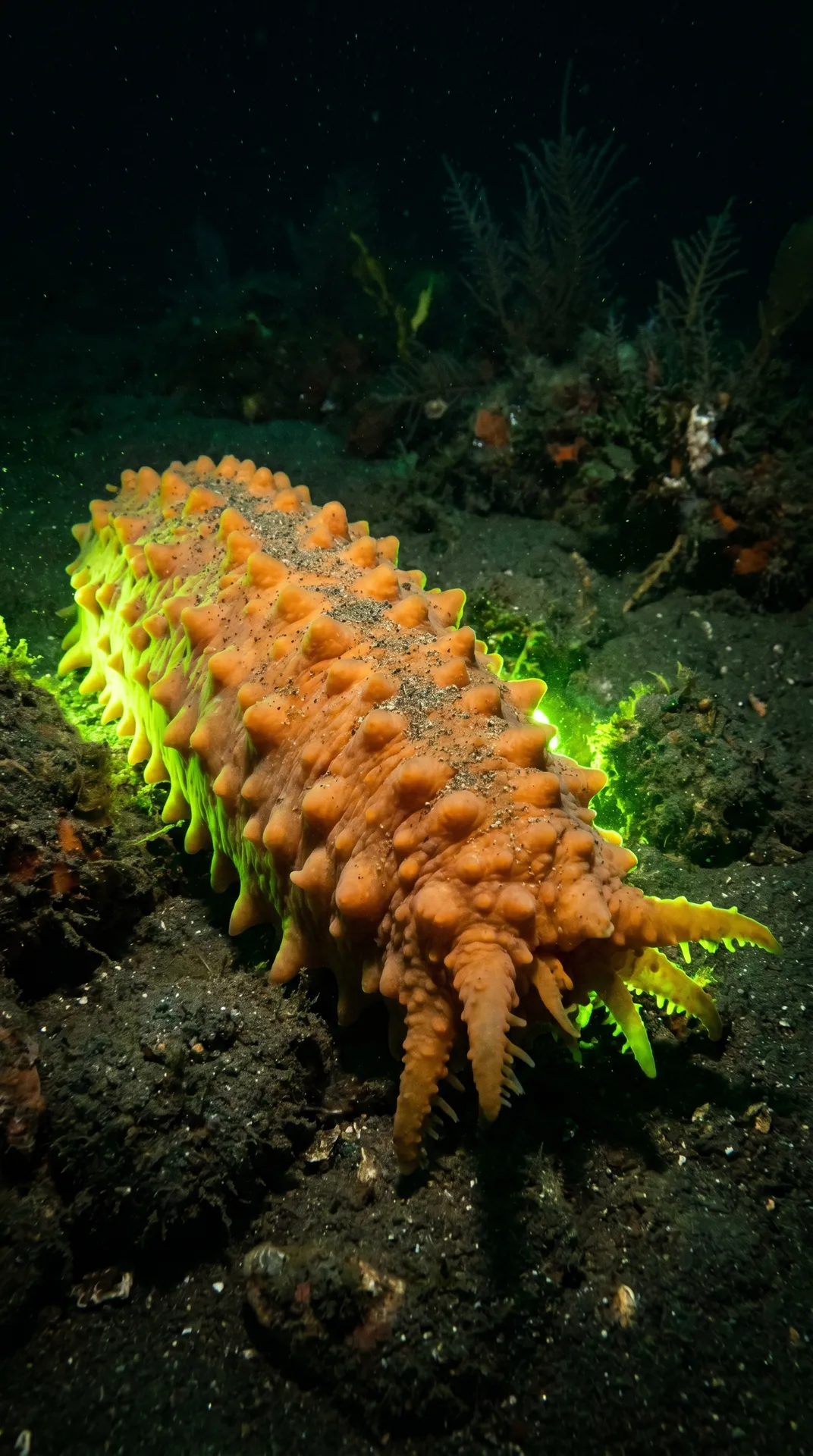
The animal that shoots its own guts at attackers
When this animal gets scared, it fires its own guts out of its body at whatever is attacking it.
Which one is REALLY true about the Sea Cucumber?
The short version
The sea cucumber defends itself by violently ejecting its sticky, toxic internal organs out of its rear to trap predators, then crawls away and regrows every organ within weeks. Some species even breathe through their back end.
Why it's so weird
- ✓The Sea Cucumber shoots its own sticky internal organs out of its rear at attackers.
- ✓The Sea Cucumber every organ it threw away within a few weeks, good as new.
- ✓The Sea Cucumber uses ejected guts that are tangled and toxic to trap a while it crawls away.
- ✓The Sea Cucumber is a soft, squishy tube that crawls along the ocean floor.
- ✓The Sea Cucumber can breathe through its back end.
You could line up about 1 of them along a 7-year-old!
The full story
When this animal gets scared, it fires its own guts out of its body at whatever is attacking it. Meet the sea cucumber, a soft, squishy tube that crawls along the ocean floor. It looks completely harmless, and honestly it mostly is, until something tries to eat it. Then it pulls off one of the strangest defenses in all of nature. It violently contracts its body and ejects its sticky internal organs straight out of its rear end. Those organs are tangled, toxic, and almost impossible to escape, trapping the predator while the cucumber quietly crawls away. And here is the wild part. It does not die. Over the next few weeks, it simply regrows every single organ it threw away, good as new. Some species can even breathe through that same back end. A living tube that weaponizes its own insides. Follow for more weird animal facts.
The sea cucumber doesn't really fire its guts on purpose like a cannon — it uses water pressure. Many sea cucumbers store sticky threads called Cuvierian tubules inside their body, attached near their breathing parts. When a predator attacks, the animal squeezes its muscles hard, water rushes into the threads, and they shoot out the rear and stretch up to 20 times longer, getting sticky in seconds. The threads also hold a natural poison (a chemical called holothurin), so a tangled-up crab or fish gets a nasty, gluey surprise while the sea cucumber escapes and slowly regrows the parts it lost.
📚 Source: Cuvierian tubules — Wikipedia ↗Scientists know this from lab studies of species like Holothuria forskali, where researchers triggered the defense, measured the sticky threads stretching and gripping objects in under ten seconds, chemically identified the toxin, and then watched the animals regrow the lost tubules over about five weeks.
📚 Source: Maintaining the line of defense: regeneration of Cuvierian tubules in the sea cucumber Holothuria forskali — PubMed ↗Watch the 45-second version
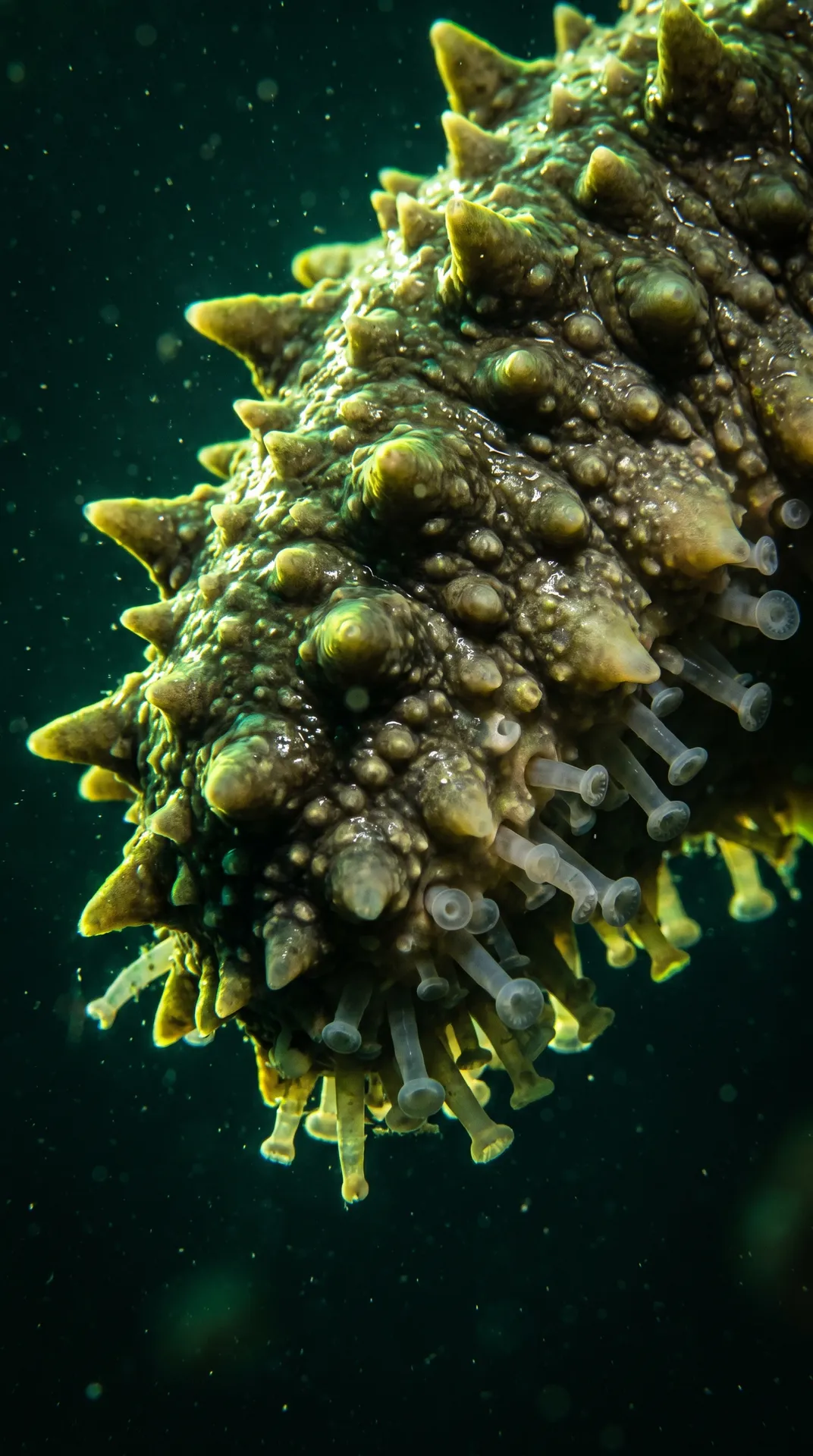
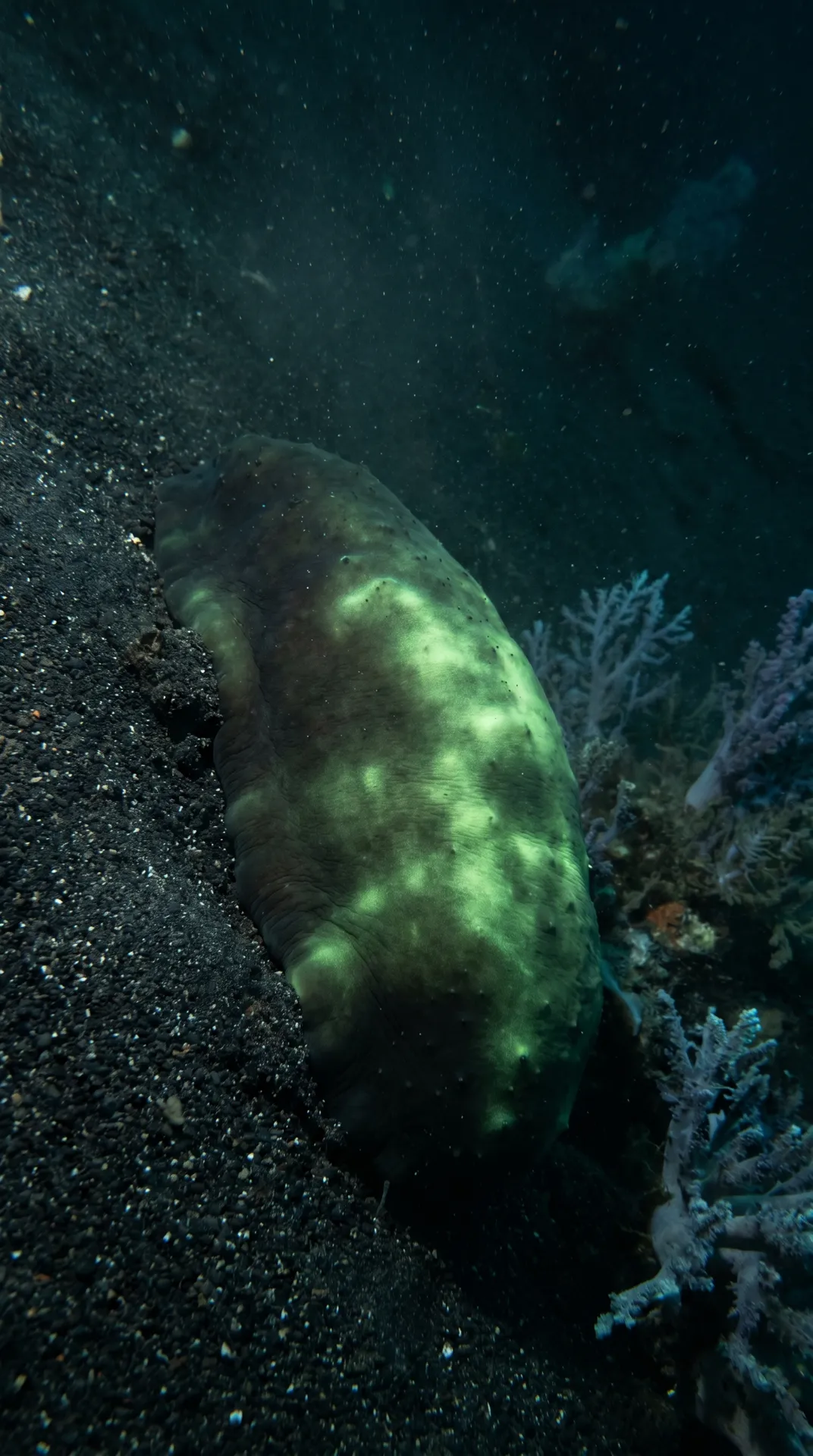
Sea Cucumber gallery
Check what you learned
No score, no pressure — just see what stuck. Tap Real or Fake.
“The Sea Cucumber shoots its own sticky internal organs out of its rear at attackers.”
“The Sea Cucumber holds hands while sleeping so it doesn't drift apart in the night.”
“The Sea Cucumber regrows every organ it threw away within a few weeks, good as new.”