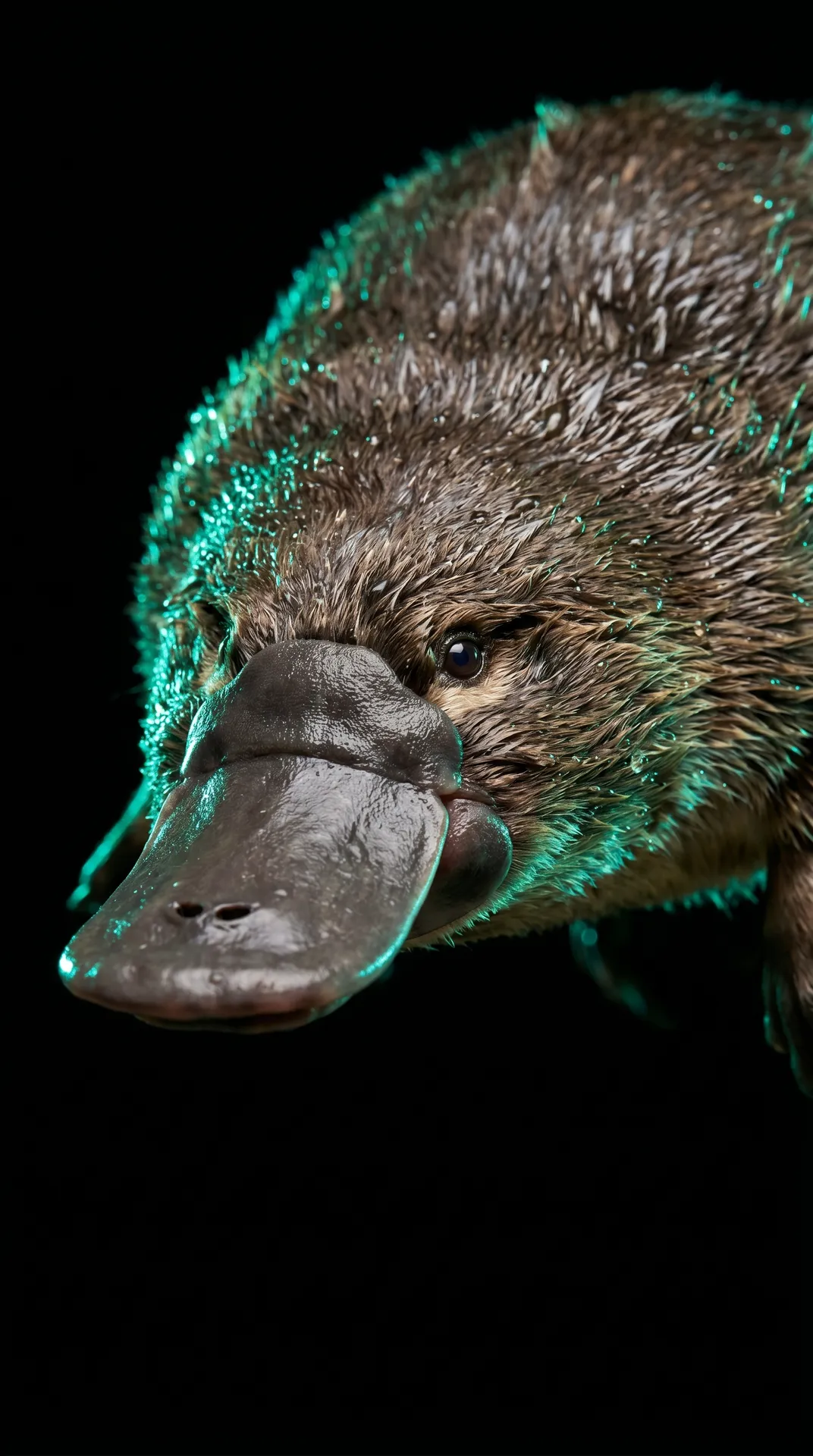
The animal that's venomous, lays eggs, and glows in the dark
This animal is venomous, lays eggs, and glows in the dark — and scientists thought it was a hoax.
Which one is REALLY true about the Platypus?
The short version
The platypus is one of only a few mammals that lay eggs. Males carry venomous spurs, it hunts with its eyes shut by sensing the electric fields of its prey through 40,000 receptors in its bill, it has no stomach, mothers sweat milk through their skin, and its fur glows blue-green under UV light.
Why it's so weird
- ✓The Platypus hunts with its eyes, ears, and nose shut, using 40,000 sensors in its bill to feel the electric pulses of its .
- ✓The Platypus is one of the only mammals that lays eggs instead of giving birth.
- ✓The Platypus carries sharp spurs on the back legs of males, strong enough to drop a dog.
- ✓The Platypus has no stomach at all, so food passes straight from gullet to gut.
- ✓The Platypus glows blue-green under ultraviolet light.
You could line up about 2 of them along a 7-year-old!
The full story
This animal is venomous, lays eggs, and glows in the dark — and scientists once thought it was a hoax. Meet the platypus, the strangest mammal on Earth. When the first one reached Britain, experts assumed somebody had stitched a duck bill onto a beaver. But it is completely real. It is one of the only mammals that lays eggs instead of giving birth. The males have sharp spurs on their back legs that deliver venom strong enough to drop a dog. It has no stomach at all, and the mothers have no nipples, so they literally sweat milk through their skin. And it hunts with its eyes, ears, and nose shut, using forty thousand sensors in its bill to feel the tiny electric pulses of its prey. Oh, and under ultraviolet light, its fur glows blue-green. Follow for more weird animal facts.
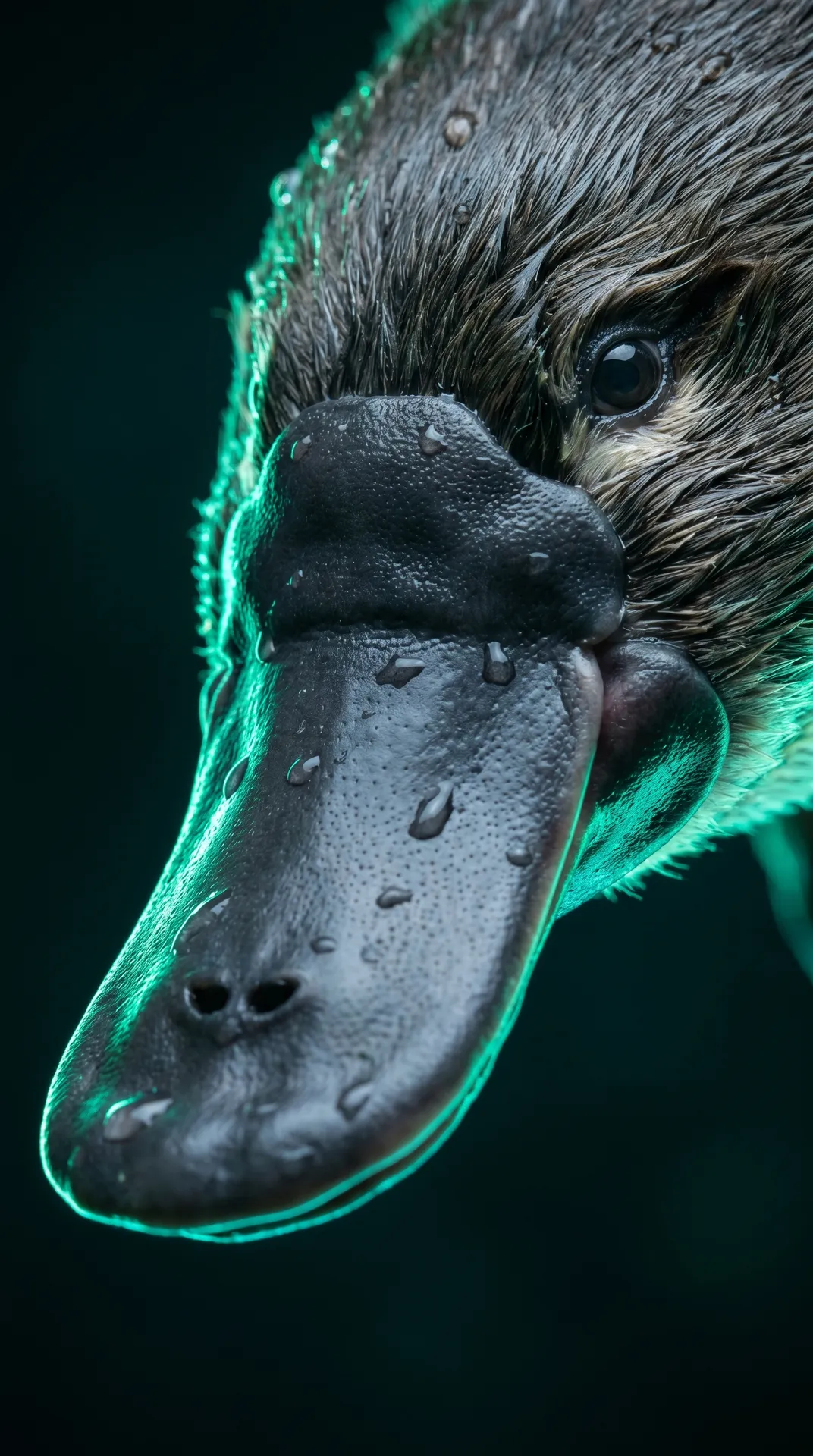
When a shrimp or insect larva twitches its muscles underwater, those muscles make a tiny burst of electricity. The platypus closes its eyes, ears, and nose underwater, so instead it 'reads' those faint electric sparks with about 40,000 special sensors in its rubbery bill. Other sensors in the bill feel the ripples the prey makes in the water. Because electricity zips through water faster than ripples do, the electric signal arrives a split second sooner, and the platypus uses that tiny time gap to work out how far away its dinner is.
📚 Source: To Hunt, the Platypus Uses Its Electric Sixth Sense — American Museum of Natural History ↗Scientists confirmed it by recording the electrical responses of nerves in the platypus's bill in the lab, finding receptors that fire to weak electric fields, and by watching platypuses in tanks swing their bills toward a small hidden electric source (like a 1.5-volt battery) even though they couldn't see it.
📚 Source: Electroreceptors in the platypus (Scheich et al., 1986) — Nature / PubMed ↗Watch the 45-second version
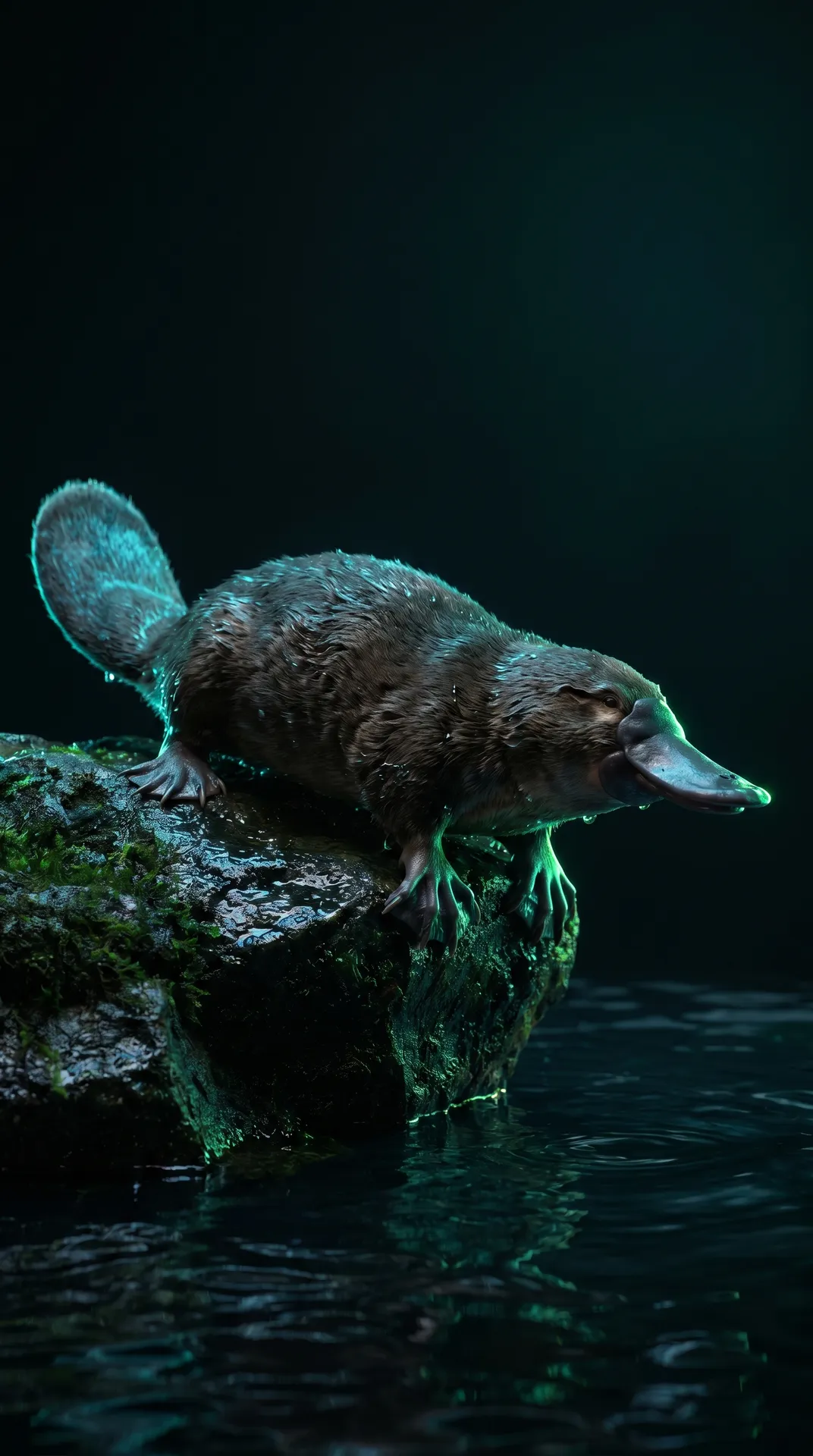
Platypus gallery
Check what you learned
No score, no pressure — just see what stuck. Tap Real or Fake.
“The Platypus hunts with its eyes, ears, and nose shut, using 40,000 sensors in its bill to feel the electric pulses of its prey.”
“The Platypus builds its home on the side of a deep-sea hydrothermal vent, kilometres below the surface.”
“The Platypus is one of the only mammals that lays eggs instead of giving birth.”