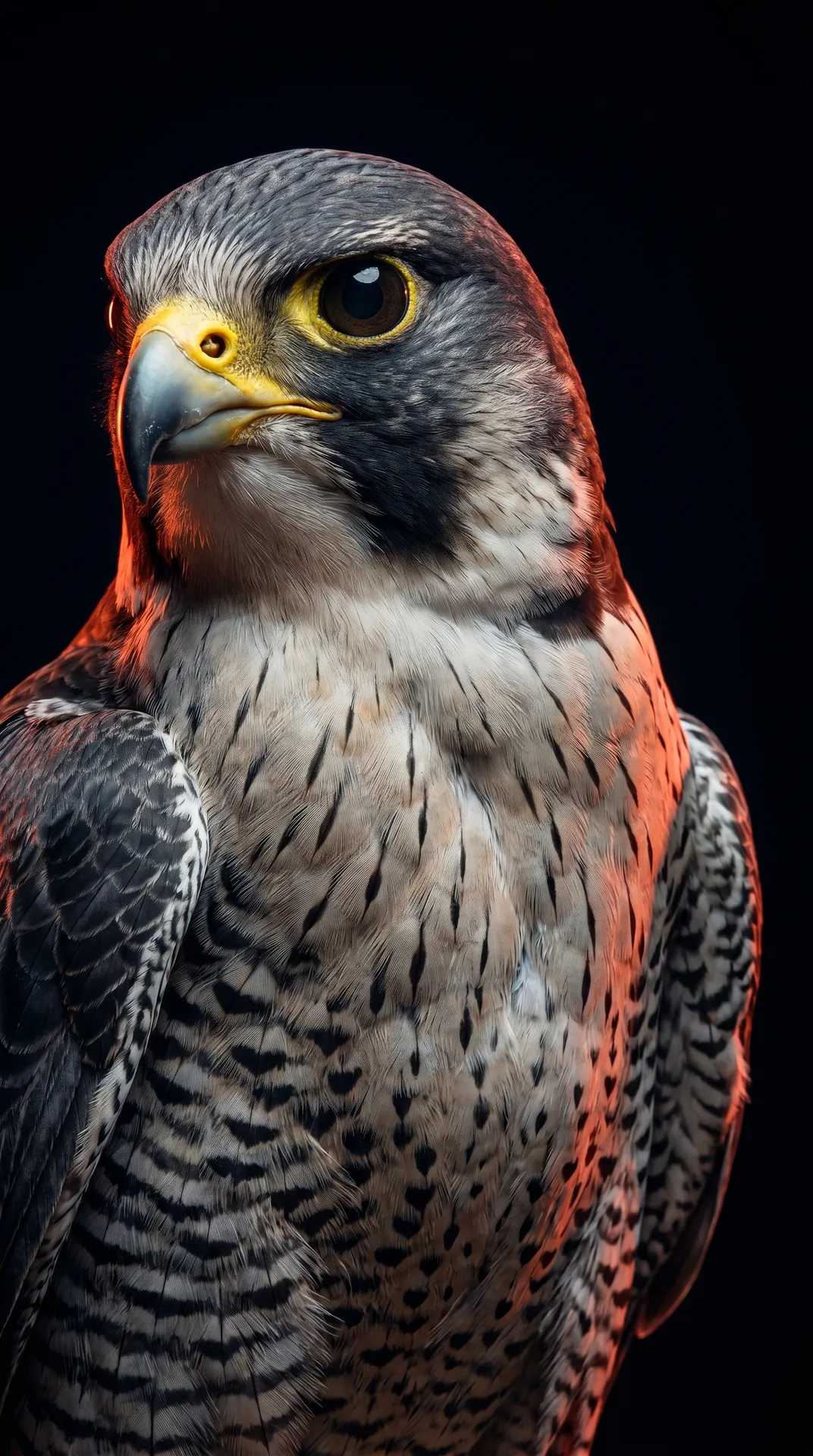
The fastest animal on Earth dives at 240 miles per hour
This bird hits 240 miles per hour in a dive — faster than a Formula 1 car.
Which one is REALLY true about the Peregrine Falcon?
The short version
The peregrine falcon is the fastest animal on the planet. In its hunting stoop it folds its wings and plummets at over 240 mph, striking prey midair with a closed foot. Cone-shaped baffles in its nostrils slow the rushing air so the pressure doesn't burst its lungs.
Why it's so weird
- ✓The Peregrine Falcon dives at over 240 miles per hour, making it the fastest animal on the planet.
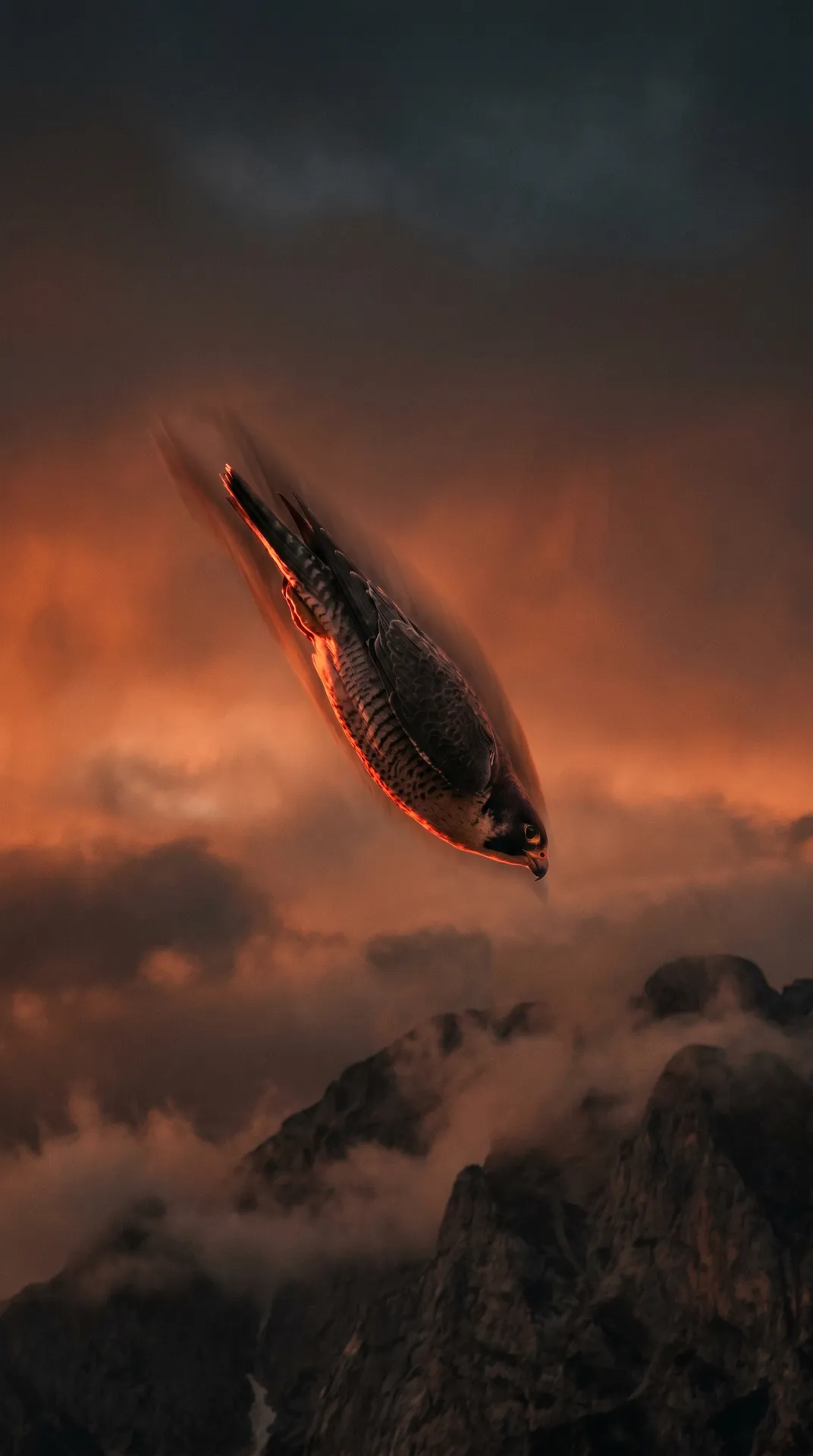
- ✓The Peregrine Falcon folds its wings into a teardrop shape and drops out of the sky in a hunting move called the stoop.
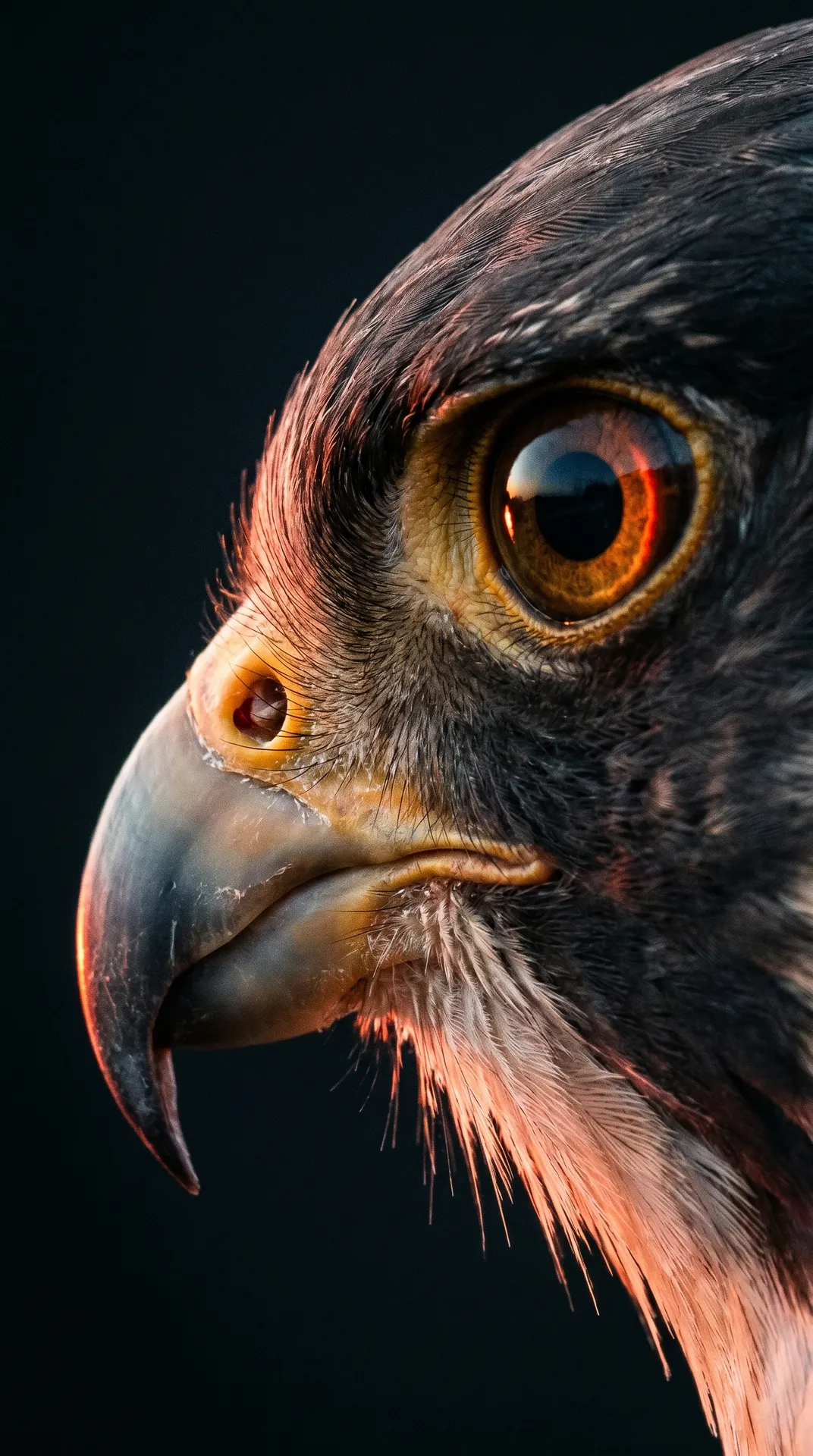
- ✓The Peregrine Falcon has tiny cone-shaped baffles inside its nostrils that slow the rushing air so the pressure doesn't burst its lungs.
- ✓The Peregrine Falcon strikes midair with a closed foot like a knockout punch, often killing it instantly.
- ✓The Peregrine Falcon can spot a pigeon from over a mile away and keeps a third eyelid wiping its eyes clean so it never loses sight of the target.
The Peregrine Falcon is about the same length as a 7-year-old.
The full story
This bird dives at 240 miles per hour — faster than a Formula 1 car at full throttle. Meet the peregrine falcon, the fastest animal on the entire planet. When it spots a target, it folds its wings into a teardrop shape and drops out of the sky in what is called a stoop. At that speed, the air rushing in should burst its lungs, so it has tiny cone-shaped baffles inside its nostrils that slow the air down before it hits. It strikes its prey midair with a closed foot, like a punch, knocking it out instantly. A special third eyelid keeps wiping its eyes clean so it never loses sight of the target. Its eyesight is so sharp it can spot a pigeon from over a mile away. Nothing on Earth moves faster. Follow for more weird animal facts.
The falcon climbs high, then tucks its wings into a teardrop shape so air slips past with almost no drag, letting gravity pull it faster and faster in the dive called a stoop. Tiny bony bumps inside its nostrils are thought to help slow and steady the blasting air rushing in, so it can keep breathing during the dive. It hits prey with a balled-up foot like a fist because a hard punch at over 200 mph stuns the target instantly and is safer than trying to grab at full speed. Its sharpest focus spot (the deep fovea) points off to one side, so it curves in along a spiral path to keep prey in clearest view, while a clear third eyelid keeps wiping its eyes during the dive.
📚 Source: Peregrine Falcon Life History, All About Birds, Cornell Lab of Ornithology ↗Scientists Vance Tucker and colleagues tracked wild peregrines through binoculars, telescopes, and a tracking device and measured that the birds approach prey along curved, spiral-shaped flight paths, keeping their heads straight to cut drag while their angled sharp-vision spot stays aimed at the target, published in the Journal of Experimental Biology in 2000.
📚 Source: Curved Flight Paths and Sideways Vision in Peregrine Falcons (Falco peregrinus), Journal of Experimental Biology (Tucker et al., 2000) ↗Watch the 45-second version
Peregrine Falcon gallery
Check what you learned
No score, no pressure — just see what stuck. Tap Real or Fake.
“The Peregrine Falcon dives at over 240 miles per hour, making it the fastest animal on the planet.”
“The Peregrine Falcon is the smallest armadillo on Earth, barely the length of your hand.”
“The Peregrine Falcon folds its wings into a teardrop shape and drops out of the sky in a hunting move called the stoop.”