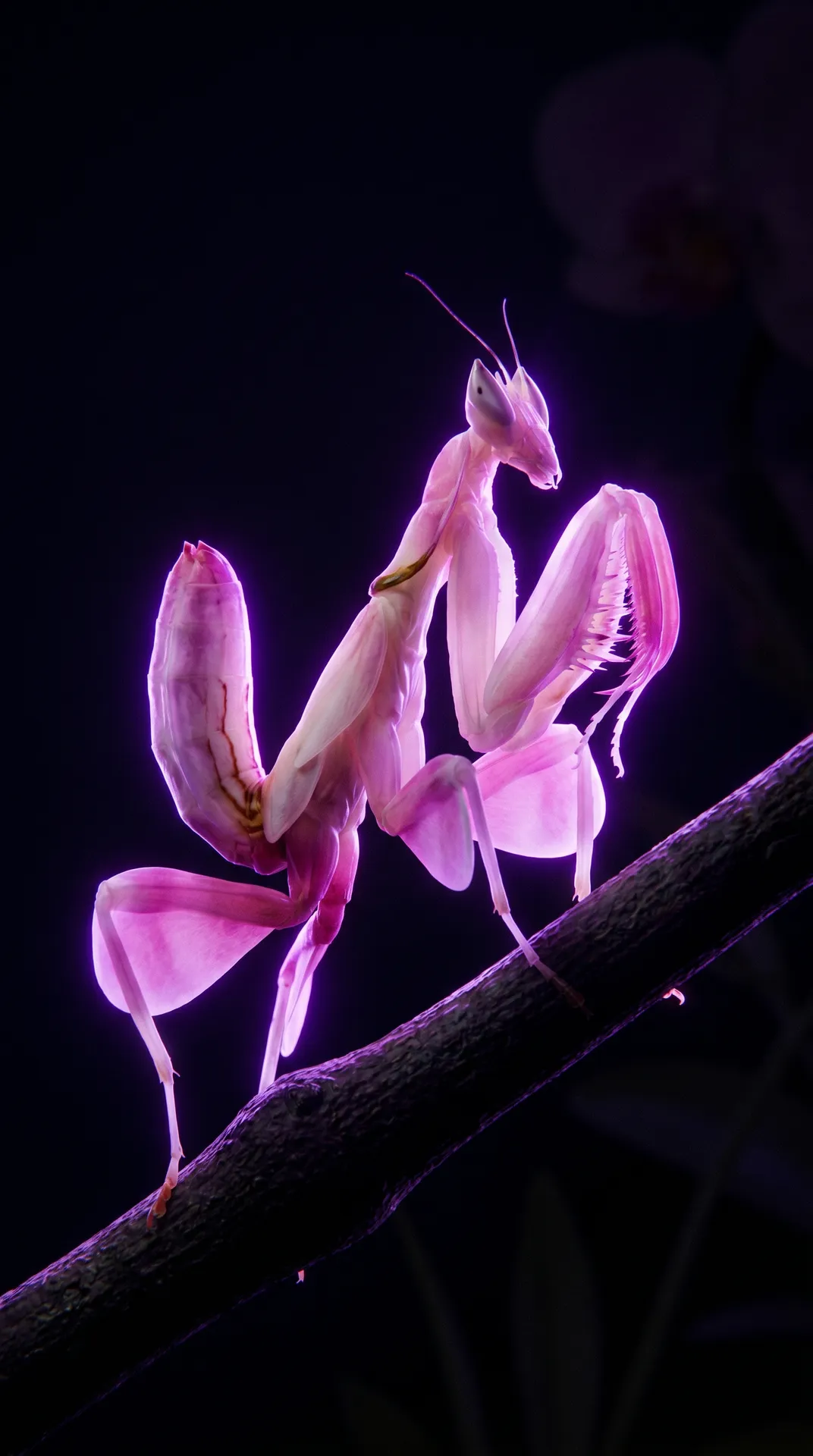
The insect disguised as a flower that bees prefer to real flowers
This insect is disguised as a flower so perfectly that bees pick it over the real thing.
Which one is REALLY true about the Orchid Mantis?
The short version
The orchid mantis has petal-shaped legs that mimic a flower so well that pollinators are drawn to it more than to real nearby flowers. It waits motionless, then strikes prey in a fraction of a second with spiked front legs, and can slowly shift its color to match its surroundings.
Why it's so weird
- ✓The Orchid Mantis lures bees better than a real flower does, so pollinators fly toward it instead.
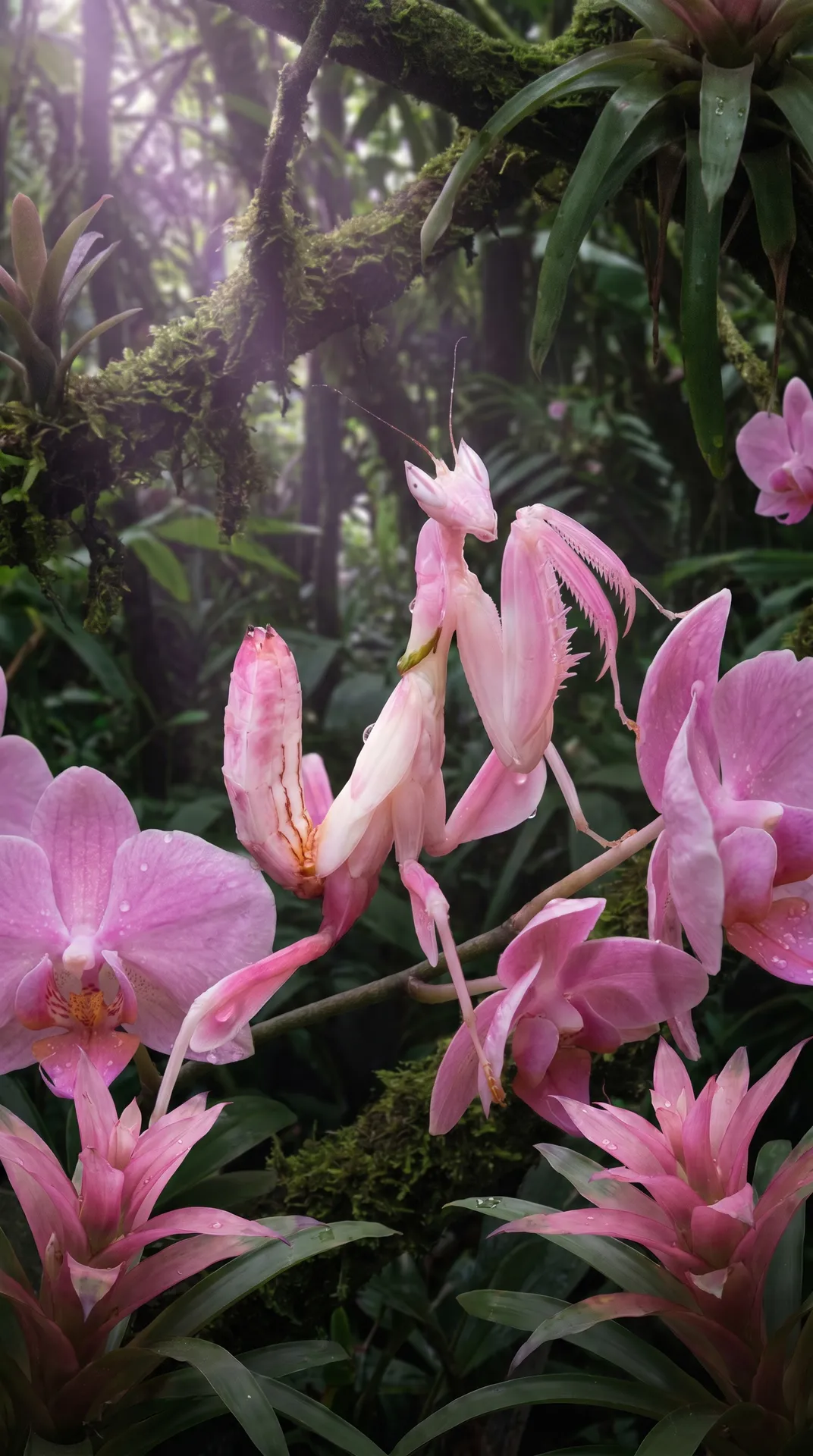
- ✓The Orchid Mantis has legs shaped and colored like soft pink and white petals, mimicking a blossom swaying in the breeze.
- ✓The Orchid Mantis sits motionless among the plants and waits for to come to it.
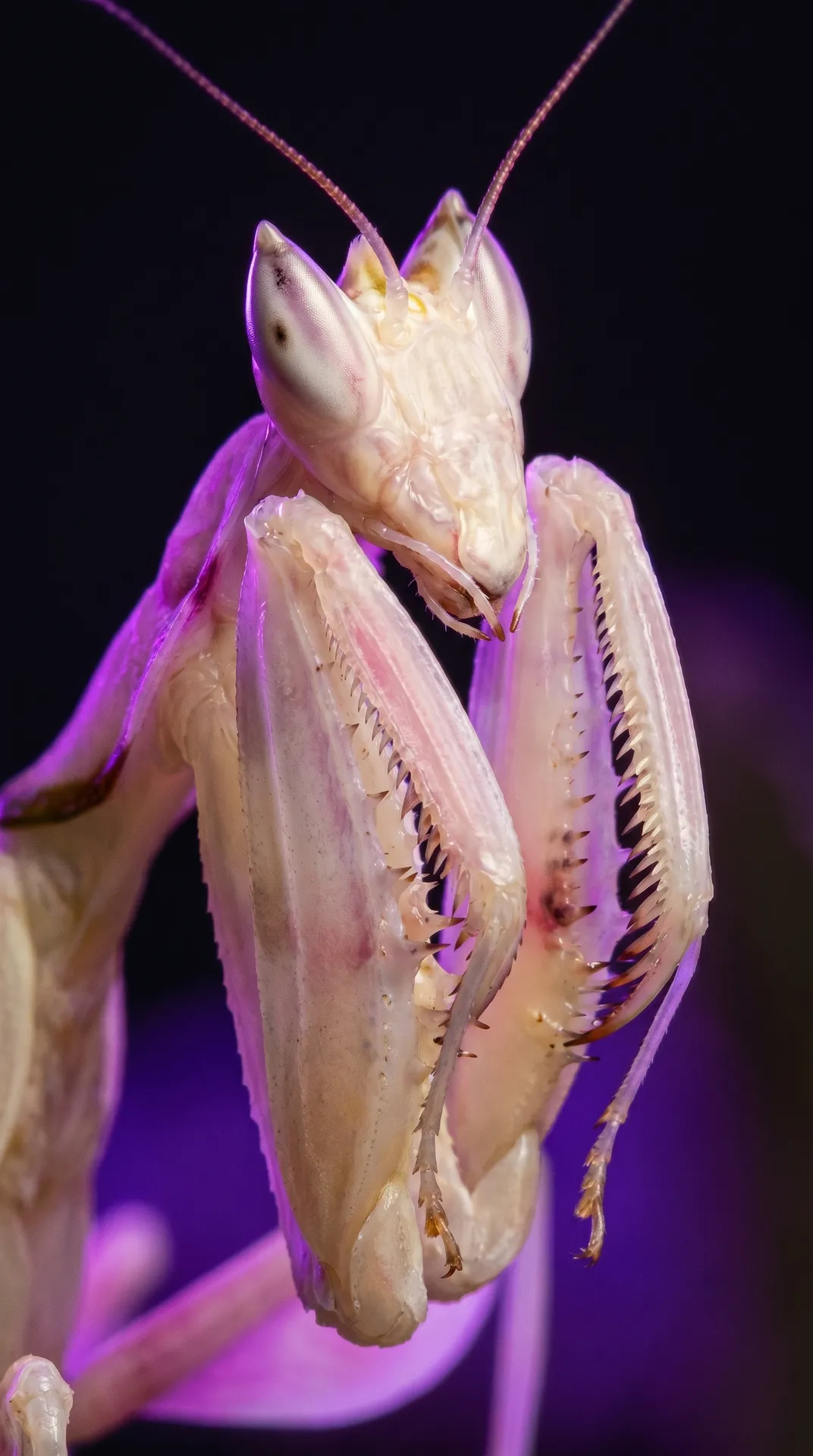
- ✓The Orchid Mantis strikes in a fraction of a second, snatching with spiked front legs.
- ✓The Orchid Mantis can slowly change its shade to better match whatever is around it.
You could line up about 17 of them along a 7-year-old!
The full story
This is not a flower. It is a predator in disguise, and it is somehow even better at attracting insects than real flowers are. Meet the orchid mantis, a master of camouflage from the rainforests of Asia. Its legs are shaped and colored like soft pink and white petals, so it looks exactly like a blossom gently swaying in the breeze. It simply sits and waits among the plants, and pollinators like bees and butterflies fly straight toward it, completely fooled. Studies actually found that insects are drawn to the fake mantis more often than to the real flowers nearby. When prey gets close enough, the mantis strikes in a fraction of a second, snatching it with spiked front legs. It can even slowly change its shade to better match whatever is around it. A flower that quietly hunts. Follow for more weird animal facts.
A flower lures bees with its color and with the way it soaks up ultraviolet (UV) light, which bees can see but people cannot. The orchid mantis fakes both: its petal-shaped legs and body match the color and UV pattern of nearby flowers so closely that, to a bee's eyes, the mantis looks just like a blossom. The bee flies in expecting nectar, and the mantis's strong, spring-loaded front legs snap shut on it. Its shade can slowly shift between whiter and pinker as it grows, but scientists are still working out exactly what controls that change.
📚 Source: O'Hanlon, Holwell & Herberstein, "Pollinator Deception in the Orchid Mantis," The American Naturalist (2014) ↗In a 2014 field study in Malaysia, scientists set real orchid mantises out in the wild and counted that pollinators flew toward the mantises more often than toward nearby real flowers, and they used color and UV measurements to show the mantis looks like a flower to a bee's eyes.
📚 Source: O'Hanlon, Holwell & Herberstein, "Pollinator Deception in the Orchid Mantis," The American Naturalist (2014) ↗Watch the 45-second version
Orchid Mantis gallery
Check what you learned
No score, no pressure — just see what stuck. Tap Real or Fake.
“The Orchid Mantis lures bees better than a real flower does, so pollinators fly toward it instead.”
“The Orchid Mantis can rotate its head up to 270 degrees — three quarters of a full circle.”
“The Orchid Mantis has legs shaped and colored like soft pink and white petals, mimicking a blossom swaying in the breeze.”