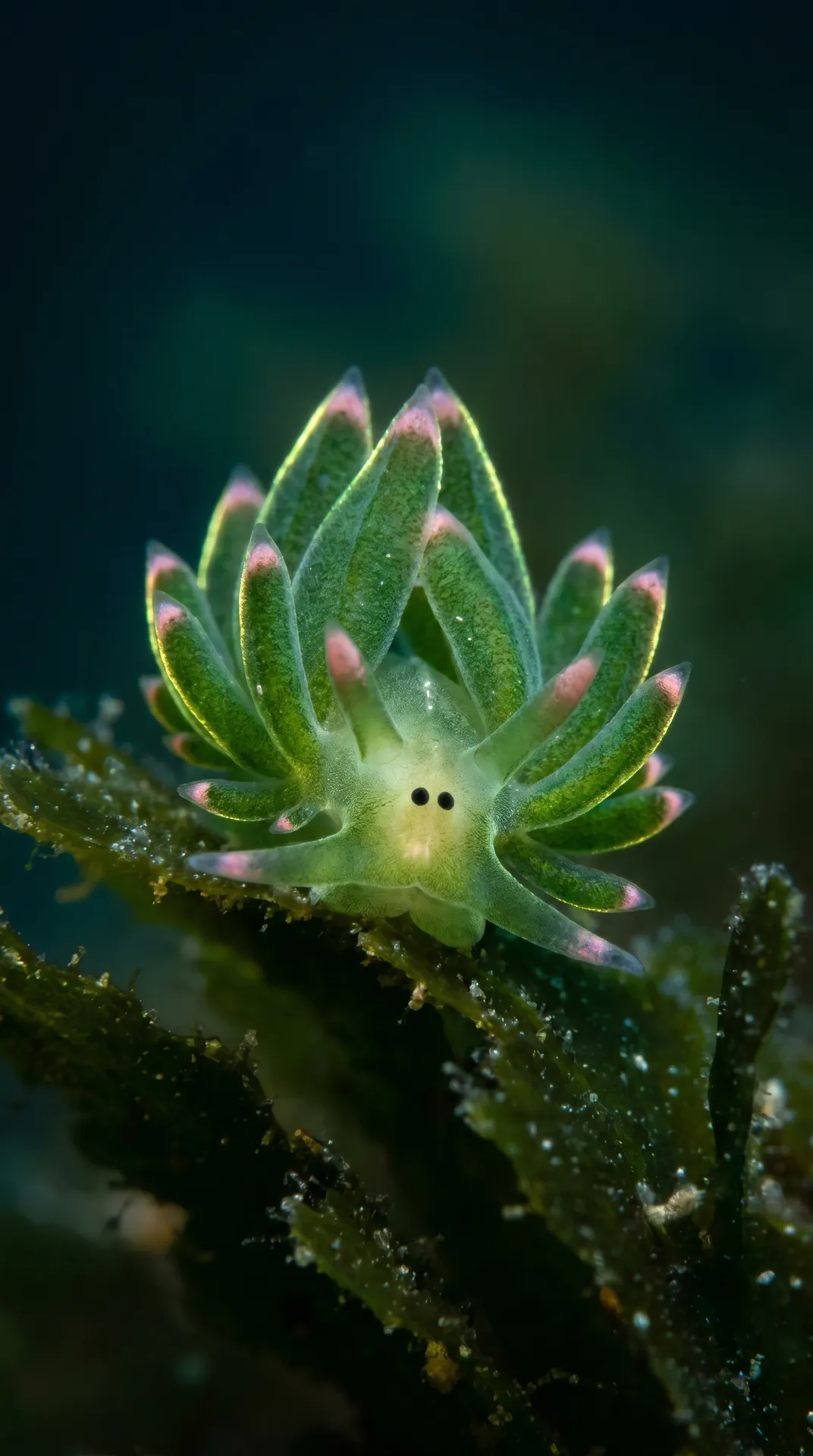
The tiny sea slug that runs on sunlight like a plant
This tiny sea slug eats plants and then runs on sunlight, like a living solar panel.
Which one is REALLY true about the Leaf Sheep?
The short version
The leaf sheep is a rice-grain-sized sea slug that steals chloroplasts from the algae it eats and keeps them working inside its body, photosynthesizing sunlight into food for weeks. This 'kleptoplasty' makes it one of the only animals that is part plant.
Why it's so weird
- ✓The Leaf Sheep runs on sunlight like a living solar panel.
- ✓The Leaf Sheep steals the chloroplasts from the algae it eats and keeps them working inside its own body.
- ✓The Leaf Sheep can survive for weeks by basically sunbathing, turning sun into food.
- ✓The Leaf Sheep is one of the only animals on Earth that is genuinely part plant.
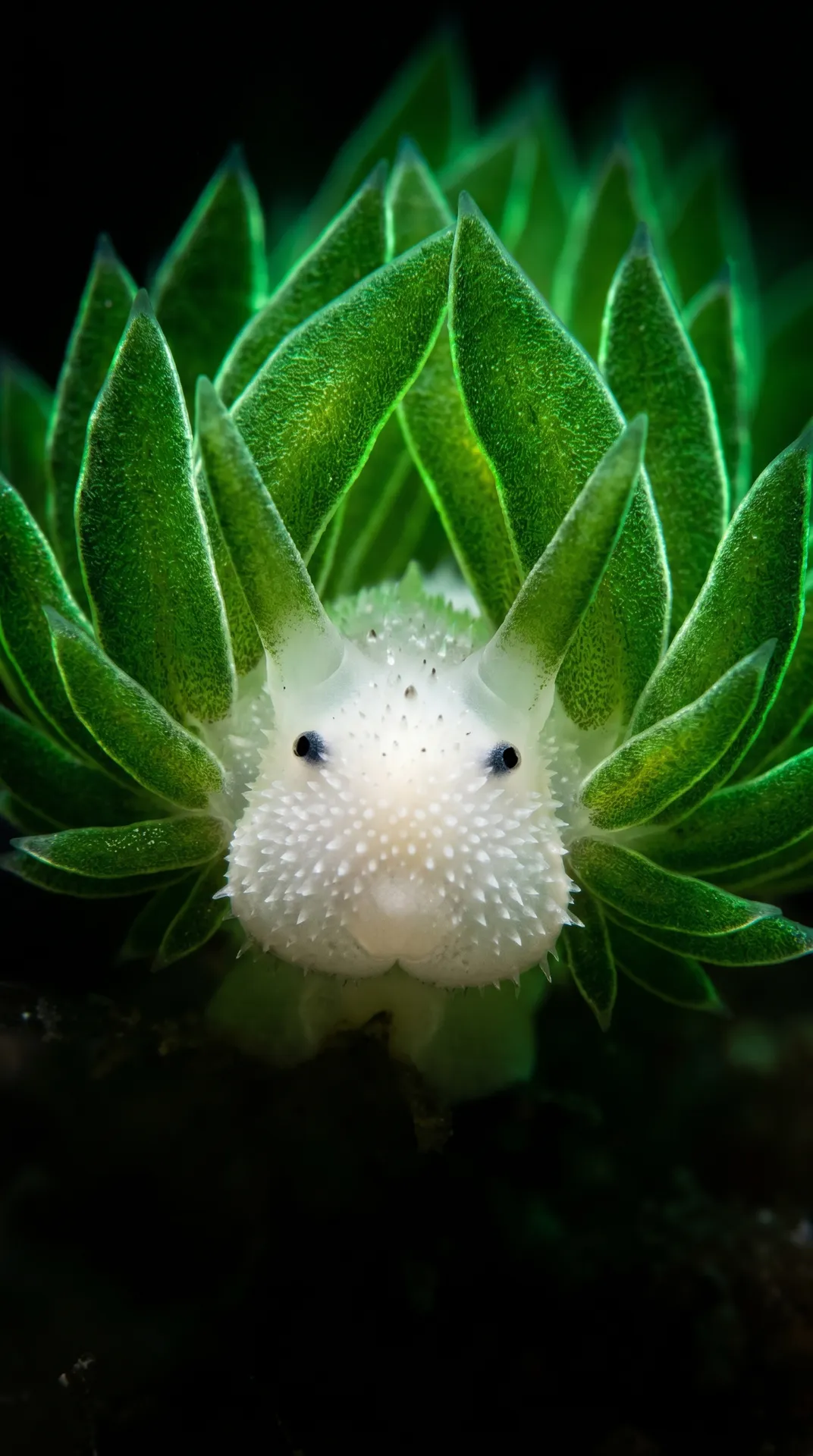
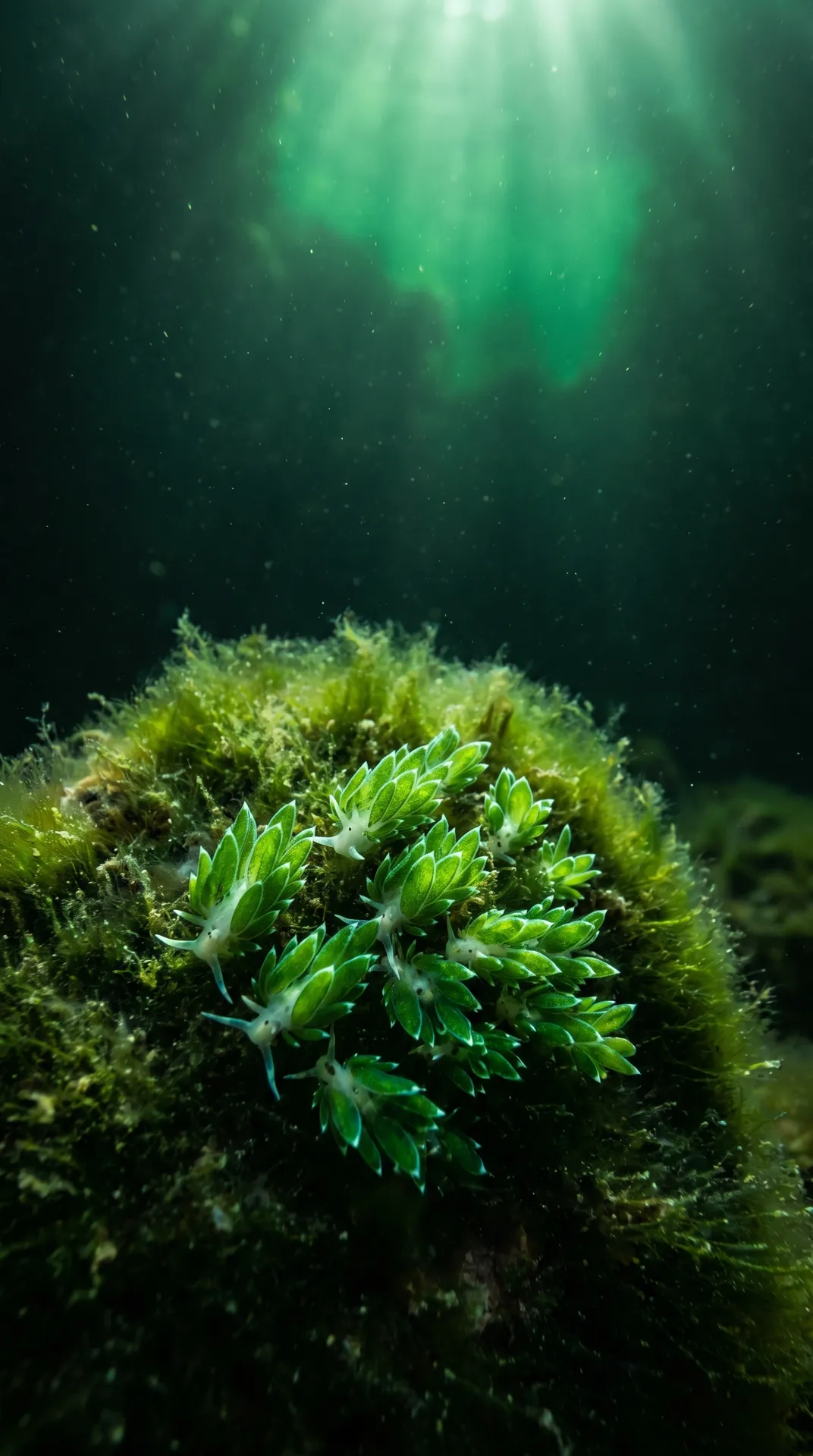
- ✓The Leaf Sheep is barely the size of a grain of rice, with leaf-shaped fronds covering its back.
You could line up about 244 of them along a 7-year-old!
The full story
This tiny sea creature does something that no animal should be able to do. It runs on sunlight, just like a plant. Meet the leaf sheep, an adorable sea slug barely the size of a grain of rice, with little black eyes and leaf-shaped fronds covering its back. When it eats algae, it does not simply digest it. It steals the algae's tiny chloroplasts, the green parts that capture sunlight, and tucks them into its own body. Those stolen chloroplasts keep right on working inside the slug, turning sunlight into food, so the leaf sheep can survive for weeks by basically sunbathing. Scientists call this trick kleptoplasty, which literally means stealing the power to photosynthesize. It is one of the only animals on Earth that is genuinely part plant. A tiny, solar-powered sea sheep. Follow for more weird animal facts.
A chloroplast is a tiny green machine inside plant and algae cells that uses sunlight to make sugar. The leaf sheep eats green algae but does not destroy these machines. Instead it stores the still-working chloroplasts in the leafy parts on its back, where they keep catching sunlight and making food the slug can use. Scientists are still puzzling out exactly how the slug keeps these stolen machines alive for so long, since it does not carry the algae's repair instructions.
📚 Source: WWF: What is a leaf sheep? ↗Scientists studying a related photosynthetic sea slug, Elysia timida, measured the light reactions inside its stolen chloroplasts and found the slug actually changes how they run -- keeping them in a more 'oxidized' state so they make fewer damaging chemicals and survive longer (Cruz et al., published in the journal eLife, 2020). This helps explain how sea slugs like the leaf sheep keep their stolen sunlight-catchers working for weeks.
📚 Source: Photosynthetic sea slugs induce protective changes to the light reactions of the chloroplasts they steal from algae (PNAS, via PubMed Central) ↗Watch the 45-second version
Leaf Sheep gallery
Check what you learned
No score, no pressure — just see what stuck. Tap Real or Fake.
“The Leaf Sheep runs on sunlight like a living solar panel.”
“The Leaf Sheep grows leaf-shaped flaps of skin that mimic floating seaweed so perfectly it becomes almost invisible.”
“The Leaf Sheep steals the chloroplasts from the algae it eats and keeps them working inside its own body.”