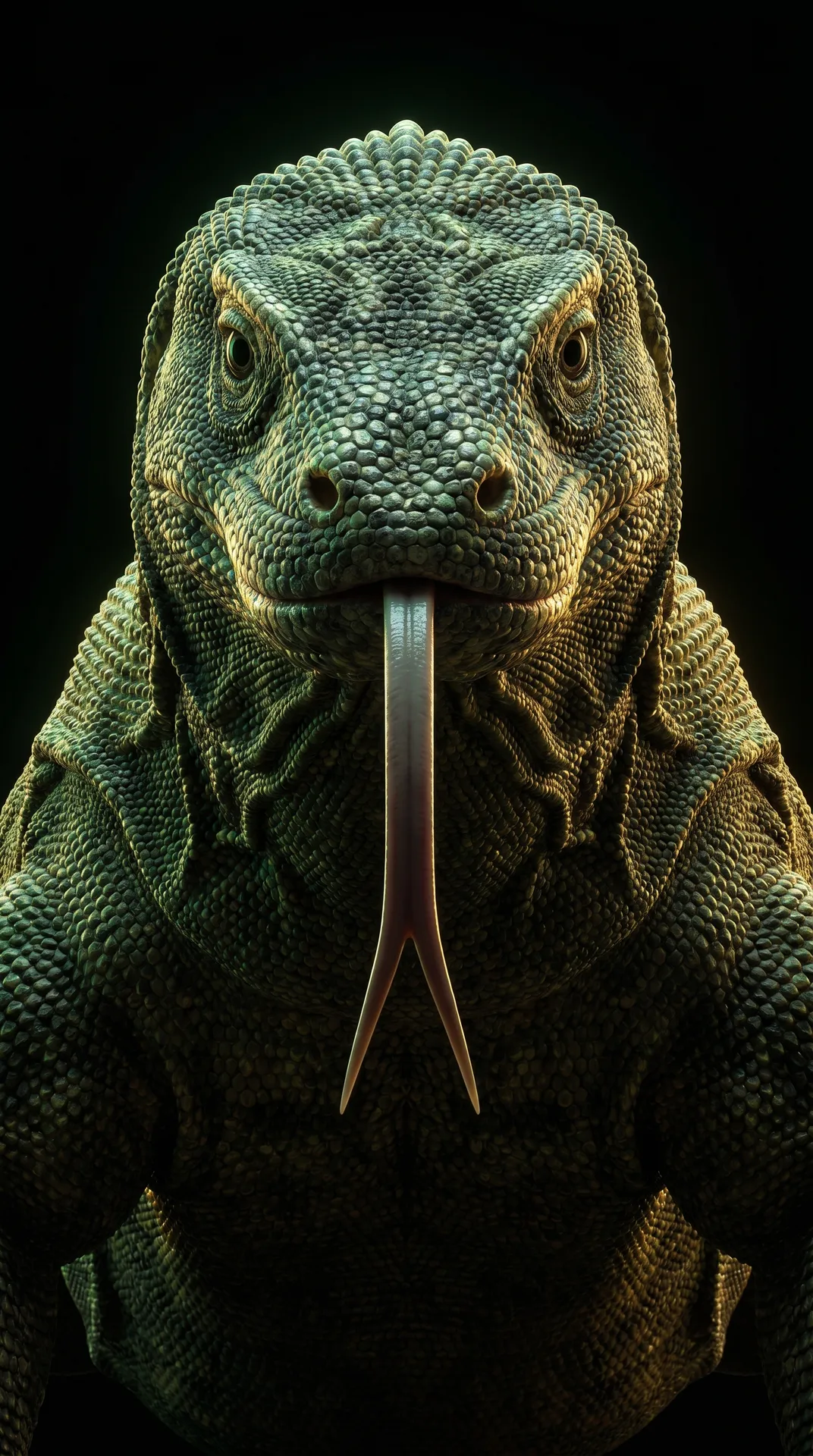
The real-life dragon with venom and a shark-like bite
This lizard is venomous, ten feet long, and can take down a water buffalo.
Which one is REALLY true about the Komodo Dragon?
The short version
The Komodo dragon is the largest lizard on Earth — up to 10 feet long and 150 pounds. It has serrated, shark-like teeth and venom glands that thin the blood and drop blood pressure, so bitten prey bleeds out. It smells carrion from miles away with its forked tongue and can eat 80% of its body weight in one meal.
Why it's so weird
- ✓The Komodo Dragon delivers a bite that thins the blood and crashes the victim's blood pressure, so slowly bleeds out.
- ✓The Komodo Dragon is the largest lizard alive, growing up to ten feet long and 150 pounds.
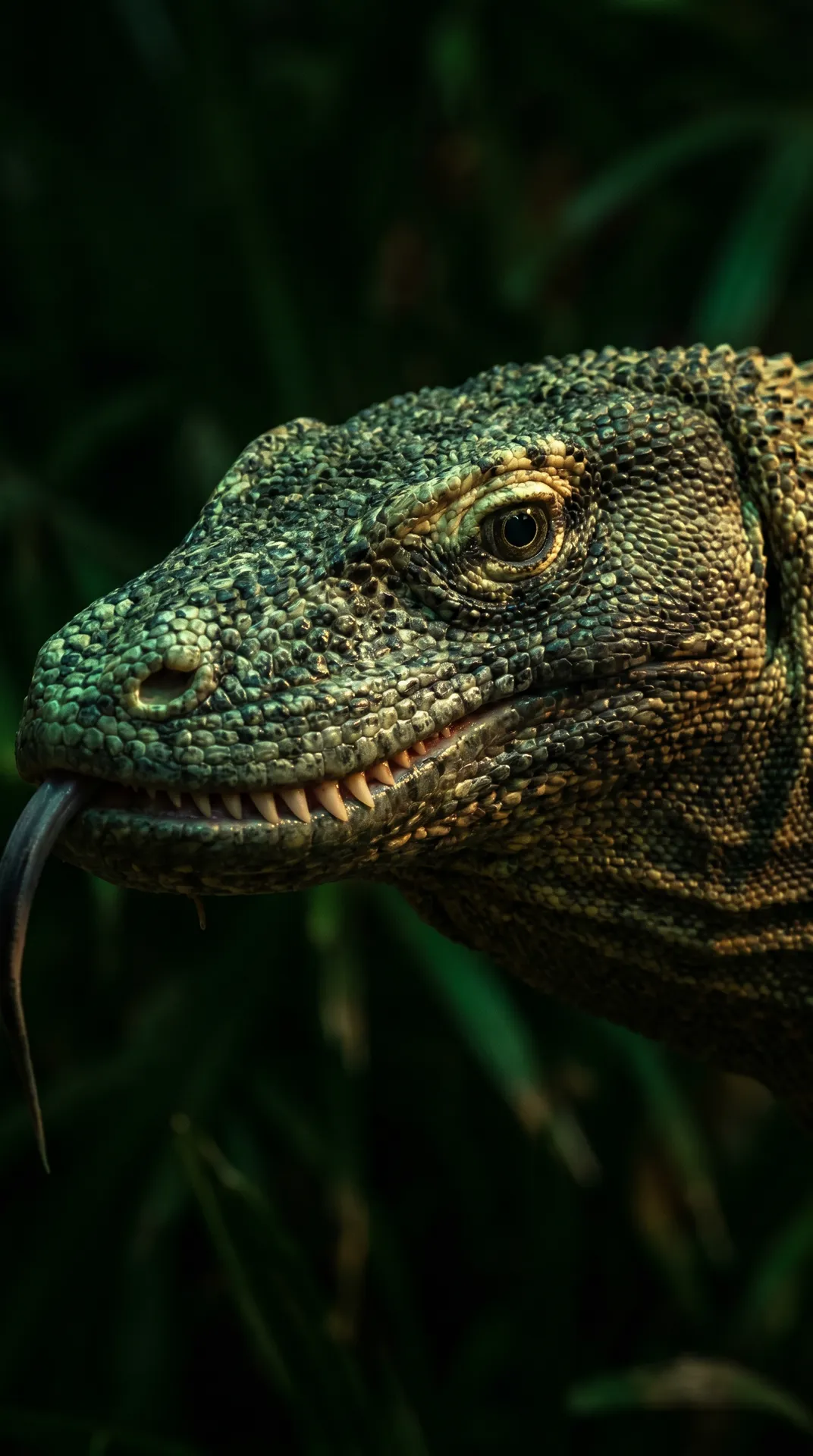
- ✓The Komodo Dragon has curved, serrated teeth like a shark for tearing flesh.
- ✓The Komodo Dragon can smell rotting meat from miles away using its forked tongue, then follows the scent for days.
- ✓The Komodo Dragon can swallow eighty percent of its own body weight in a single meal that lasts a month.
The Komodo Dragon is about 2.5× as long as a 7-year-old! 🤯
The full story
This lizard is venomous, ten feet long, and can drop a water buffalo. Meet the Komodo dragon, the largest lizard alive and about as close to a real dragon as nature gets. Its mouth is full of curved, serrated teeth like a shark, and its bite delivers venom that thins the blood and crashes the victim's blood pressure. So even if big prey escapes, it slowly bleeds out, and the dragon just follows the scent for days. It can smell rotting meat from miles away using its forked tongue, and it can swallow eighty percent of its own body weight in a single meal. Young dragons even live up in the trees to avoid being eaten by the adults. A single big meal can last it an entire month. A living dragon that hunts with venom. Follow for more weird animal facts.
A Komodo dragon's venom is a mix of special proteins it makes in glands in its lower jaw. When the dragon bites, the venom seeps into the wound and does two things at once: some proteins stop the blood from clotting (forming scabs), so the cut keeps bleeding, while others make the blood vessels relax and widen, which drops the prey's blood pressure. Together that means the bitten animal loses blood fast and goes into shock, so it gets weak and can't escape. Scientists are still studying exactly how strong each toxin is.
📚 Source: A central role for venom in predation by Varanus komodoensis (Komodo Dragon) — PNAS (Fry et al., 2009) ↗In 2009, scientist Bryan Fry's team put a preserved Komodo dragon head into a medical MRI scanner (the same machine doctors use) and saw real venom glands in the lower jaw, then tested the venom's proteins in the lab and found ones that stop clotting and lower blood pressure.
📚 Source: Research Finds That Komodo Dragons Kill With Venom — National Geographic ↗Watch the 45-second version
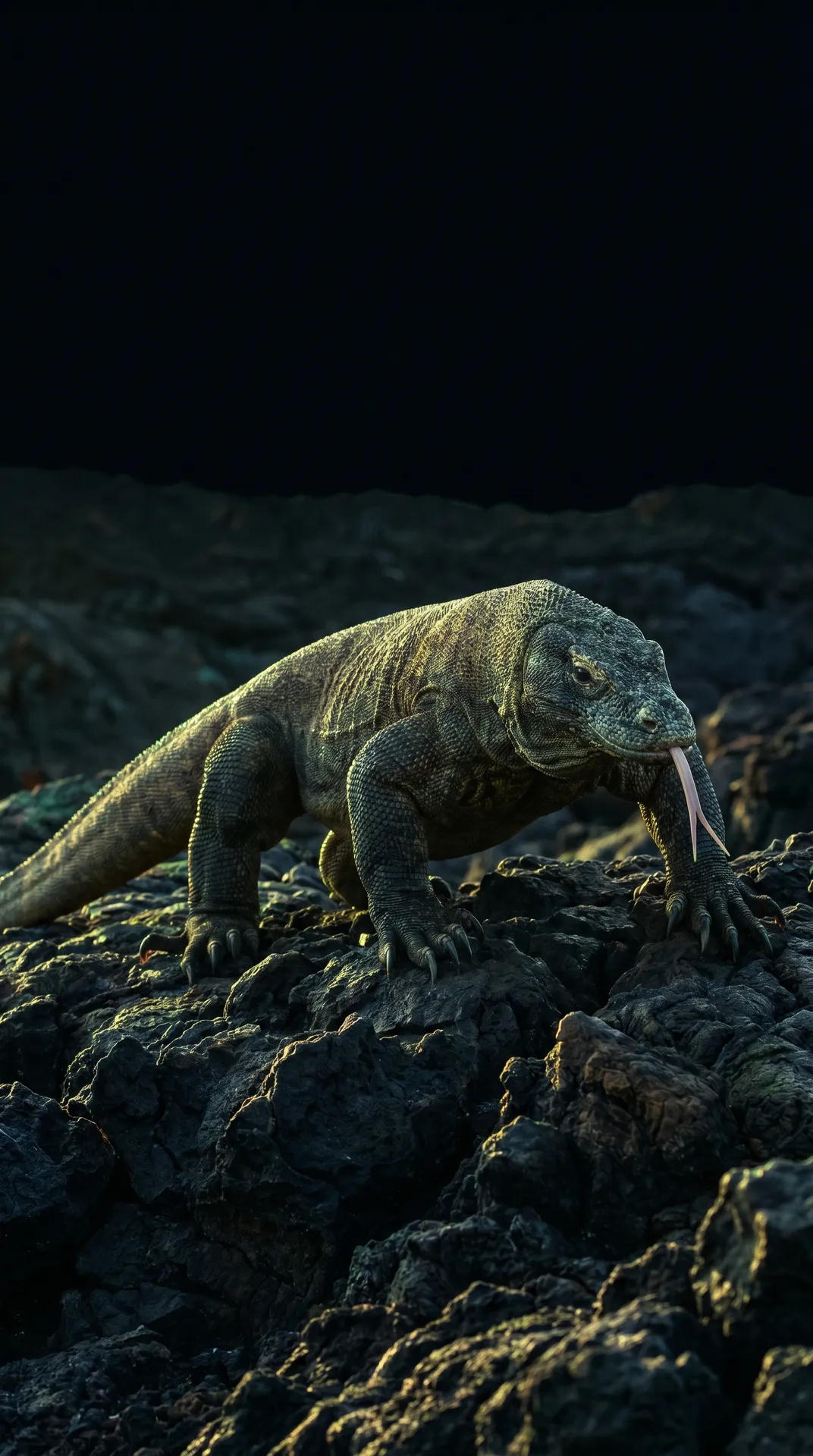
Komodo Dragon gallery
Check what you learned
No score, no pressure — just see what stuck. Tap Real or Fake.
“The Komodo Dragon delivers a venomous bite that thins the blood and crashes the victim's blood pressure, so prey slowly bleeds out.”
“The Komodo Dragon runs on sunlight like a living solar panel.”
“The Komodo Dragon is the largest lizard alive, growing up to ten feet long and 150 pounds.”