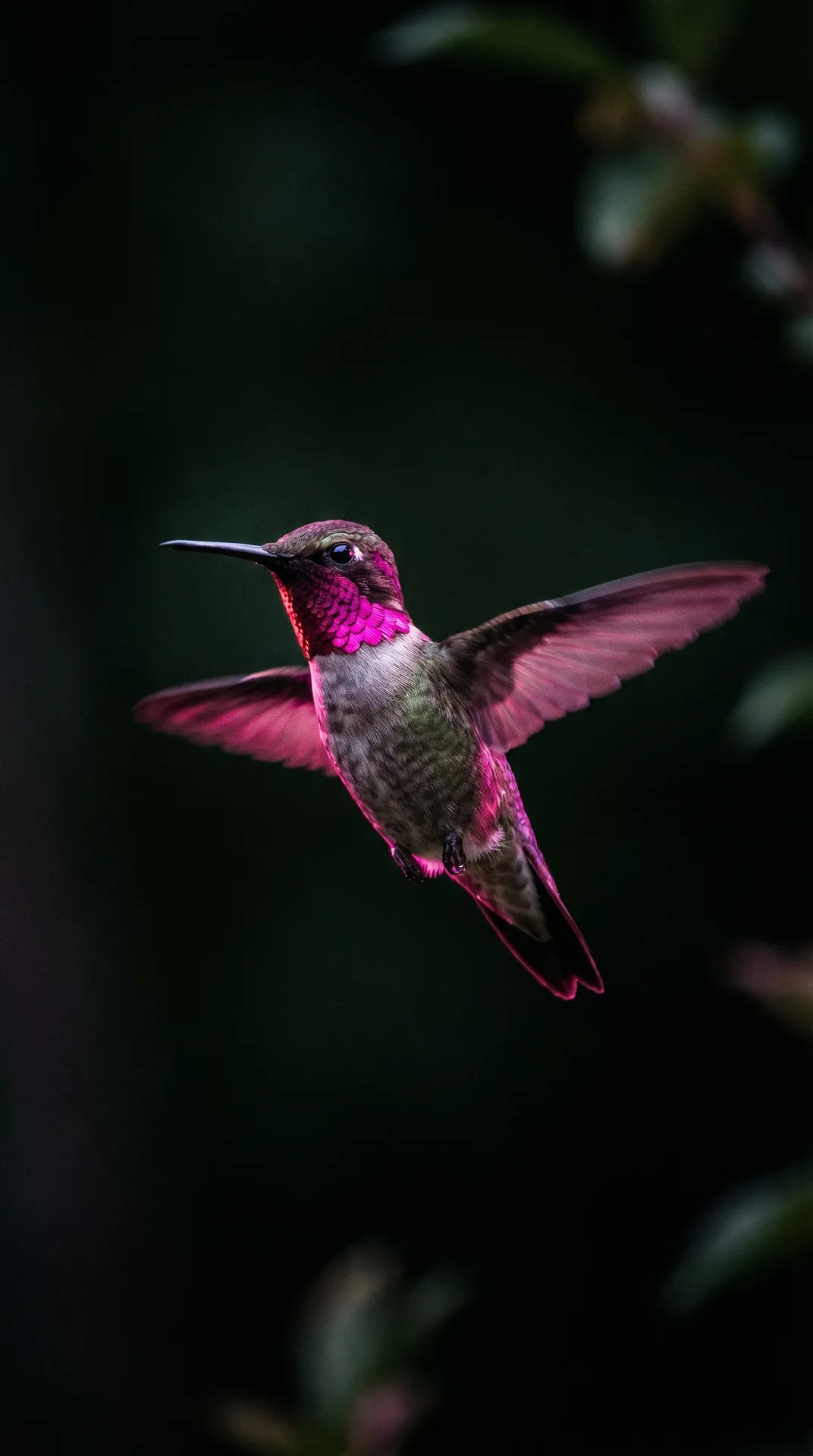
The bird whose heart beats 1,200 times a minute
This bird's heart beats over 1,200 times a minute — and it nearly dies every single night.
Which one is REALLY true about the Hummingbird?
The short version
A hummingbird's heart can beat over 1,200 times a minute and its wings flap up to 80 times a second; it's the only bird that can fly backwards and hover. It eats constantly, and at night enters torpor, dropping its heart rate and temperature so low it appears dead until morning.
Why it's so weird
- ✓The Hummingbird has a heart that can beat over 1,200 times every minute.
- ✓The Hummingbird is the only bird that can truly fly backwards and hover perfectly in place.
- ✓The Hummingbird flaps its wings up to 80 times a second, so fast they blur into a hum.
- ✓The Hummingbird eats almost nonstop, visiting hundreds of flowers a day and nearly doubling its weight in nectar.
- ✓The Hummingbird drops into a deep state called torpor at night, lowering its heart rate and temperature so much it looks completely dead until morning.
You could line up about 9 of them along a 7-year-old!
The full story
This tiny bird has a heart that can beat over twelve hundred times every minute. Meet the hummingbird, a creature living life at an absolutely impossible speed. Its wings flap up to eighty times every second, so fast they blur into a hum, and it is the only bird that can truly fly backwards and even hover perfectly in place. All that power burns enormous energy, so it has to eat almost constantly, visiting hundreds of flowers a day and nearly doubling its weight in nectar. But here is the strange part. At night, when the food runs out, it cannot survive its own racing metabolism. So it enters a deep state called torpor, dropping its heart rate and body temperature so low that it looks completely dead, until the morning sun slowly brings it back to life. Follow for more weird animal facts.
A hummingbird hovers because its wings rotate almost all the way over at the shoulder, sweeping in a figure-eight. Most birds only get a push on the downstroke, but a hummingbird flips its wing so it grabs the air and makes lift on BOTH the forward and backward sweep, so it can hang in place or even fly backward. Its heart races and it eats nonstop because it is so tiny that it burns fuel and loses heat incredibly fast. At night it cannot eat, so it saves energy by slipping into torpor, turning its body way down like a dimmer switch until sunrise.
📚 Source: Hummingbirds — Smithsonian's National Zoo and Conservation Biology Institute ↗Scientists measured the body temperature of 26 wild Andean hummingbirds through the night and found one cooled all the way to about 3.3°C (38°F) in torpor — the lowest body temperature ever recorded for any bird (Wolf et al., Biology Letters, 2020).
📚 Source: Extreme and variable torpor among high-elevation Andean hummingbird species — Biology Letters (Royal Society) ↗Watch the 45-second version
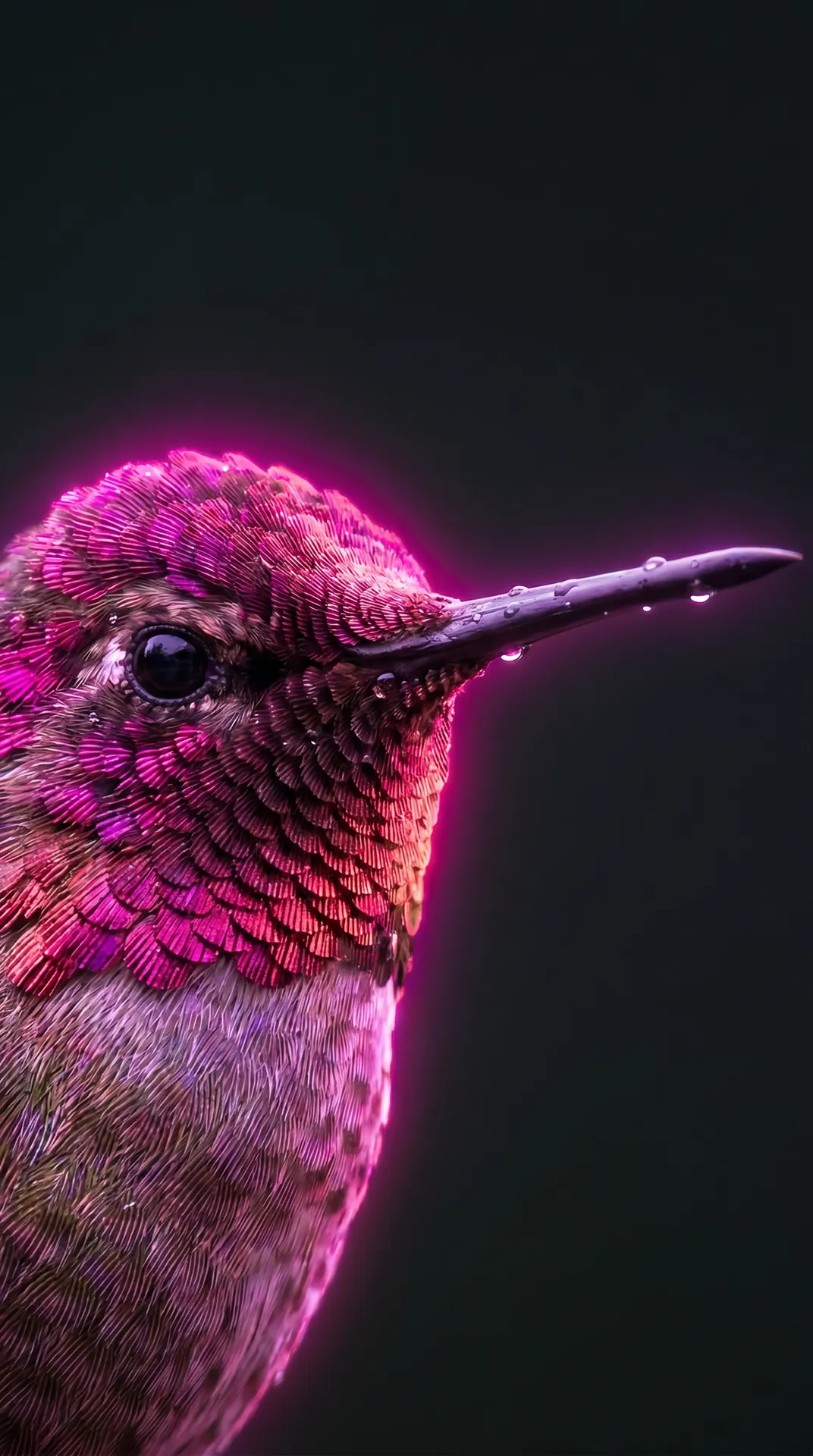
Hummingbird gallery

Check what you learned
No score, no pressure — just see what stuck. Tap Real or Fake.
“The Hummingbird has a heart that can beat over 1,200 times every minute.”
“The Hummingbird can avoid dying of old age by folding back into a baby and growing up again.”
“The Hummingbird is the only bird that can truly fly backwards and hover perfectly in place.”