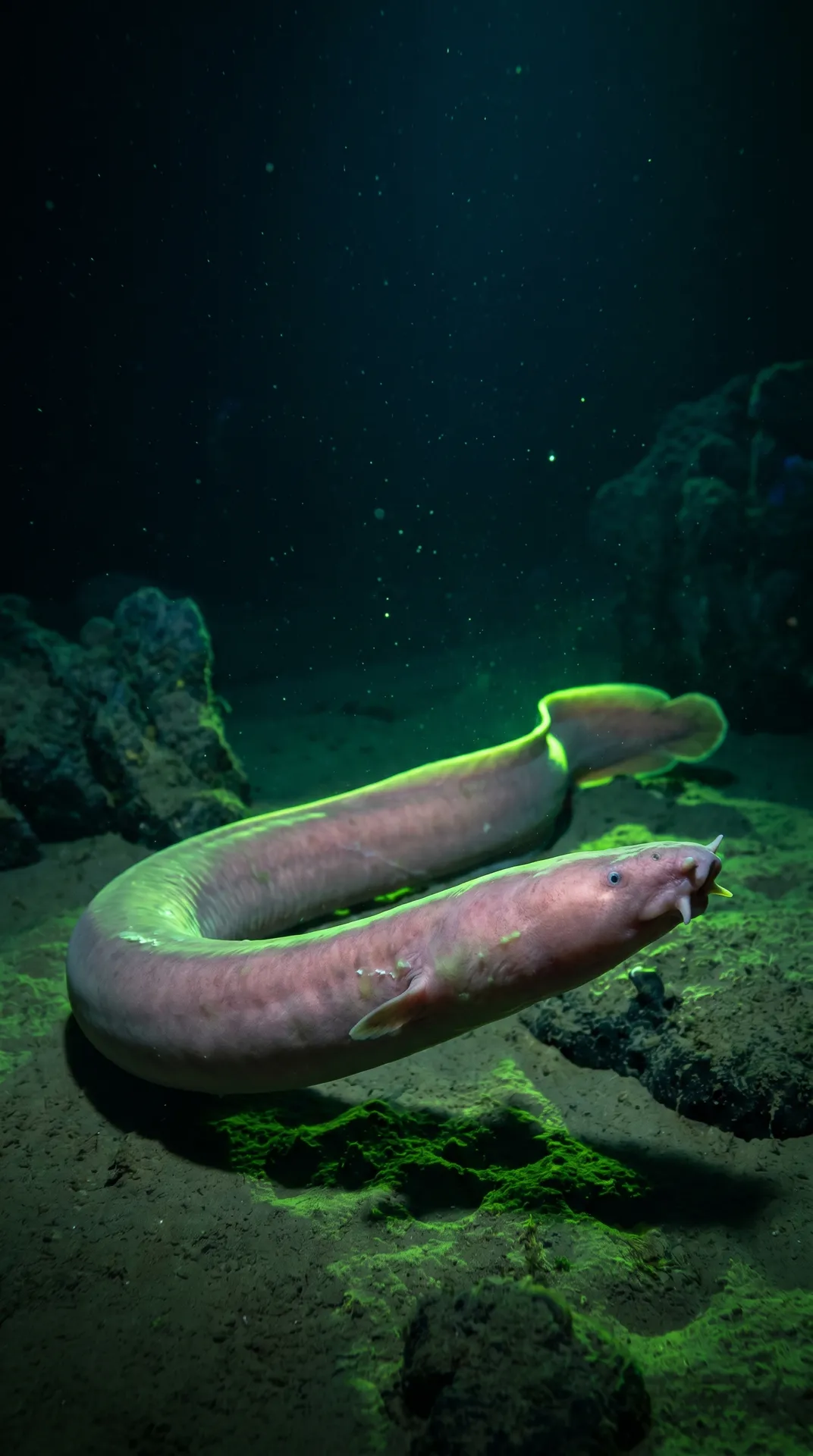
The fish that drowns predators in slime in under a second
When attacked, this fish turns the water around it into a bucket of choking slime in seconds.
Which one is REALLY true about the Hagfish?
The short version
The hagfish releases tiny threads that expand into liters of sticky gel in under a second, clogging a predator's gills until it gags and flees. It ties itself in a knot to wipe the slime off, has no jaw or real bones, absorbs nutrients through its skin, and has survived 300+ million years.
Why it's so weird
- ✓The Hagfish turns the water around it into liters of choking slime in under a second.
- ✓The Hagfish releases tiny threads that expand into sticky, suffocating gel that clogs a 's gills until it gags and flees.
- ✓The Hagfish ties its own body into a knot and slides it down itself to wipe the slime clean off.
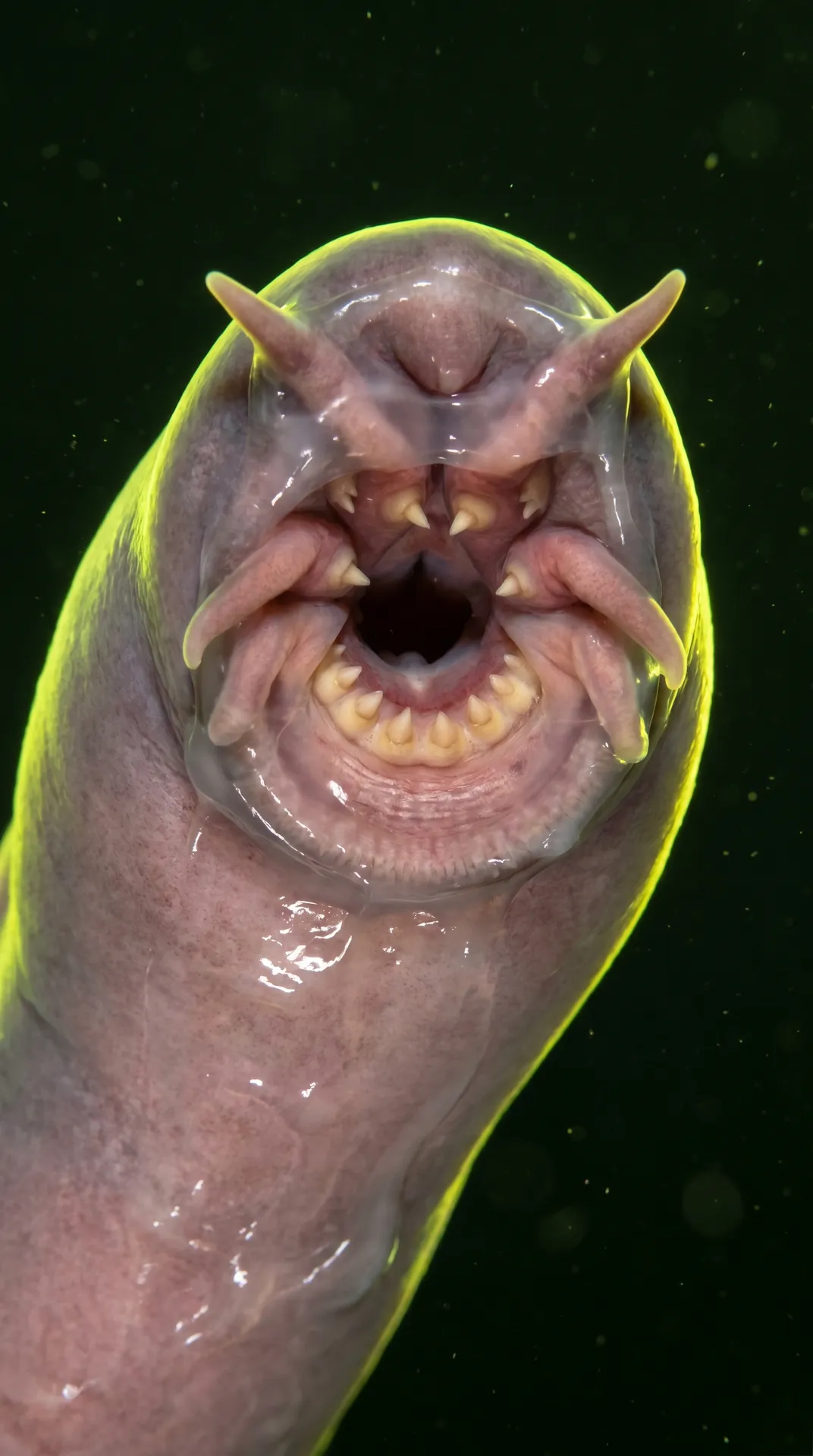
- ✓The Hagfish has no jaw and no real bones, and can absorb nutrients straight through its skin.
- ✓The Hagfish has survived in the deep sea for over three hundred million years, older than the dinosaurs.
The Hagfish is about the same length as a 7-year-old.
The full story
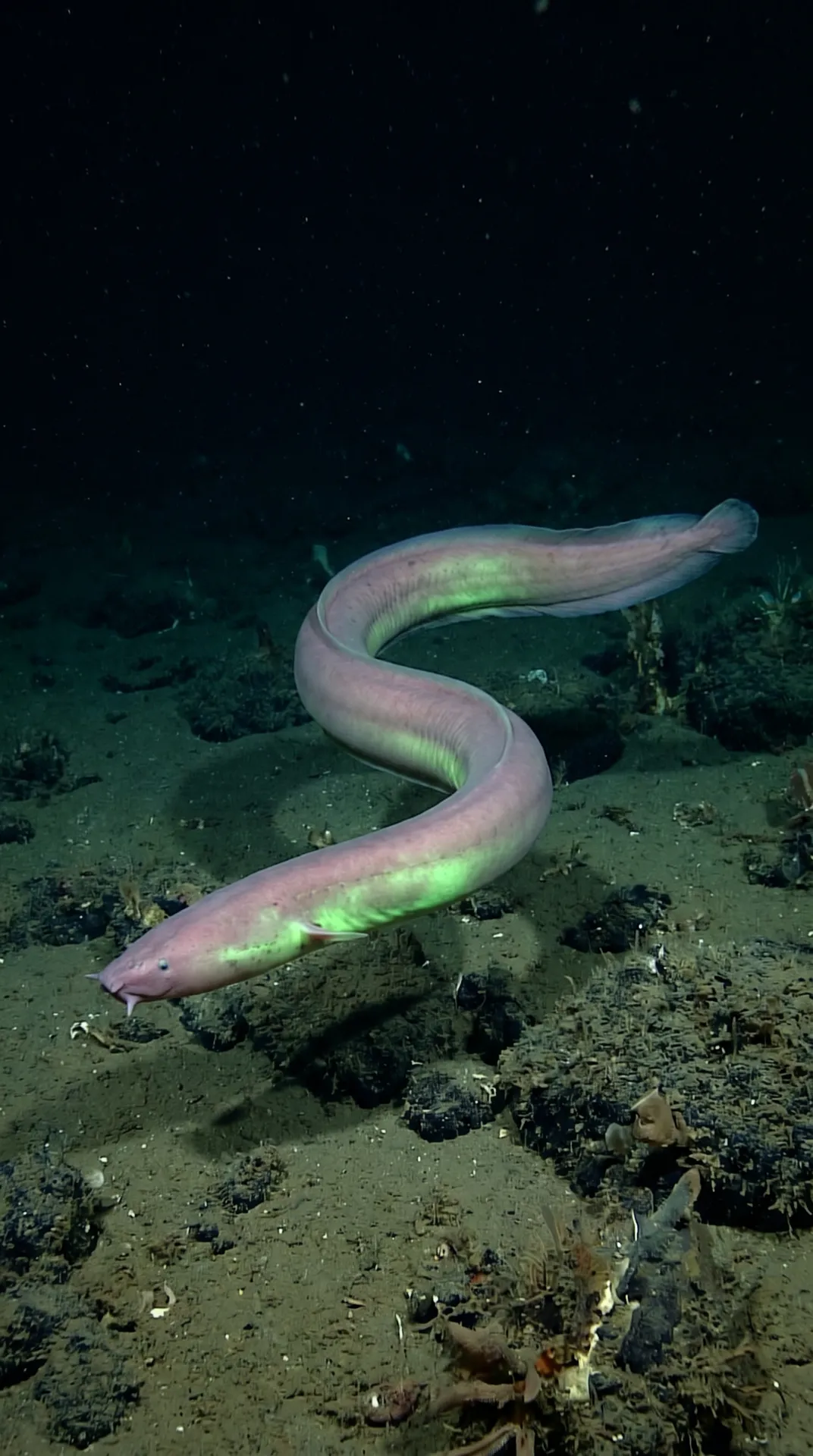
When something tries to eat this fish, it instantly turns the surrounding water into a thick cloud of slime. Meet the hagfish, one of the oldest and slimiest animals alive. The moment a predator bites down, the hagfish releases tiny threads that expand in water into liters of sticky, suffocating gel in less than a single second. The slime clogs the attacker's gills, and it is forced to gag, choke, and flee, leaving the hagfish completely untouched. To avoid choking on its own slime, the hagfish ties its body into a knot and slides that knot down itself to wipe the goo clean off. It has no jaw and no real bones, it can absorb nutrients straight through its skin, and it has survived in the deep sea for over three hundred million years. Follow for more weird animal facts.
Each slime gland is packed with two tiny ingredients: little coiled bundles of protein thread (each wound up like a ball of wool) and small packets of mucus. When the hagfish shoots them into seawater, the mucus packets soak up a huge amount of water and swell into a fine gel, while the threads unravel and tangle through it. The mucus is the part that actually clogs: it spreads into spaces so small that water can barely flow through, so it jams a predator's gills and makes breathing very hard. The threads work like a net that holds the gooey gel together and keeps it stuck to the gills, so it doesn't just wash away. Together they turn a teaspoon of goo into liters of stretchy, watery slime in under a second.
📚 Source: Mechanisms of gill-clogging by hagfish slime — Journal of the Royal Society Interface ↗In 2011, scientists lowered baited cameras to the deep sea floor and filmed real predators like sharks biting hagfish, then gagging and fleeing in under half a second as the slime filled their mouths and gills.
📚 Source: Hagfish filmed choking sharks with slime, and actively hunting fish — National Geographic ↗Watch the 45-second version
Hagfish gallery
Check what you learned
No score, no pressure — just see what stuck. Tap Real or Fake.
“The Hagfish turns the water around it into liters of choking slime in under a second.”
“The Hagfish breaks the small bones in its own toes and forces the sharp broken ends out through the skin of its feet to form claws.”
“The Hagfish releases tiny threads that expand into sticky, suffocating gel that clogs a predator's gills until it gags and flees.”