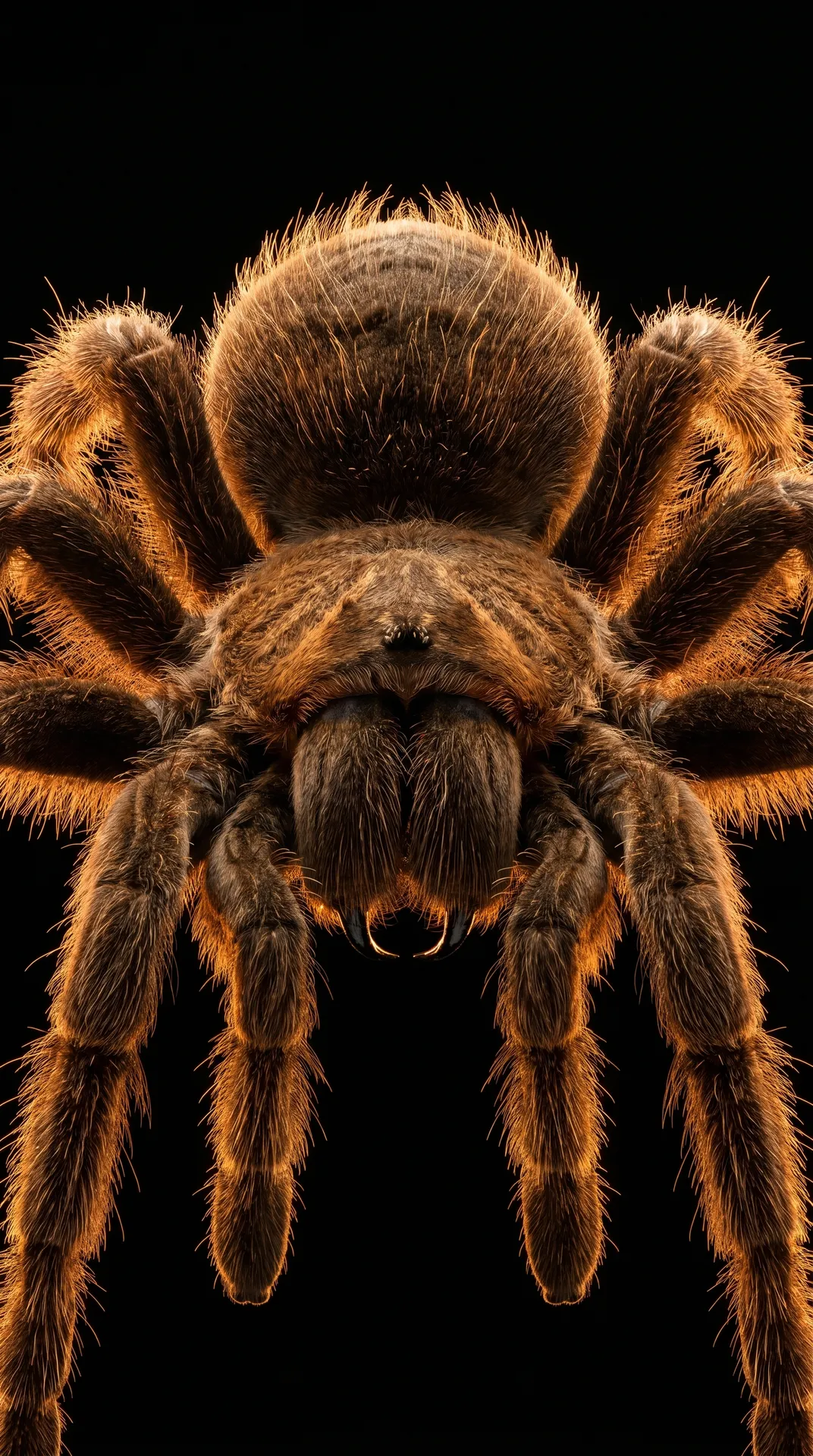
The spider as big as a dinner plate that eats birds
This spider is the size of a dinner plate — and it really does eat birds.
Which one is REALLY true about the Goliath Birdeater?
The short version
The Goliath birdeater is the largest spider on Earth, with a leg span near a foot and the weight of a small puppy. When threatened it hisses by rubbing its legs and flicks clouds of tiny barbed hairs that burn eyes and skin. Its fangs are nearly an inch long, though its venom is mild to humans.
Why it's so weird
- ✓The Goliath Birdeater flicks a cloud of tiny barbed hairs off its belly that lodge in eyes and skin and burn for hours.
- ✓The Goliath Birdeater is the largest spider on the entire planet, with legs that span almost a foot.
- ✓The Goliath Birdeater weighs about as much as a small puppy.
- ✓The Goliath Birdeater hisses by rubbing its legs together, a sound you can hear from a few feet away.
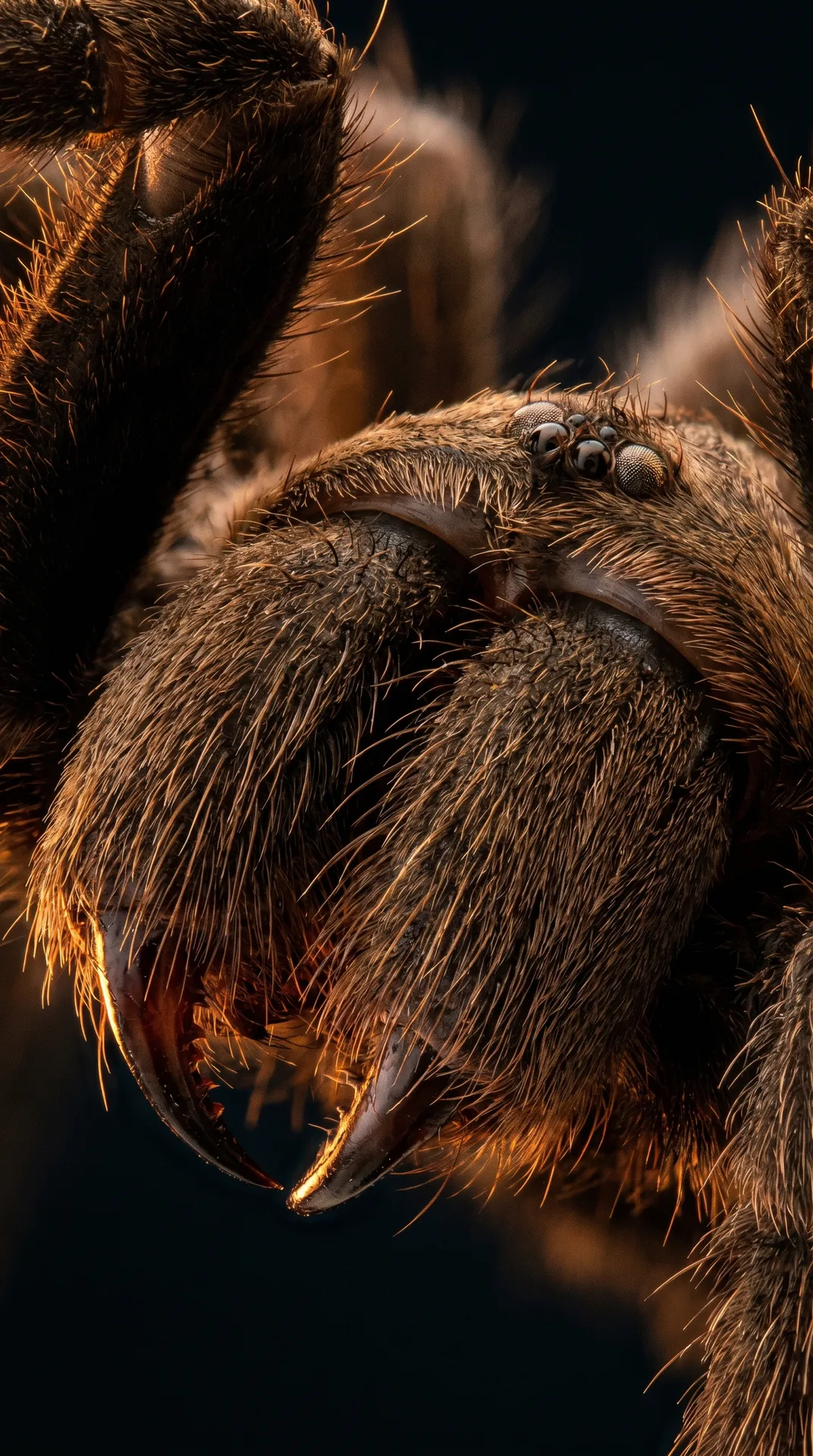
- ✓The Goliath Birdeater has fangs nearly an inch long that can easily pierce a mouse.
You could line up about 4 of them along a 7-year-old!
The full story
This spider is the size of a dinner plate, and yes, it really does eat birds. Meet the Goliath birdeater, the largest spider on the entire planet. Its legs can span almost a foot, and it weighs about as much as a small puppy. When something threatens it, it rubs its legs together to make a loud hissing sound you can hear from a few feet away. If that does not work, it flicks a cloud of tiny barbed hairs off its belly that lodge in your eyes and skin and burn for hours. And it backs all that up with fangs nearly an inch long that can easily pierce a mouse. Luckily for us, its venom is only about as bad as a wasp sting. The females can live for fifteen to twenty years, slowly molting their whole skin to grow even bigger. Big, hairy, and surprisingly polite. Follow for more weird animal facts.
Those itchy hairs aren't really hairs at all. They are tiny, stiff bristles called urticating hairs, and under a microscope each one is covered in backward-pointing barbs, like a miniature harpoon. When the spider feels threatened, it rubs its back legs over its belly and flings a cloud of these bristles into the air; the barbs snag in soft wet places like eyes and skin, and because they point backward they are hard to brush out, so they keep poking and irritating for hours. The 'hiss' is a trick called stridulation: the spider scrapes rough, hooked hairs on its legs against each other, making a buzzing sound the same way running your finger over a comb does.
📚 Source: National Geographic - Goliath Birdeater facts ↗Scientists examined the bristles under microscopes and saw the backward-facing barbs (described as 'harpoon-shaped hairs tipped with stinging barbs'), and they have watched and filmed the spiders rapidly rubbing their hind legs over their belly to launch the hairs at a threat.
📚 Source: National Geographic - World's Biggest Spider Explained ↗Watch the 45-second version
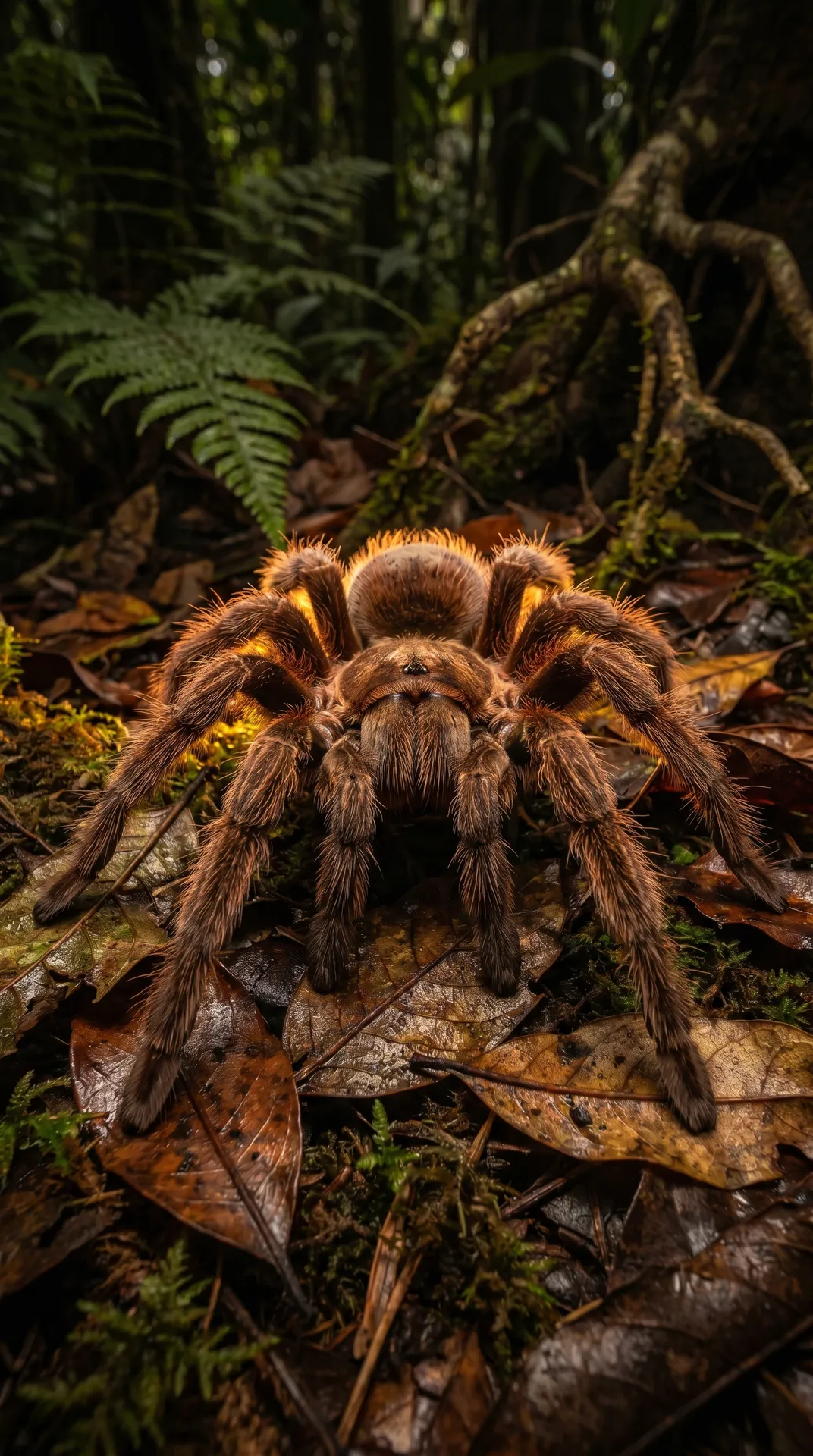
Goliath Birdeater gallery
Check what you learned
No score, no pressure — just see what stuck. Tap Real or Fake.
“The Goliath Birdeater flicks a cloud of tiny barbed hairs off its belly that lodge in eyes and skin and burn for hours.”
“The Goliath Birdeater loves to eat beeswax but cannot break into a bee nest on its own.”
“The Goliath Birdeater is the largest spider on the entire planet, with legs that span almost a foot.”