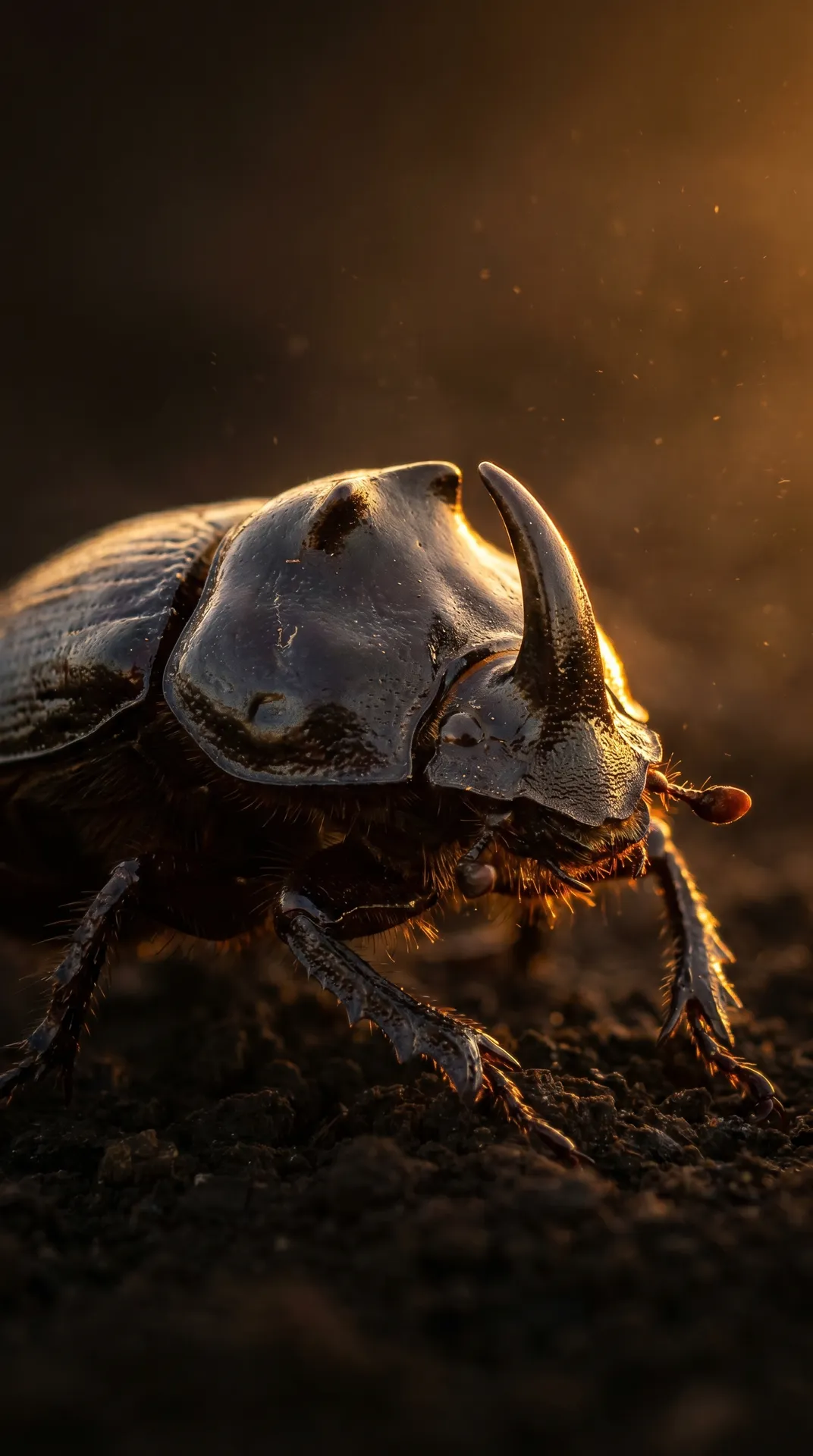
The beetle that navigates by the Milky Way galaxy
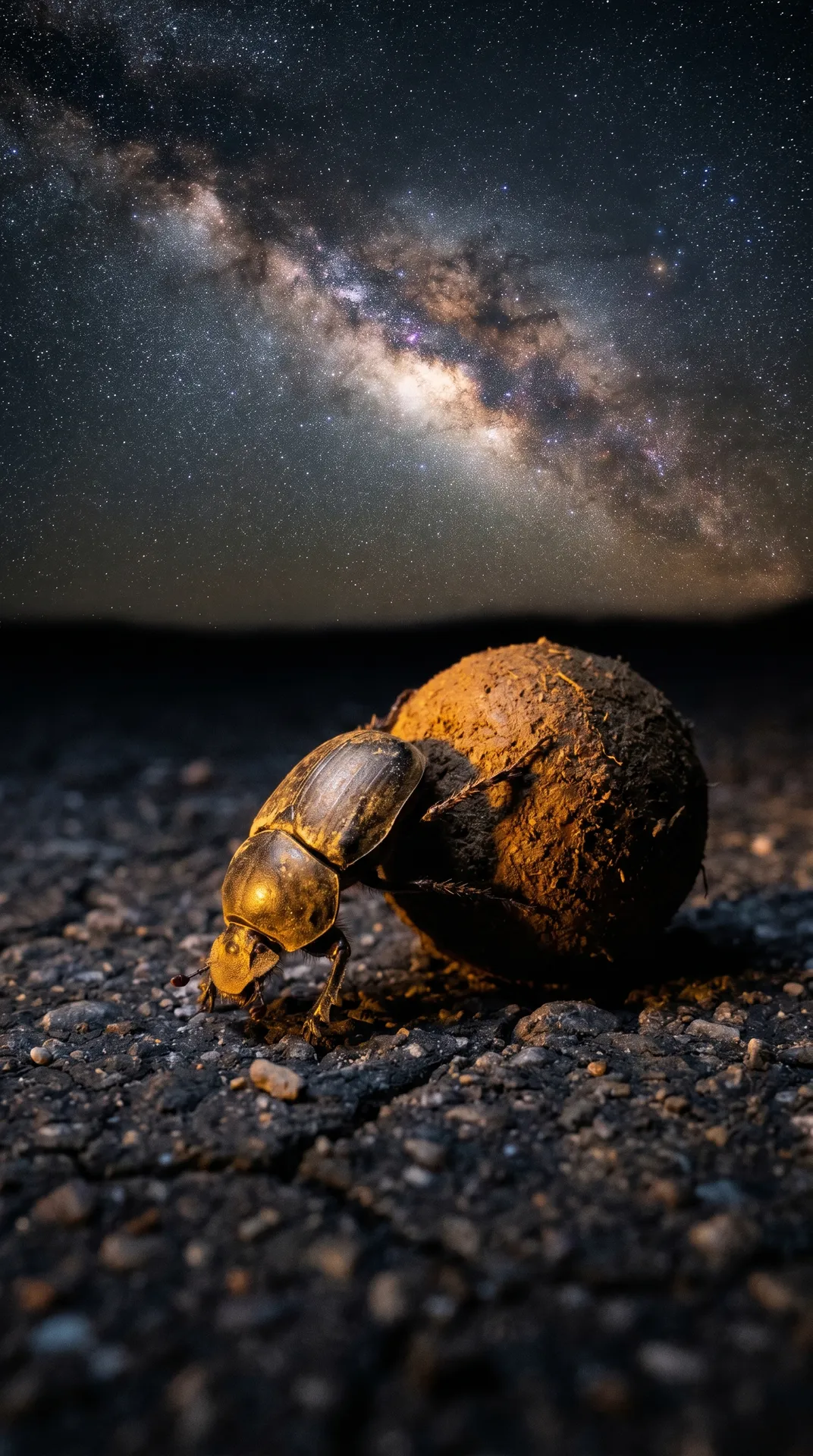
This beetle steers using the Milky Way galaxy while rolling a giant ball of poop in a straight line.
Which one is REALLY true about the Dung Beetle?
The short version
The dung beetle is the only animal proven to navigate by the stars, locking onto the band of the Milky Way to roll its dung ball in a straight line. Scientists proved it with tiny blinding hats. It's also one of the strongest animals, pulling over 1,000 times its body weight.
Why it's so weird
- ✓The Dung Beetle navigates by the Milky Way, the only animal ever proven to steer by the stars.
- ✓The Dung Beetle climbs on top of its dung ball and does a little spin to scan the sky and lock onto a straight heading.
- ✓The Dung Beetle can pull over a thousand times its own body weight, ranking among the strongest animals alive.
- ✓The Dung Beetle rolls its ball away in a perfectly straight line so rival beetles can't simply steal it.
You could line up about 41 of them along a 7-year-old!
The full story
This little beetle steers using the Milky Way galaxy, all while rolling a giant ball of poop. Meet the dung beetle, the only animal ever proven to navigate by the stars. After it sculpts a fresh ball of dung, it needs to roll it away in a perfectly straight line, or rival beetles will simply steal it. The problem is that the ground all looks the same. So the beetle climbs on top of its ball, does a little spin to scan the sky, and locks onto the glowing band of the Milky Way to hold a straight heading. Scientists proved this by fitting tiny hats on the beetles to block their view, and the blinded ones just wandered helplessly in circles. It is also one of the strongest animals alive, able to pull over a thousand times its own body weight. A dung-rolling, star-reading powerhouse. Follow for more weird animal facts.
A dung beetle can't read a map in the dark, so it makes its own compass out of the sky. The glowing band of the Milky Way is brighter on one side than the other, and the beetle's eyes are sharp enough to notice that difference in brightness. Before it rolls, it climbs on top of its ball and spins in a little circle to take a kind of mental snapshot of where the bright band sits. Then it keeps that brightness pattern in the same place as it pushes, which holds its path dead straight. Its huge pulling power comes from thick muscles packed inside a hard outer shell that works like a built-in skeleton, letting it heave loads far heavier than itself.
📚 Source: When dung beetles dance, they photograph the firmament (Lund University) ↗Scientists led by Marie Dacke at Lund University taped tiny cardboard caps over some beetles' eyes to block their view of the sky and tested others under a planetarium's stars, finding that beetles which could see the Milky Way rolled in straight lines while blinded ones just wandered in circles.
📚 Source: Dung Beetles Navigate by the Milky Way (Science / AAAS) ↗Watch the 45-second version
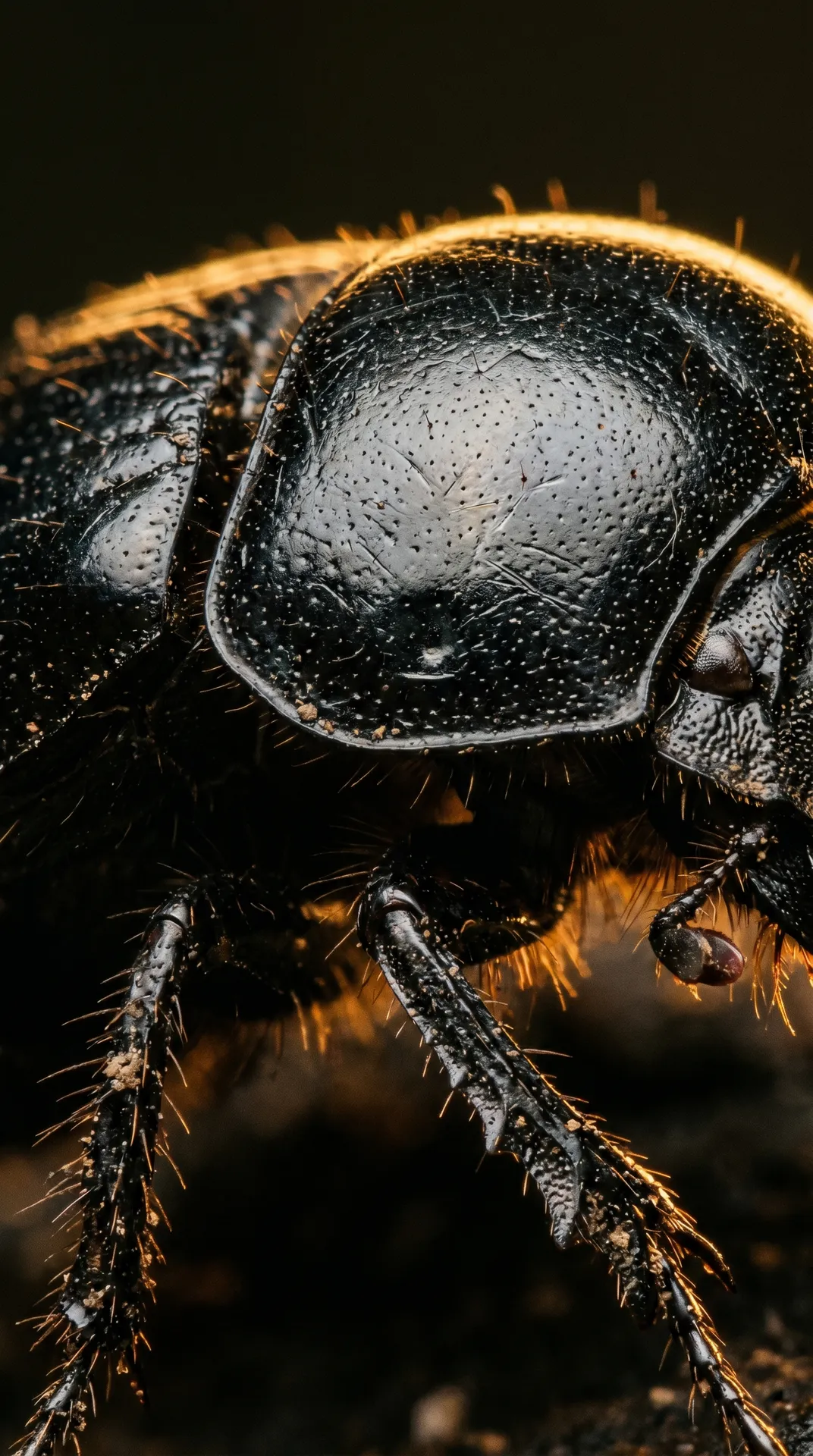
Dung Beetle gallery
Check what you learned
No score, no pressure — just see what stuck. Tap Real or Fake.
“The Dung Beetle navigates by the Milky Way, the only animal ever proven to steer by the stars.”
“The Dung Beetle can generate up to 860 volts — enough to stun a horse.”
“The Dung Beetle climbs on top of its dung ball and does a little spin to scan the sky and lock onto a straight heading.”