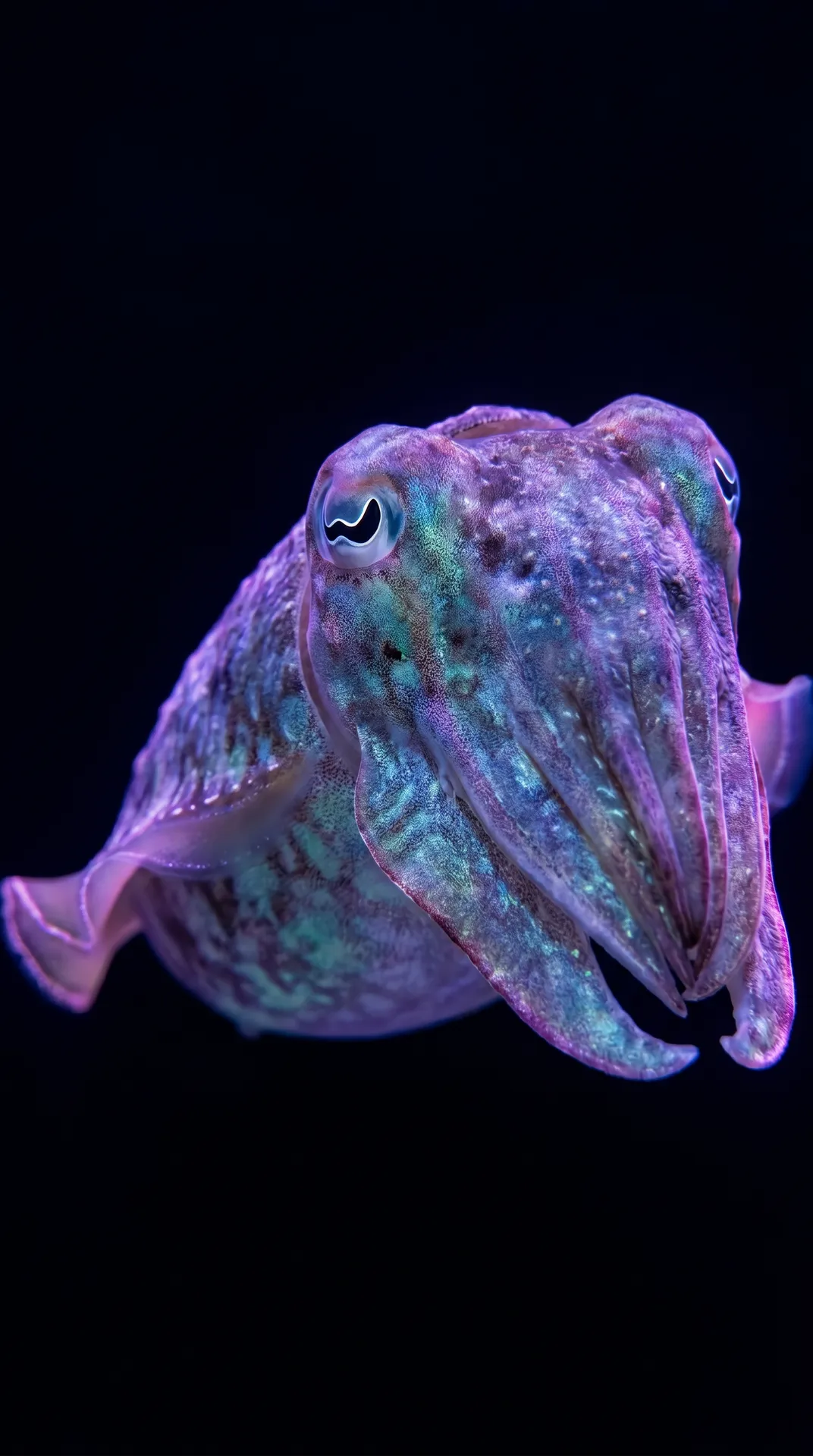
The animal that hypnotizes its prey with a light show
This animal hypnotizes its prey with a moving light show on its own skin.
Which one is REALLY true about the Cuttlefish?
The short version
The cuttlefish stuns prey by pulsing hypnotic bands of color across its skin, then strikes with two long tentacles. It can change its color and skin texture in under a second to vanish against any background — all while being completely colorblind — and it's smart enough to pass a self-control test that stumps some children.
Why it's so weird
- ✓The Cuttlefish hypnotizes its by pulsing moving bands of color across its skin, freezing the target in place.
- ✓The Cuttlefish can change its color and even the texture of its skin in under a second to vanish against rock, sand, or coral.
- ✓The Cuttlefish fires out two long feeding tentacles faster than your eye can follow to snatch a crab.
- ✓The Cuttlefish pulls off all of its color-shifting tricks while being completely colorblind.
- ✓The Cuttlefish can pass a patience test that stumps some human children.
You could line up about 2 of them along a 7-year-old!
The full story
This animal hypnotizes its prey with a moving light show on its own skin. Meet the cuttlefish, one of the strangest and smartest hunters in the entire sea. When it spots a crab, it pulses shifting bands of color down its body like a rolling hypnotic screen, freezing the crab in place. Then it fires out two long feeding tentacles faster than your eye can follow and snatches it. Even weirder, the cuttlefish is a master of disguise. In under a single second it can change its color and even the texture of its skin to vanish against rock, sand, or coral. And here is the real twist. It does all of this while being completely colorblind. It can also pass a patience test that stumps some human children. A hypnotist, a shapeshifter, and a genius. Follow for more weird animal facts.
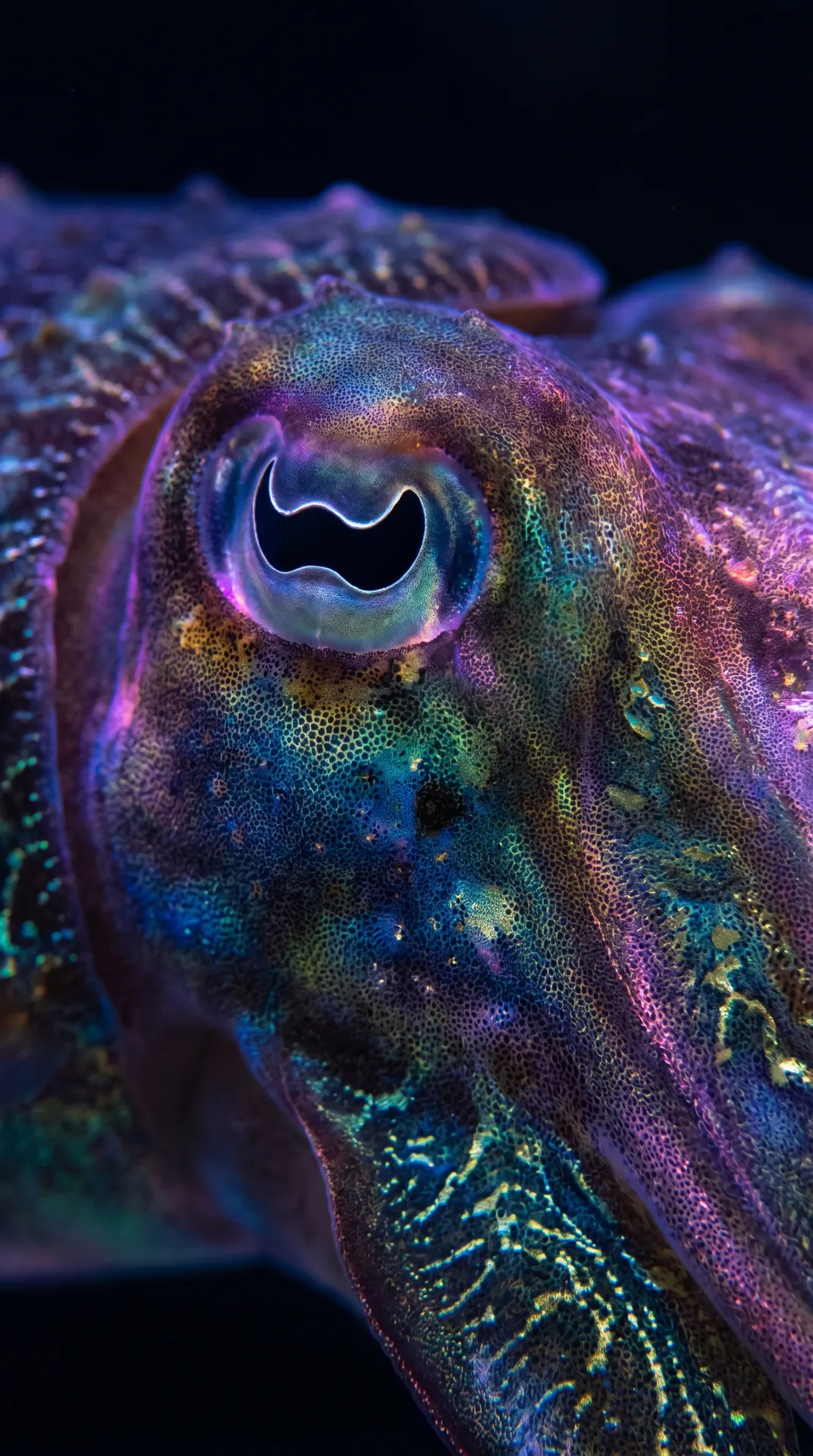
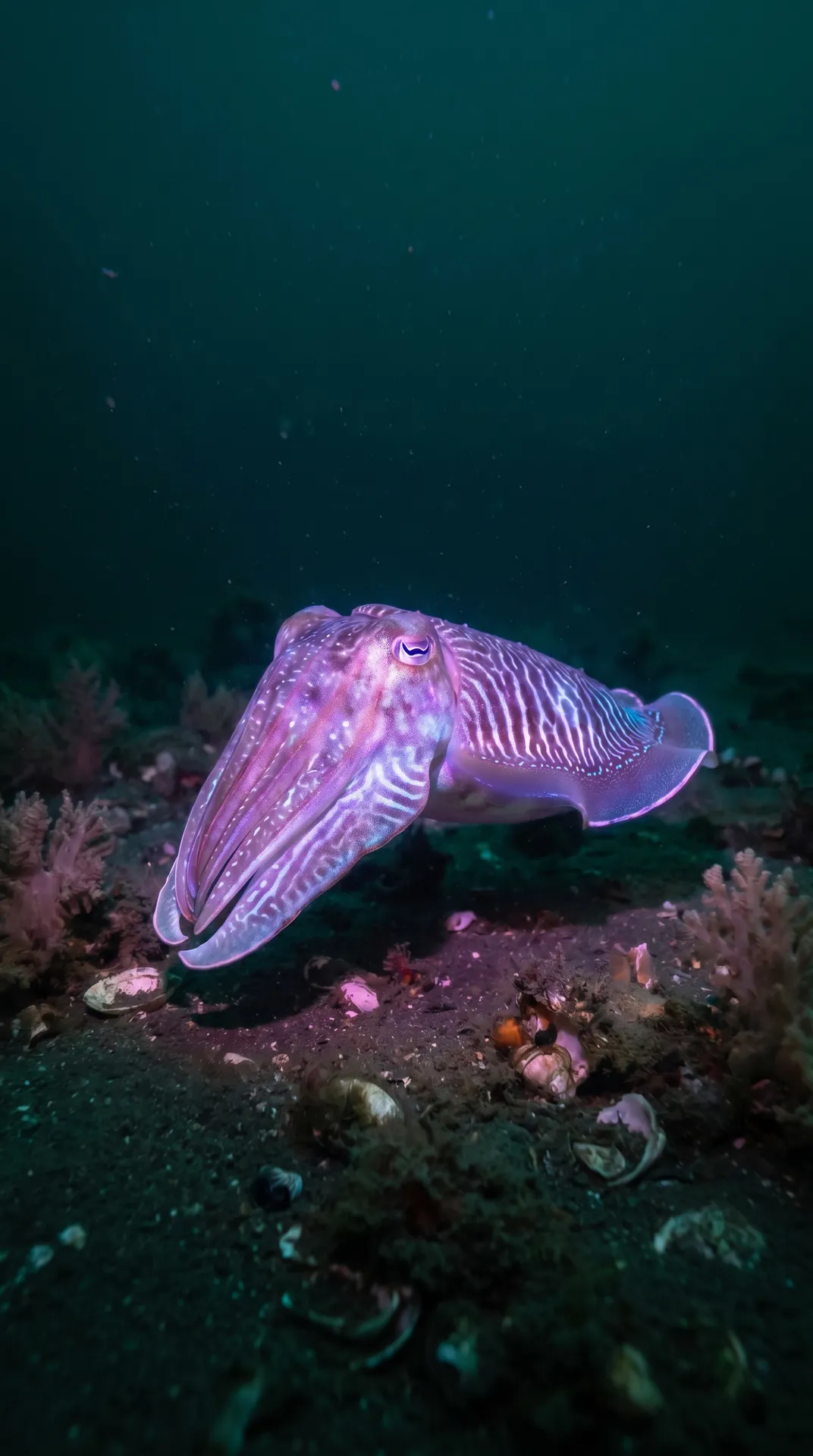
The cuttlefish's skin is packed with tiny color sacs called chromatophores, and each one is ringed by little muscles its nerves can yank open or snap shut. Because muscles and nerves do the work (not slow chemicals), the color flips almost instantly, and mirror-like cells underneath bounce light to add blues, greens, and silver. When it hunts, it rolls dark stripes across its body; scientists think this swirling motion overloads the prey's eyes so the crab or fish can't tell the cuttlefish is creeping closer. And even though it is colorblind, it seems to match its background by reading how light or dark each spot is rather than the actual color.
📚 Source: Smithsonian Ocean: How Octopuses and Squids Change Color ↗In a 2025 University of Bristol study published in Science Advances, Matteo Santon and Martin How filmed broadclub cuttlefish hunting and tested prey with the moving-stripe display, finding the prey failed to flee from the approaching predator because the strong stripe motion masked the 'it's getting closer' looming cue.
📚 Source: ScienceDaily: Cuttlefish 'mesmerize' their prey with a moving skin pattern, study finds ↗Watch the 45-second version
Cuttlefish gallery
Check what you learned
No score, no pressure — just see what stuck. Tap Real or Fake.
“The Cuttlefish hypnotizes its prey by pulsing moving bands of color across its skin, freezing the target in place.”
“The Cuttlefish has fathers who stand guard over the eggs for weeks, watching for the tadpoles to start twitching.”
“The Cuttlefish can change its color and even the texture of its skin in under a second to vanish against rock, sand, or coral.”