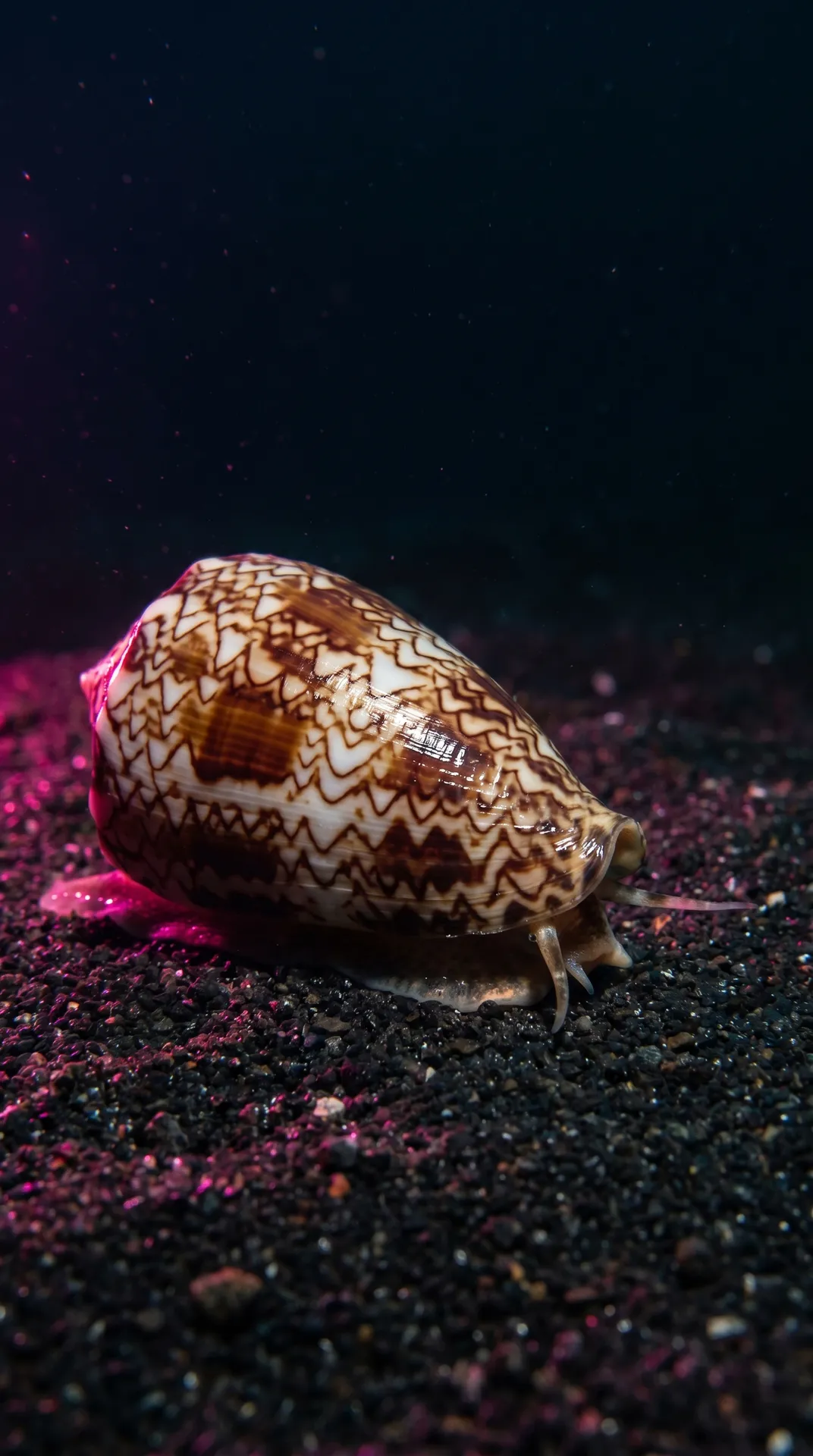
The beautiful seashell that can kill you in minutes
This gorgeous seashell fires a venomous harpoon that can kill a human in minutes.
Which one is REALLY true about the Cone Snail?
The short version
The cone snail looks like a pretty seashell but is one of the deadliest animals in the ocean. It fires a hollow, harpoon-like tooth loaded with paralyzing venom to spear fish — and one sting from some species can kill a person. There's no antivenom; divers call it the 'cigarette snail'. Its venom is being turned into painkillers stronger than morphine.
Why it's so weird
- ✓The Cone Snail fires a hollow harpoon-shaped tooth loaded with paralyzing to spear passing fish.
- ✓The Cone Snail carries so deadly that a single sting can stop a human heart in minutes.
- ✓The Cone Snail has no antivenom, which earned it the grim nickname the 'cigarette snail'.
- ✓The Cone Snail hides one of the deadliest venoms in the ocean inside a beautiful seashell.
- ✓The Cone Snail supplies a so precise that scientists turn it into painkillers stronger than morphine.
You could line up about 5 of them along a 7-year-old!
The full story
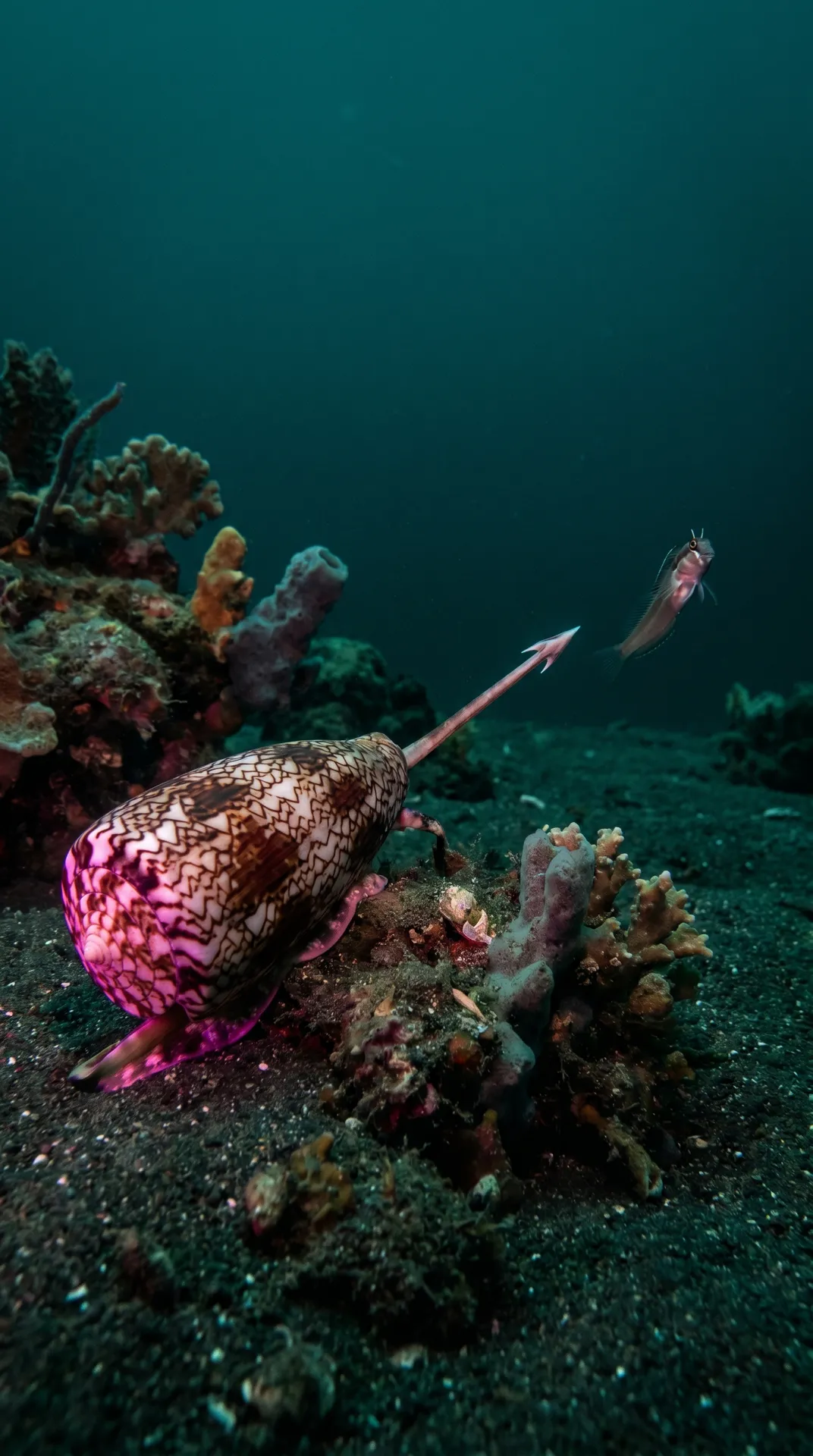
This gorgeous seashell can kill a grown human in minutes — and there is no antivenom. Meet the cone snail, one of the deadliest animals hiding in the ocean. It looks harmless, but it hunts by firing a hollow tooth shaped like a tiny harpoon, loaded with paralyzing venom, fast enough to spear a passing fish. Some species are so toxic that a single sting can stop a person's heart. Divers nicknamed it the cigarette snail, joking that a sting leaves you just enough time to smoke one before it is over. Strangely, that same venom is so precise that scientists are turning it into powerful painkillers stronger than morphine. There are over 700 species of these silent assassins hiding in shells. Beautiful, slow, and absolutely lethal. Follow for more weird animal facts.
A cone snail turns one of its own teeth into a tiny hollow harpoon, like a dart with a barb on the end. Muscles squeeze a venom gland to pump venom down through the hollow tooth and inject it into a fish, the same way a needle injects. The venom is a mix of chemicals called conotoxins that jam the fish's nerve "switches" (the ion channels that let sodium, potassium, and calcium flow in and out of nerve cells), so the nerves can't send messages and the fish can't move. One of these conotoxins blocks calcium channels that carry pain signals, which is why a copy of it became a painkiller (ziconotide/Prialt) stronger than morphine.
📚 Source: Killer Cone Snails: Deadly Predators or the Future of Medicine? - Frontiers for Young Minds ↗Scientists tested purified conotoxins on nerve and muscle cells in the lab to see exactly which ion channels each one blocks, and the calcium-channel-blocking conotoxin was developed into the FDA-approved painkiller ziconotide (Prialt), proving it really acts on pain-carrying nerves.
📚 Source: Pain Therapeutics from Cone Snail Venoms: From Ziconotide to Novel Non-Opioid Pathways (PMC, NIH) ↗Watch the 45-second version
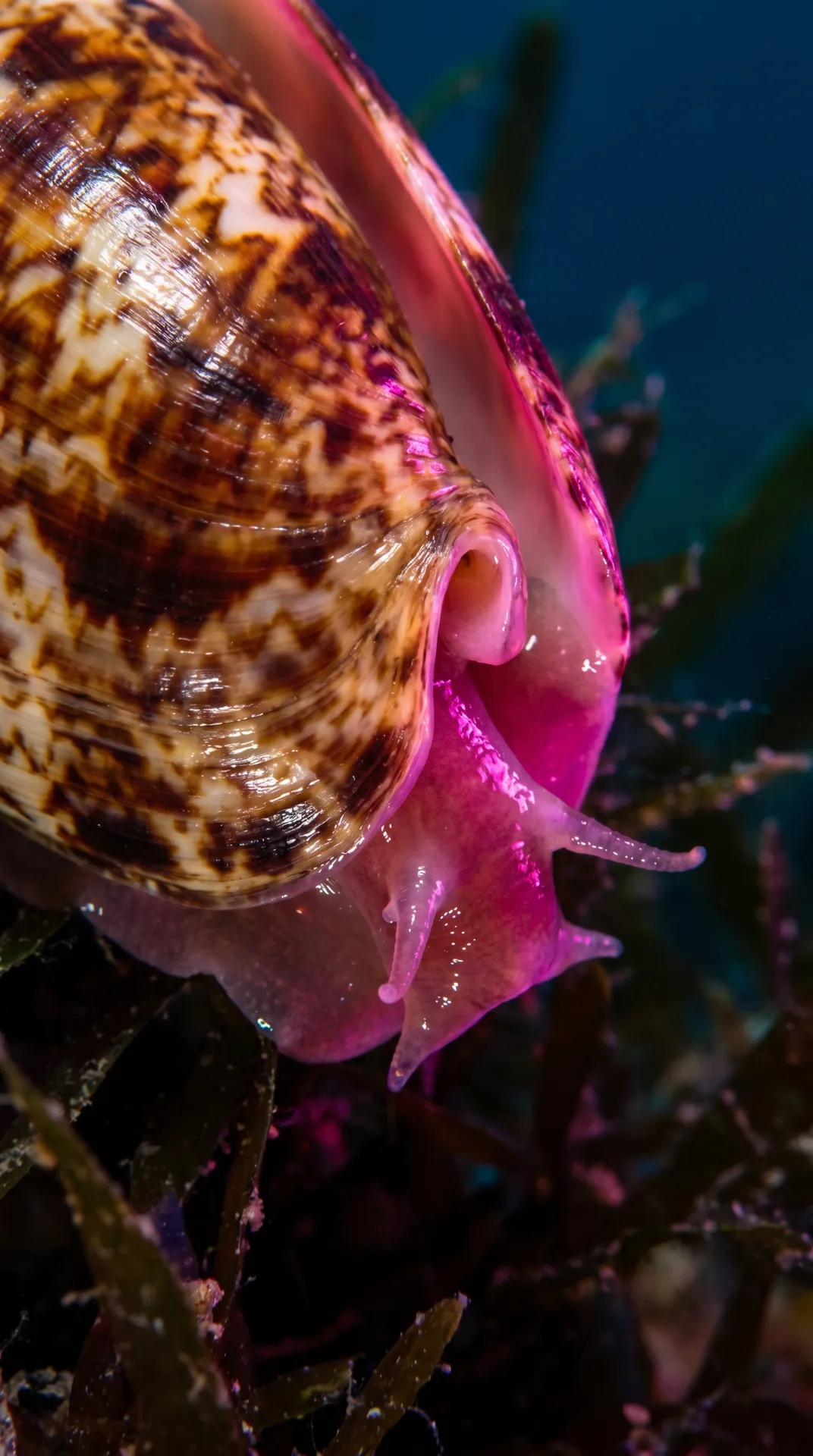
Cone Snail gallery
Check what you learned
No score, no pressure — just see what stuck. Tap Real or Fake.
“The Cone Snail fires a hollow harpoon-shaped tooth loaded with paralyzing venom to spear passing fish.”
“The Cone Snail eats its own soft droppings on purpose to digest its food a second time.”
“The Cone Snail carries venom so deadly that a single sting can stop a human heart in minutes.”