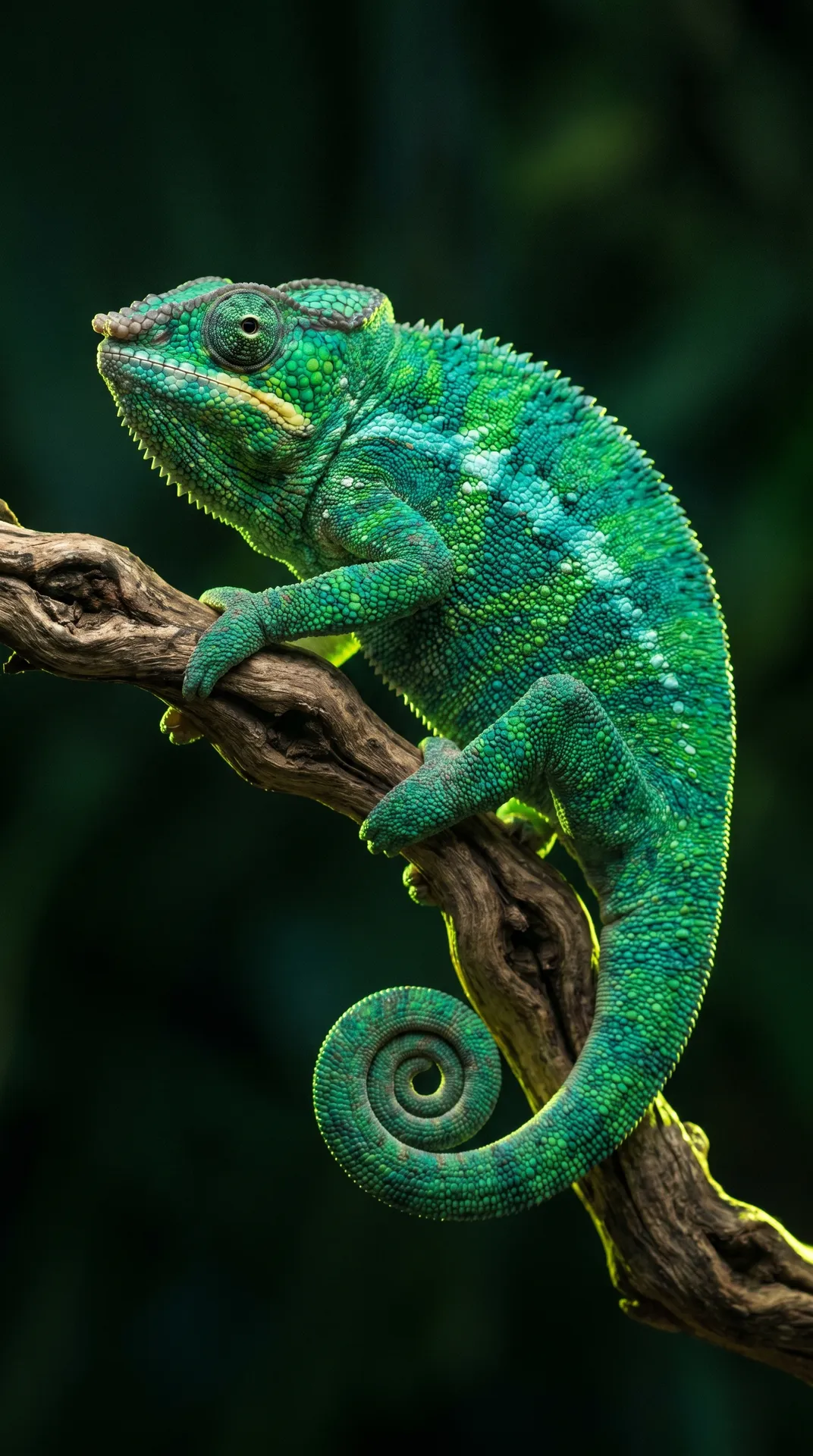
The lizard with a slingshot tongue twice its body length
This lizard fires a tongue twice the length of its body in under a tenth of a second.
Which one is REALLY true about the Chameleon?
The short version
A chameleon's sticky tongue is about twice its body length and launches in roughly a hundredth of a second. Its two eyes move independently in full circles to see almost all around its head, and its color change is mainly for mood and communication, made by rearranging crystals in its skin.
Why it's so weird
- ✓The Chameleon fires a sticky tongue twice the length of its whole body in about a hundredth of a second.
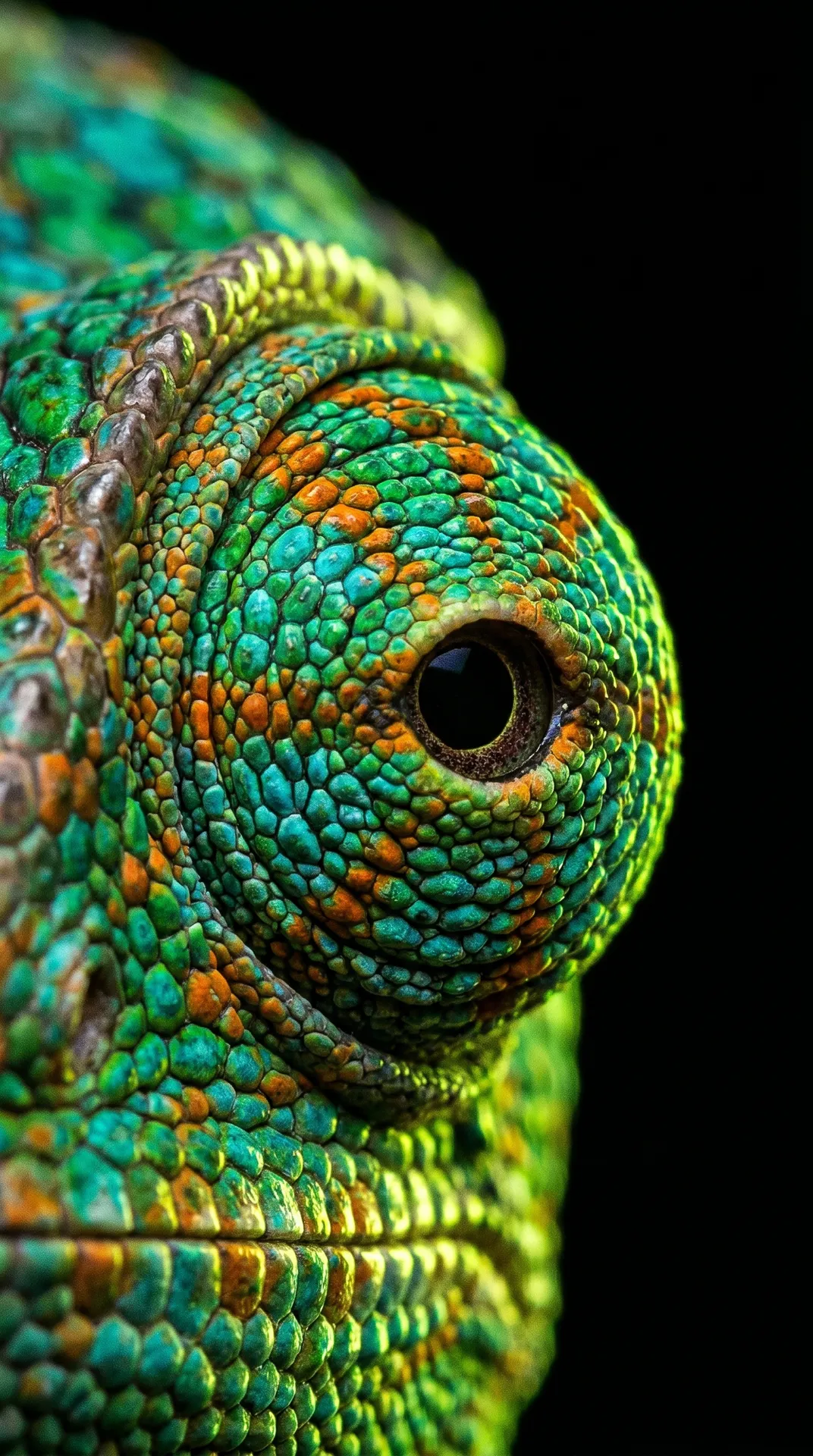
- ✓The Chameleon moves its two eyes completely independently, each swiveling in a full circle.
- ✓The Chameleon can watch in two directions at once and see almost all the way around its own head.
- ✓The Chameleon changes color mainly to show its mood and talk to other of its kind, not to hide.
- ✓The Chameleon shifts color by rearranging tiny crystals inside its skin, going bright when excited and dark when stressed.
You could line up about 2 of them along a 7-year-old!
The full story
This lizard hunts with a tongue that is twice as long as its entire body, and it fires faster than you can blink. Meet the chameleon, one of the most bizarrely built animals on Earth. Its sticky tongue launches out in around a hundredth of a second, hitting an insect with the force of a tiny slingshot before yanking it straight back. Its two eyes work completely independently, each swiveling in a full circle, so it can watch in two directions at once and see almost all the way around its own head. And the famous color change is not really for camouflage. They shift their color mainly to show their mood and talk to each other, going bright when excited and dark when stressed. They do it by rearranging tiny crystals inside their skin. A slingshot tongue and a built-in mood ring. Follow for more weird animal facts.
A chameleon's tongue works like a tiny bow and arrow. First, a muscle slowly stretches stretchy tissue (made of a protein called collagen) wrapped around a bone in the tongue, squeezing energy into it like a pulled-back rubber band. When the chameleon lets go, that stored energy snaps free all at once and flings the sticky tip forward way faster than any muscle could push on its own. That stretch-and-release trick is what makes the tongue blast out in about a hundredth of a second to grab a bug.
📚 Source: Evidence for an elastic projection mechanism in the chameleon tongue (Proceedings of the Royal Society B) ↗Scientists filmed chameleons with high-speed cameras and measured how fast the tongue sped up; the launch was far too powerful for the tongue's muscle alone, which showed the real push must come from stretchy collagen springing back like a stretched rubber band.
📚 Source: Evidence for an elastic projection mechanism in the chameleon tongue (Proceedings of the Royal Society B) ↗Watch the 45-second version
Chameleon gallery

Check what you learned
No score, no pressure — just see what stuck. Tap Real or Fake.
“The Chameleon fires a sticky tongue twice the length of its whole body in about a hundredth of a second.”
“The Chameleon is the largest amphibian alive on Earth and can grow nearly six feet long.”
“The Chameleon moves its two eyes completely independently, each swiveling in a full circle.”