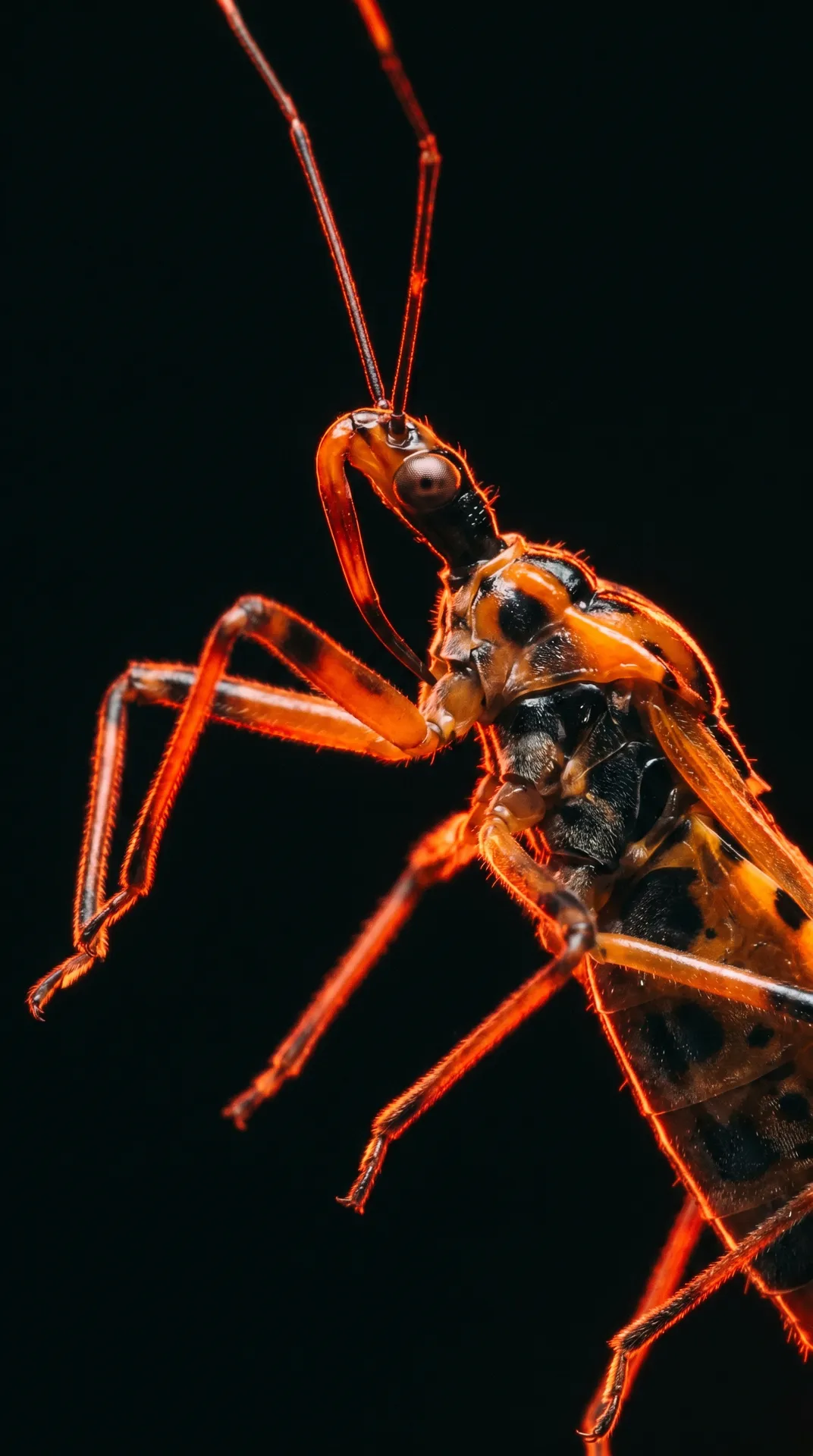
The bug that wears its victims' corpses as a disguise
This bug stabs its prey, drinks it from the inside out, then wears the empty corpses as armor.
Which one is REALLY true about the Assassin Bug?
The short version
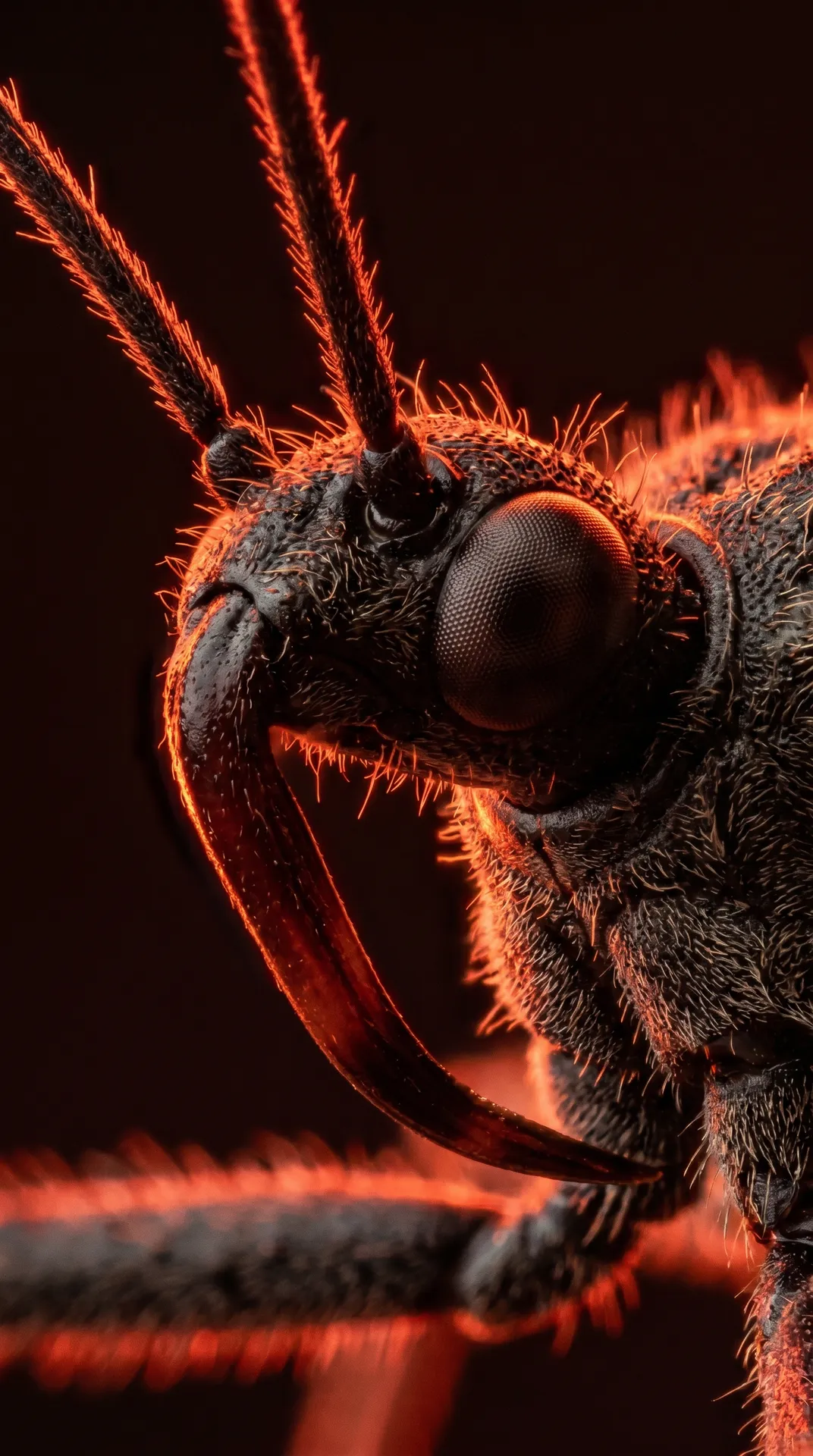
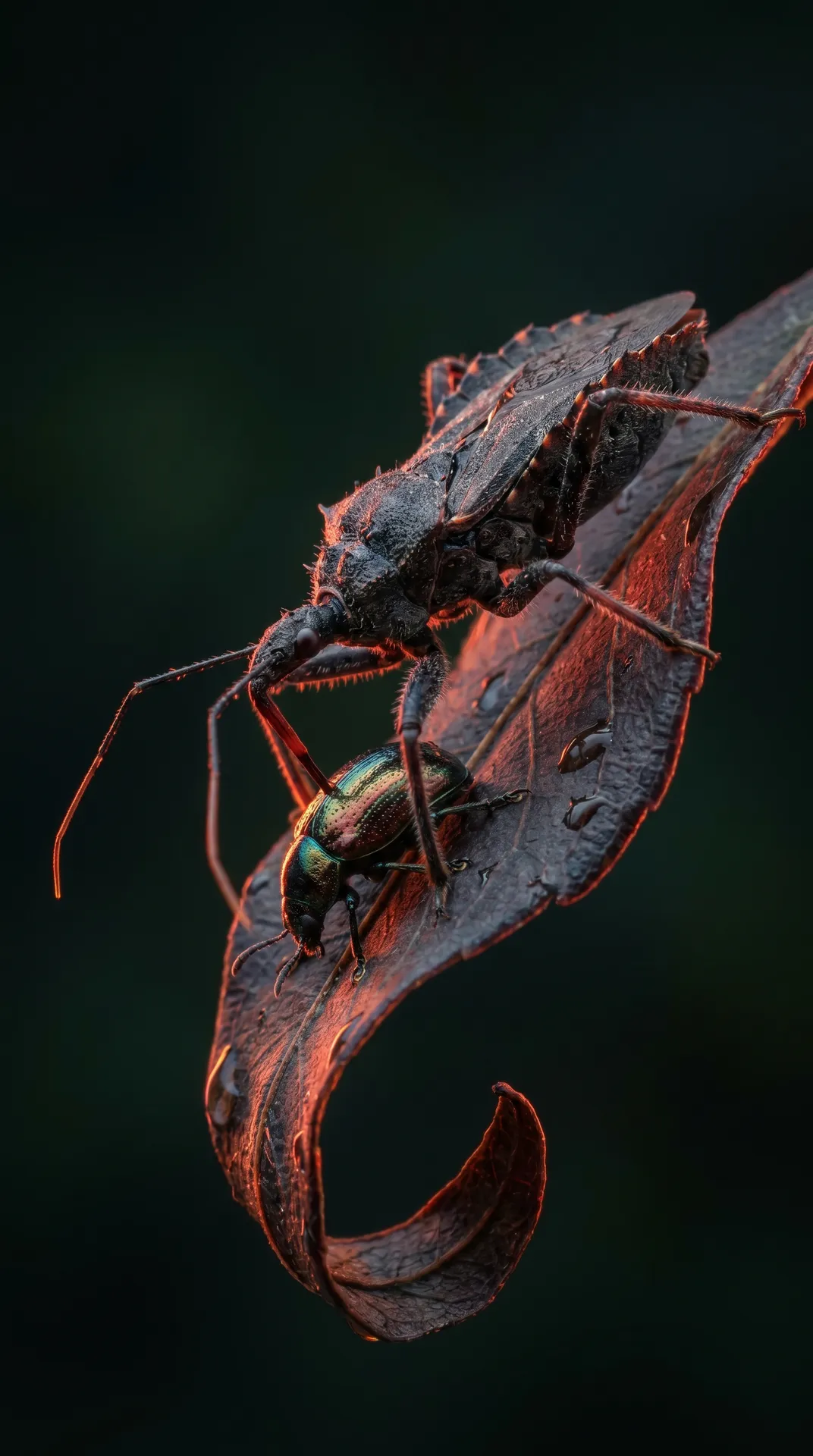
The assassin bug stabs prey with a sharp curved beak, injects venom that liquefies the insides, and slurps them out. Some species glue the drained corpses of the ants they kill onto their own backs as camouflage and armor — a gruesome stack that can be taller than the bug itself.
Why it's so weird
- ✓The Assassin Bug glues the drained corpses of its victims onto its own back, building a tower of bodies taller than itself.
- ✓The Assassin Bug stabs with a sharp curved beak and injects that turns the insides to liquid.
- ✓The Assassin Bug slurps its liquefied out like a juice box, leaving a hollow shell behind.
- ✓The Assassin Bug uses its stack of dead bodies as both and armor to terrify .
You could line up about 49 of them along a 7-year-old!
The full story
This bug stabs its prey, drinks it from the inside out, then wears the empty corpses as a disguise. Meet the assassin bug, one of the most gruesome hunters in the entire insect world. It hunts with a sharp, curved beak, which it jabs into its victim and uses to inject a venom that turns the insides into liquid. Then it simply slurps the prey out like a juice box, leaving a hollow shell behind. But here is the truly disturbing part. Some species glue the drained corpses of the ants they have killed onto their own backs, building a tower of dead bodies taller than themselves. It works as both camouflage and armor, and it terrifies anything that might eat them. A tiny serial killer wearing its trophies. Follow for more weird animal facts.
When an assassin bug stabs prey with its sharp beak, it injects saliva loaded with venom and digestive enzymes -- special chemicals that break body tissue down into mush. This is digestion happening OUTSIDE the body: the prey's insides turn to soup so the bug can suck them up through its strawlike beak, leaving an empty shell. Scientists think the bug saves those shells and glues them on its back because the messy pile breaks up its outline, so a hunting spider can't tell it's a tasty bug -- though exactly why the trick fools predators is still being studied.
📚 Source: National Geographic: Assassin bugs deceive spiders with coat of many corpses ↗In a 2007 experiment, researchers Robert Jackson and Simon Pollard put jumping spiders (the bug's natural predator) in cages with assassin bugs that either wore their ant-corpse backpacks or were bare, and the spiders attacked the bare bugs about ten times more often -- showing the corpse pile really protects the bug.
📚 Source: Smithsonian Magazine: This Insect Uses Its Victims' Carcasses As Camouflage ↗Watch the 45-second version
Assassin Bug gallery
Check what you learned
No score, no pressure — just see what stuck. Tap Real or Fake.
“The Assassin Bug glues the drained corpses of its victims onto its own back, building a tower of bodies taller than itself.”
“The Assassin Bug can regrow its legs, heart, spine, eyes and even parts of its brain.”
“The Assassin Bug stabs prey with a sharp curved beak and injects venom that turns the insides to liquid.”